Sometimes the smallest habits feel the most comforting. A spoonful of ground seeds in your oatmeal, a sprinkle over yogurt, a nutty crunch in a smoothie bowl—simple, steady, and surprisingly satisfying.
That is part of why seed cycling has become so popular. It is a food-based routine that involves eating specific seeds during different phases of the menstrual cycle, usually with the goal of supporting hormone balance, smoother periods, PMS relief, or steadier energy.
But here is the honest truth: while the seeds themselves are nutritious, the exact practice is not strongly proven by large clinical trials. That does not mean it is useless. It means it is best understood as a gentle nutrition habit, not a cure-all.
If you are curious, this guide will walk you through what it is, how people do it, what the evidence actually says, who may benefit, who should be cautious, and how to make it easy enough to stick with.
![Image: Four small bowls of flax, pumpkin, sesame, and sunflower seeds arranged on a kitchen counter with a journal and tea nearby.]
What Is Seed Cycling?
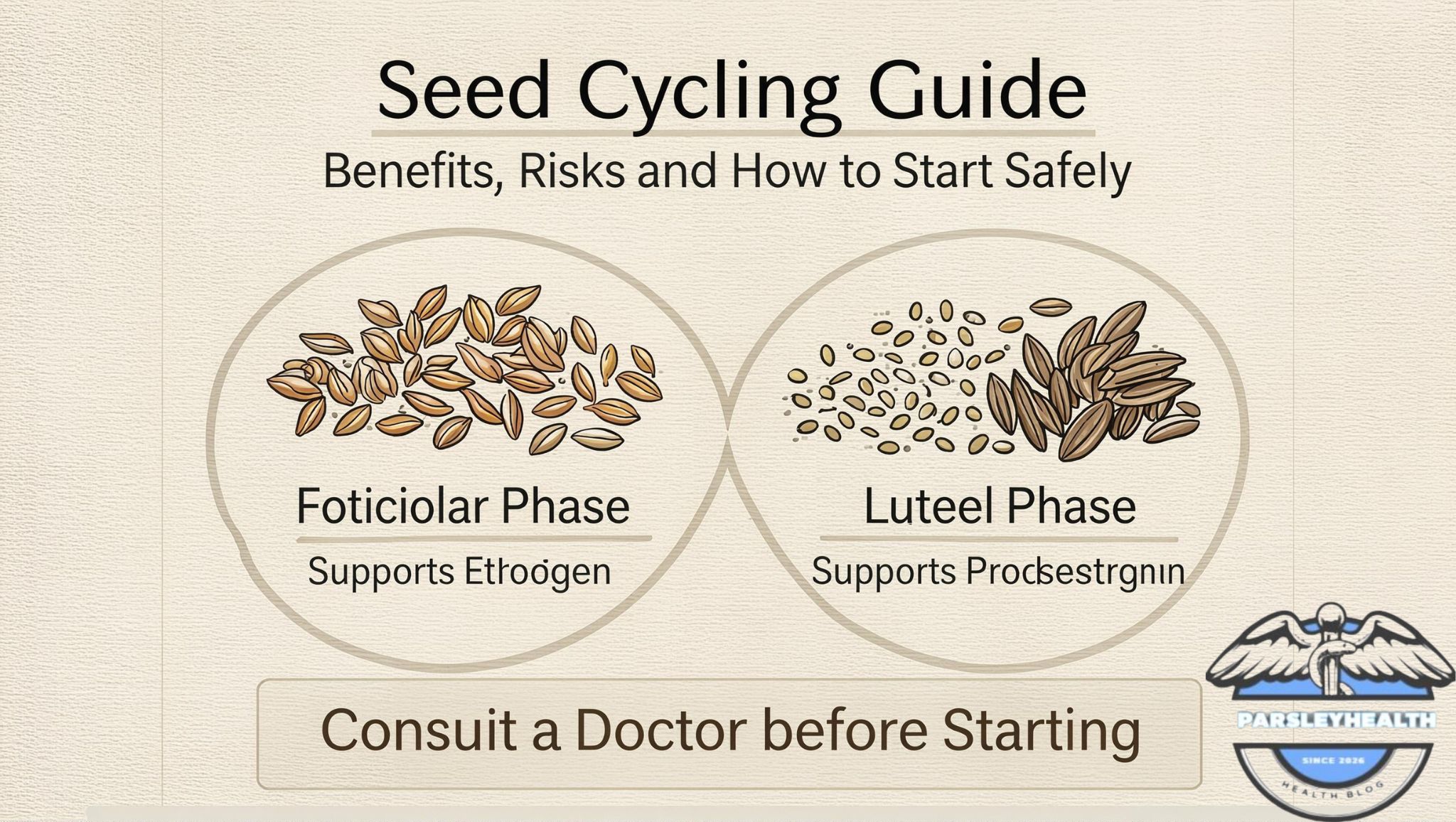
Seed cycling is the practice of eating certain seeds during different parts of the menstrual cycle. The most common approach uses flax and pumpkin seeds during the first half of the cycle, then sesame and sunflower seeds during the second half.
The idea is that different seeds provide nutrients that may support the body’s natural hormone rhythms. These nutrients include fiber, plant-based fats, lignans, zinc, magnesium, selenium, vitamin E, and omega-3 or omega-6 fatty acids.
A typical plan looks like this:
- Days 1–14: ground flax seeds and pumpkin seeds
- Days 15–28: ground sesame seeds and sunflower seeds
Day 1 is the first day of your period. In a textbook 28-day cycle, ovulation happens around day 14, but real cycles vary. Some people ovulate earlier or later, and some do not ovulate regularly.
Healthline describes the practice as a naturopathic routine that aims to influence estrogen and progesterone by using flax and pumpkin seeds in the first half of the cycle and sunflower and sesame seeds in the second half.
How the Menstrual Cycle Works
To understand the routine, it helps to understand the two broad halves of the menstrual cycle.
The Follicular Phase
The follicular phase begins on the first day of your period and continues until ovulation. During this time, estrogen gradually rises as an egg matures.
Some people feel more energetic in this phase. Others feel tired during menstruation because of cramps, blood loss, poor sleep, headaches, or low iron.
Ovulation
Ovulation is when an ovary releases an egg. In a 28-day cycle, it often happens near day 14, but that is only an average. Stress, illness, travel, PCOS, thyroid issues, postpartum changes, perimenopause, and under-eating can all shift ovulation timing.
The Luteal Phase
The luteal phase happens after ovulation. Progesterone rises to prepare the uterine lining. If pregnancy does not happen, estrogen and progesterone fall, and the next period begins.
This second half of the cycle is when many people notice PMS symptoms, breast tenderness, mood changes, bloating, cravings, headaches, acne, sleep changes, and fatigue. You may read this: Cortisol Detox Diet: Foods to Lower Stress Naturally Now.
How Seed Cycling Is Usually Done
Most people follow a simple tablespoon routine. The goal is consistency, not perfection.
Days 1–14: Flax and Pumpkin Seeds
During the first half of the cycle, people typically eat:
- 1 tablespoon ground flax seeds
- 1 tablespoon ground pumpkin seeds
Flax seeds are known for lignans and alpha-linolenic acid, a plant-based omega-3 fat. Pumpkin seeds provide magnesium, zinc, protein, iron, and healthy fats.
Ground flax is usually recommended because whole flax seeds may pass through digestion without being fully broken down. Grinding helps your body access more of the nutrients.
Days 15–28: Sesame and Sunflower Seeds
During the second half, people typically eat:
- 1 tablespoon ground sesame seeds
- 1 tablespoon sunflower seeds
Sesame seeds contain lignans, healthy fats, minerals, and fiber. Sunflower seeds provide vitamin E, selenium, magnesium, and unsaturated fats.
You can use raw or lightly toasted seeds, but avoid heavily salted or sugar-coated versions if your goal is a steady daily habit.
Why People Try Seed Cycling
People usually try this practice because they want a gentle, natural-feeling way to support hormone-related symptoms. Common reasons include PMS, irregular periods, acne, breast tenderness, menstrual cramps, mood swings, low energy, perimenopause symptoms, and post-birth-control cycle changes.
It also appeals to people who want something simple. There are no complicated recipes, expensive devices, or extreme restrictions. You just add seeds to food you already eat.
That said, nutrition habits can support health, but they cannot replace medical care when symptoms are severe. Heavy bleeding, missing periods, infertility, severe pelvic pain, sudden cycle changes, or intense mood symptoms deserve proper evaluation.
![Image: Smoothie bowl topped with ground flax, pumpkin seeds, berries, and sunflower seeds in a bright morning kitchen.]
What the Evidence Really Says
This is where the conversation needs balance. The individual seeds have nutritional value. Some seed compounds have been studied for cholesterol, inflammation, fiber intake, menopause symptoms, and metabolic health. But direct research on the full seed rotation method is limited.
Medical News Today reported in 2026 that the practice is popular for reproductive hormone support, but there are not many studies proving that the method works as claimed.
A 2023 systematic review and meta-analysis in Frontiers in Nutrition found that flaxseed supplementation did not significantly affect sex hormones in adults overall, while also noting the number of available trials was limited.
So the most accurate way to view seed cycling is this: it may be a nutritious routine that helps some people feel better, but it should not be promoted as a guaranteed hormone-balancing treatment.
Why Some People Still Notice Benefits
Even when the specific cycle timing is not proven, adding seeds may improve the overall quality of the diet. Seeds add fiber, healthy fats, minerals, and plant compounds. That alone may support digestion, blood sugar steadiness, satiety, heart health, and nutrient intake.
Sometimes the benefit may come from the routine itself. Tracking your cycle, eating breakfast more consistently, adding protein and fiber, reducing ultra-processed snacks, and paying attention to symptoms can all make a difference.
Nutrients in the Four Main Seeds
Each seed brings something slightly different to the table. That is part of why the routine feels appealing: it encourages variety.
Flax Seeds
Flax seeds are rich in fiber, plant omega-3 fats, and lignans. Lignans are plant compounds often described as phytoestrogens, meaning they can interact weakly with estrogen pathways in the body.
Flax has been studied more than the other seeds in relation to hormone-related symptoms. Some research explores its role in menopausal symptoms, cholesterol, blood pressure, and gut health, but results vary depending on dose, form, and study design.
Pumpkin Seeds
Pumpkin seeds are rich in magnesium, zinc, iron, protein, and healthy fats. Magnesium supports many body processes, including muscle and nerve function, while zinc is important for immune function, wound healing, and reproductive health.
Pumpkin seeds are also satisfying. Their protein and fat content can help make meals feel more filling.
Sesame Seeds
Sesame seeds contain fiber, minerals, healthy fats, and lignans such as sesamin and sesamolin. They have a strong nutty flavor and work well in savory meals.
Sesame is also one of the major food allergens in some countries, so people with sesame allergy must avoid it completely.
Sunflower Seeds
Sunflower seeds are a good source of vitamin E, selenium, magnesium, and unsaturated fats. Vitamin E acts as an antioxidant, and selenium supports thyroid hormone metabolism and immune function.
Sunflower seeds are easy to add to salads, oatmeal, yogurt, smoothies, and homemade snack mixes.
Possible Benefits of Seed Cycling
The benefits below should be understood as possible or indirect, not guaranteed.
It May Improve Nutrient Intake
Many people do not eat enough fiber, minerals, or unsaturated fats. A daily seed habit can help close some of those gaps.
Seeds are calorie-dense, but in small portions they can be a practical way to add nutrition without needing a complicated meal plan.
It May Support Digestive Regularity
Flax, sesame, pumpkin, and sunflower seeds all provide fiber. Fiber supports bowel regularity, gut bacteria, cholesterol metabolism, and fullness.
If your diet is currently low in fiber, increase slowly. A sudden jump can cause gas or bloating.
It May Help With Meal Balance
Adding seeds to breakfast or snacks can make them more filling. For example, yogurt with fruit and seeds is usually more satisfying than fruit alone.
Steadier meals may also help reduce energy crashes and cravings, especially in the premenstrual phase.
It May Encourage Cycle Awareness
One underrated benefit of seed cycling is that it encourages people to pay attention to their bodies. You may begin noticing when you ovulate, when cravings appear, when sleep gets worse, or when mood changes begin.
Cycle awareness can help you plan exercise, rest, meals, appointments, and conversations with a healthcare professional.
It May Feel Grounding
A small daily ritual can be emotionally supportive. For people who feel disconnected from their cycle or frustrated by symptoms, having a gentle routine may feel empowering.
That matters, as long as the routine does not become stressful or replace needed care.
Seed Cycling for PMS
PMS can include mood swings, irritability, anxiety, bloating, breast tenderness, headaches, acne, cravings, and fatigue. Because these symptoms often happen in the luteal phase, many people hope the sesame-and-sunflower phase will help.
There is no strong proof that this seed rotation reliably treats PMS. However, improving diet quality may support general PMS management. Regular meals, adequate protein, magnesium-rich foods, omega-3 fats, hydration, sleep, and stress reduction can all be helpful.
If PMS symptoms are severe enough to affect relationships, work, school, or daily functioning, it may be PMDD or another condition. That is worth discussing with a clinician.
Seed Cycling for Irregular Periods
Irregular periods can happen for many reasons, including stress, PCOS, thyroid disease, perimenopause, under-eating, over-exercising, medication changes, pregnancy, breastfeeding, and hormonal birth control.
A seed routine may be a supportive food habit, but it should not be the only response to irregular cycles.
See a healthcare professional if:
- Your periods suddenly become very irregular
- You go more than 90 days without a period and are not pregnant or on a medication that explains it
- Bleeding is very heavy
- You have severe pelvic pain
- You are trying to conceive without success
- You have new facial hair growth, acne, or unexplained weight changes
Food can support the body, but irregular ovulation often needs a clearer medical picture.
Seed Cycling for PCOS
Polycystic ovary syndrome, or PCOS, can involve irregular ovulation, higher androgen levels, acne, excess hair growth, insulin resistance, weight changes, and fertility challenges.
People with PCOS may benefit from blood-sugar-friendly meals, adequate protein, fiber, resistance training, sleep support, stress management, and medical care when needed. Seeds can fit nicely into that kind of approach because they provide fiber, fat, and minerals.
But seed cycling should not be presented as a PCOS treatment by itself. PCOS is complex, and management often needs individualized care.
Seed Cycling for Perimenopause and Menopause
Perimenopause and menopause bring different hormone patterns than a predictable menstrual cycle. Periods may become irregular, ovulation may be inconsistent, and symptoms such as hot flashes, night sweats, mood changes, sleep disruption, and fatigue may appear.
Some people without regular cycles use a moon-based schedule: flax and pumpkin for about 14 days, then sesame and sunflower for about 14 days. Others simply rotate the seeds every two weeks.
Research on flaxseed and menopause symptoms is mixed. A 2024 study on flaxseed and perimenopausal symptoms reported improvement in menopausal symptom length and frequency among women taking flaxseed, but this does not prove the full seed rotation method works for everyone.
If symptoms are interfering with sleep, mood, work, or quality of life, it is worth asking about evidence-based menopause care, including lifestyle support, non-hormonal therapies, and hormone therapy when appropriate.
![Image: Infographic showing days 1–14 with flax and pumpkin seeds, days 15–28 with sesame and sunflower seeds, plus serving size tips.]
How to Start Seed Cycling
The easiest plan is the one you will actually do.
Step 1: Know Your Day 1
Day 1 is the first day of your period, not the last day or the first spotting day unless spotting turns into true flow.
If your cycle is irregular, start with the first day of your next period and track from there.
Step 2: Use Ground Seeds When Possible
Ground seeds are easier to digest, especially flax and sesame. You can buy ground flax, grind seeds in a coffee grinder, or use a small blender.
Store ground seeds in the refrigerator or freezer because their oils can go rancid.
Step 3: Start With a Small Amount
The classic amount is 1 tablespoon of each seed per day, but you can start with less.
A gentle starting plan:
- Week 1: 1 teaspoon of each seed daily
- Week 2: 2 teaspoons of each seed daily
- Week 3 onward: 1 tablespoon of each seed daily, if tolerated
This is especially helpful if you are not used to eating much fiber.
Step 4: Add Seeds to Food You Already Eat
Try seeds in:
- Oatmeal
- Smoothies
- Yogurt
- Chia pudding
- Soups
- Salads
- Grain bowls
- Energy bites
- Homemade granola
- Hummus
- Porridge
- Toast with nut butter
- Rice bowls
- Vegetable stir-fries
Do not make it complicated. A habit that takes 20 seconds is more likely to last.
Sample 28-Day Seed Cycling Schedule
This schedule assumes a 28-day cycle. Adjust based on your actual cycle length.
| Cycle Days | Seeds | Simple Serving |
|---|---|---|
| Days 1–14 | Flax + pumpkin | 1 tablespoon ground flax + 1 tablespoon ground pumpkin seeds daily |
| Days 15–28 | Sesame + sunflower | 1 tablespoon ground sesame + 1 tablespoon sunflower seeds daily |
If you ovulate later than day 14, some people prefer switching seeds after ovulation rather than by calendar day. Ovulation can be tracked with cervical mucus, basal body temperature, or ovulation predictor kits.
What If You Do Not Have a Period?
You may not have regular periods because of menopause, birth control, pregnancy, breastfeeding, PCOS, hypothalamic amenorrhea, or other reasons.
If you are postmenopausal, some people use a simple two-week rotation. If you are on hormonal birth control, your natural hormone rhythm may be suppressed or altered, so the timing may not matter in the same way.
If you have lost your period unexpectedly, do not rely on seed cycling alone. Missing periods can signal under-fueling, pregnancy, thyroid problems, PCOS, stress, medication effects, or other health issues.
Best Ways to Eat the Seeds
The routine works best when the seeds taste good. Otherwise, it becomes another wellness task you dread.
Breakfast Ideas
Add the seeds to oatmeal with berries and cinnamon. Stir them into Greek yogurt with honey. Blend them into a smoothie with banana, spinach, and nut butter.
Lunch Ideas
Sprinkle seeds over a grain bowl, soup, or salad. Mix ground seeds into hummus or a tahini-style dressing.
Snack Ideas
Make energy bites with oats, nut butter, dates, and seeds. Add them to cottage cheese, apple slices with peanut butter, or a homemade trail mix.
Dinner Ideas
Use sesame and sunflower seeds on stir-fries, roasted vegetables, noodles, or rice bowls. Pumpkin seeds pair well with soups, tacos, roasted squash, and salads.
Common Mistakes to Avoid
Expecting Immediate Results
Hormone-related symptoms rarely change overnight. If you try this routine, give it at least two to three cycles while also tracking sleep, stress, meals, bleeding, and symptoms.
Ignoring the Rest of Your Diet
Seeds cannot make up for chronic under-eating, low protein, high alcohol intake, poor sleep, or unmanaged stress. They are a helpful addition, not the whole foundation.
Using Whole Flax Only
Whole flax seeds are nutritious, but many pass through the digestive tract intact. Ground flax is usually better if you want to access more nutrients.
Eating Too Much Too Fast
Seeds are high in fiber and fat. Too much too quickly may cause bloating, gas, loose stools, or stomach discomfort.
Forgetting Allergies and Medication Concerns
Sesame allergy can be serious. Flax and other high-fiber foods may also affect how some medicines are absorbed if taken at the same time. When in doubt, separate supplements or medications from high-fiber seed meals and ask a pharmacist or clinician.
Who Should Be Careful?
Seeds are safe for many people as foods, but not everyone should jump in without thought.
Be cautious if you:
- Have a sesame, sunflower, pumpkin, or flax allergy
- Have trouble swallowing or need texture-modified foods
- Have digestive conditions that worsen with high fiber
- Are on blood-thinning medication
- Take medications that must be carefully timed with food or fiber
- Are pregnant and using seeds in unusually large amounts
- Have hormone-sensitive medical conditions and are making major diet changes
- Have a history of disordered eating and cycle tracking feels triggering
Food routines should make life easier, not more anxious.
When to See a Healthcare Professional
Cycle symptoms can be common, but they are not always normal. Get medical advice if you have severe pain, very heavy bleeding, bleeding between periods, periods that stop unexpectedly, cycles shorter than 21 days or longer than 35 days repeatedly, infertility concerns, sudden acne or facial hair growth, nipple discharge, pelvic pain, or intense mood symptoms before your period.
Also seek care if fatigue, dizziness, fainting, shortness of breath, or heart palpitations occur with your cycle. These may point to anemia, thyroid problems, blood pressure issues, or other conditions.
Nutrition can support health, but symptoms that disrupt your life deserve real answers.
A Realistic 30-Day Plan
If you want to try seed cycling, keep the first month simple.
Week 1
Buy fresh seeds. Grind what needs grinding. Store them properly. Start with small servings if your fiber intake is low.
Week 2
Add the seeds to one daily meal. Do not change ten other things at once, or you will not know what helped.
Week 3
Track symptoms in a simple way. Use notes like “bloating mild,” “sleep poor,” “cramps moderate,” or “mood better.”
Week 4
Look for patterns. Did digestion change? Did PMS feel different? Did the routine feel easy or annoying? Adjust based on real life, not perfection.
FAQ
Does seed cycling really balance hormones?
There is limited direct evidence that the full routine reliably balances hormones. However, the seeds provide fiber, healthy fats, minerals, and plant compounds that can support overall nutrition.
How long does seed cycling take to work?
Many people who try it give it two to three menstrual cycles. If symptoms are severe, worsening, or unusual, do not wait months before seeking medical advice.
Can I do seed cycling with irregular periods?
Yes, but the timing may be harder. You can follow your actual cycle if you can identify day 1, switch after ovulation if you track it, or use a simple two-week rotation. Irregular periods should be evaluated if they are persistent or new.
Do I have to grind the seeds?
Grinding is especially helpful for flax and sesame seeds because it makes nutrients easier to access. Pumpkin and sunflower seeds can be eaten whole, chopped, or ground.
Can seed cycling help with acne?
It may help indirectly if it improves overall diet quality, blood sugar balance, or nutrient intake. But acne can have many causes, including hormones, skincare products, medication, stress, and genetics.
Is seed cycling safe during pregnancy?
Food amounts of seeds are generally common in normal diets, but pregnancy is not the time to use large amounts of any food as a hormone remedy without professional guidance. Ask your healthcare provider if you are unsure.
Can I use seed butter instead of whole or ground seeds?
Yes, seed butters can work if they are made from the same seeds and do not contain lots of added sugar or oils. Tahini, for example, is made from sesame seeds.
What if I miss a day?
Nothing dramatic happens. Just continue the next day. The routine should feel flexible, not stressful.
Can men do seed cycling?
Men can eat these seeds for their nutritional value, but the traditional rotation is designed around menstrual cycle phases. There is no strong evidence that men need to rotate seeds this way.
Conclusion
Seed cycling is simple, affordable, and easy to personalize. It encourages you to eat nutrient-dense seeds, pay attention to your cycle, and build a daily ritual around supporting your body.
The honest view is that the full method is not strongly proven as a hormone-balancing treatment. Still, the seeds themselves are nutritious, and many people find the routine helpful because it improves meal quality, fiber intake, and body awareness.
Try it gently if it appeals to you. Keep expectations realistic, track how you feel, and avoid treating it like a cure. Your hormones are influenced by sleep, stress, nutrition, movement, medical conditions, medications, age, and life stage—not just one spoonful of seeds.
A small habit can still be meaningful. Let it support your health without carrying more pressure than it deserves.