Gut health has become one of the biggest wellness conversations in recent years, and for good reason. From digestion and immunity to mood and energy levels, the health of your gut affects far more than most people realize. But with so many supplement options and conflicting recommendations, many people still wonder when to take probiotics for the best results.
Timing may seem like a small detail, yet it can influence how effectively probiotics survive the digestive process and support your gut microbiome. Some people take them with breakfast, others before bed, and many simply guess without understanding what actually works.
The good news is that probiotics don’t need to be complicated. Once you understand how these beneficial bacteria interact with your digestive system, it becomes much easier to build a routine that fits your lifestyle and supports your health goals naturally.
Whether you’re trying to ease bloating, improve digestion, recover after antibiotics, or strengthen your immune system, knowing the right timing can help you get more from your probiotic routine.


What Are Probiotics?
Probiotics are live microorganisms, mainly beneficial bacteria and yeasts, that support balance within the gut microbiome.
Your digestive system naturally contains trillions of microbes. Some are helpful, while others can become problematic if they grow out of balance.
Probiotics help maintain this balance and may support:
- Healthy digestion
- Nutrient absorption
- Immune function
- Bowel regularity
- Reduced bloating
- Gut barrier health
They can come from supplements or fermented foods such as:
- Yogurt
- Kefir
- Sauerkraut
- Kimchi
- Miso
- Kombucha
Different probiotic strains provide different benefits, which is why timing and consistency can matter.
Why Timing Matters for Probiotics
One challenge probiotics face is surviving stomach acid.
The stomach’s acidic environment helps break down food and destroy harmful bacteria, but it can also reduce the number of beneficial probiotic organisms that reach the intestines alive.
That’s why many people ask about the best timing for probiotic supplements.
Taking probiotics at certain times may:
- Improve bacterial survival
- Increase colonization in the gut
- Reduce digestive discomfort
- Improve consistency
However, the perfect timing isn’t exactly the same for everyone.
When to Take Probiotics for Best Results
Most experts recommend taking probiotics either:
- On an empty stomach
- Or shortly before a meal
This is because stomach acid levels may be slightly lower before eating, giving beneficial bacteria a better chance of survival.
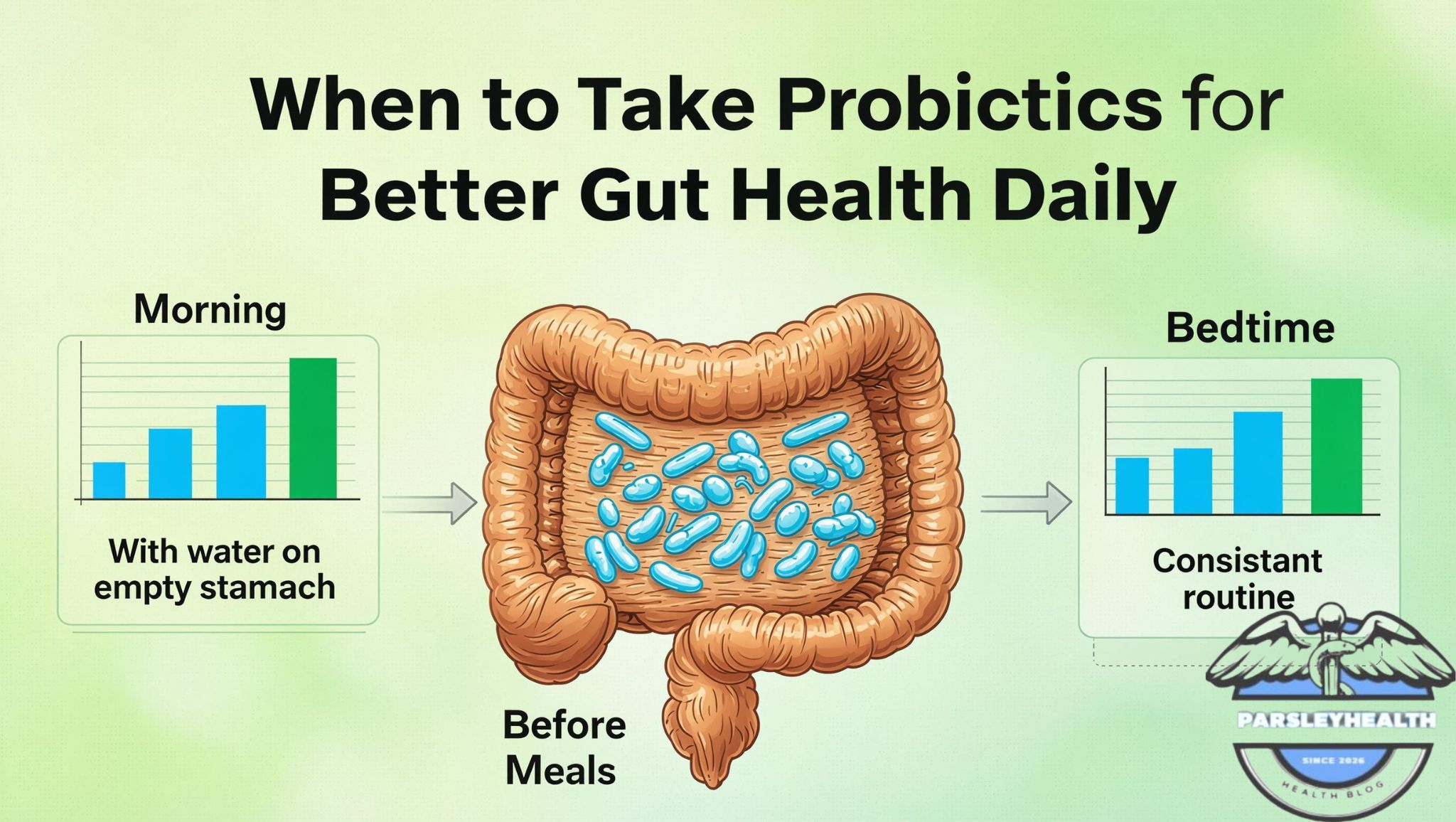
Morning Before Breakfast
This is one of the most common recommendations.
Taking probiotics:
- 20–30 minutes before breakfast
- With a glass of water
may help probiotics pass through the stomach more efficiently.
Many people also find mornings easier for building a consistent routine.
Before Bed
Others prefer taking probiotics before sleep.
At night:
- Digestion slows down
- The gut becomes less active
- There may be less stomach acid fluctuation
Some individuals feel nighttime supplementation works better for bloating or overnight digestion support.
With Meals
Certain probiotic strains survive better when taken with food, especially meals containing healthy fats.
Food may temporarily buffer stomach acid and protect probiotic organisms during digestion.
This is particularly helpful for:
- Sensitive stomachs
- Stronger probiotic formulas
- Multi-strain supplements


5
Does the Type of Probiotic Matter?
Absolutely.
Not all probiotics behave the same way. Different strains survive stomach acid differently and serve different purposes.
Common Probiotic Strains
Lactobacillus
Often used for:
- Digestive balance
- Bloating support
- Vaginal health
- Immune support
These strains are commonly found in yogurt and fermented foods. You may also read this: Why Am I Suddenly Lactose Intolerant? Real Causes Explained.
Bifidobacterium
Frequently used for:
- Gut regularity
- IBS support
- Digestive comfort
Saccharomyces boulardii
This beneficial yeast is often recommended during or after antibiotic use because it survives stomach acid well.
The manufacturer’s instructions can also provide guidance based on the strain and capsule design.
When to Take Probiotics With Antibiotics
Antibiotics can disrupt the balance of bacteria in the gut by killing both harmful and beneficial microbes.
Taking probiotics during antibiotic treatment may help reduce:
- Diarrhea
- Digestive upset
- Gut imbalance
However, timing matters.
Best Timing During Antibiotics
Take probiotics:
- At least 2 hours before or after antibiotics
This helps reduce the chance of antibiotics destroying the probiotic bacteria before they reach the intestines.
Continue probiotics for several weeks after finishing antibiotics to help restore microbial balance.
Should You Take Probiotics Every Day?
For many people, daily use provides the most consistent benefits.
The gut microbiome changes constantly due to:
- Diet
- Stress
- Sleep
- Illness
- Medications
- Lifestyle habits
Consistent supplementation may help maintain healthier microbial diversity over time.
That said, not everyone needs probiotics forever.
Some people use them:
- Temporarily after illness
- During stressful periods
- While traveling
- After antibiotics
Others include them as part of their long-term wellness routine.
Signs Your Probiotics May Be Working
Results can vary depending on the person and the specific probiotic strain.
Some people notice changes within days, while others need several weeks.
Possible signs include:
- Less bloating
- Improved digestion
- More regular bowel movements
- Reduced stomach discomfort
- Better energy levels
- Improved immune resilience
Subtle improvements are often more common than dramatic overnight changes.
Common Mistakes People Make With Probiotics
Taking Them Inconsistently
One of the biggest issues is inconsistency.
Taking probiotics occasionally may not provide lasting benefits. Building a regular habit is usually more effective.
Ignoring Storage Instructions
Some probiotics require refrigeration to keep bacteria alive.
Always check:
- Temperature recommendations
- Expiration dates
- Packaging instructions
Choosing the Wrong Strain
Not every probiotic is designed for every issue.
A strain helpful for diarrhea may not be ideal for bloating or immune support.
Expecting Instant Results
Gut health changes gradually.
It often takes:
- Several days
- Or a few weeks
before noticeable improvements appear.
When to Take Probiotics for Bloating
Many people start probiotics specifically because of bloating.
If bloating is your main concern:
- Try taking probiotics before meals
- Stay consistent daily
- Avoid heavily processed foods
- Increase fiber gradually
Some people experience mild temporary gas or bloating during the first week as the gut microbiome adjusts.
This often improves with continued use.


Can You Take Probiotics on an Empty Stomach?
Yes, and many experts recommend it.
Taking probiotics on an empty stomach may improve bacterial survival because stomach acid levels are often lower.
Common options include:
- First thing in the morning
- Before breakfast
- Before bedtime
Still, some individuals with sensitive stomachs feel better taking probiotics with food.
Foods That Naturally Contain Probiotics
Supplements are not the only source of beneficial bacteria.
Fermented foods can also support gut health naturally.
Examples include:
- Yogurt with live cultures
- Kefir
- Kimchi
- Sauerkraut
- Tempeh
- Miso
- Pickles fermented naturally
Eating probiotic-rich foods alongside a high-fiber diet may support healthier gut bacteria overall.
The Role of Prebiotics
Probiotics are beneficial bacteria, while prebiotics are fibers that feed those bacteria.
Prebiotic foods include:
- Garlic
- Onions
- Bananas
- Oats
- Asparagus
- Apples
Combining probiotics with prebiotic-rich foods may improve gut health outcomes.
Can You Take Too Many Probiotics?
More is not always better.
Very high doses may cause:
- Gas
- Bloating
- Digestive discomfort
Most healthy individuals tolerate probiotics well, but people with severe immune compromise or major medical conditions should consult healthcare professionals before starting supplementation.
When to Take Probiotics for Immune Support
A large portion of the immune system is connected to the gut.
Healthy gut bacteria help regulate immune responses and protect against harmful microbes.
For immune support:
- Consistency matters more than exact timing
- Daily use is generally more important than morning vs evening
Some people increase probiotic intake during:
- Cold and flu season
- Travel
- Stressful periods
- Recovery from illness
Do Probiotics Help With Mental Health?
The gut and brain are closely connected through what scientists call the gut-brain axis.
Emerging research suggests gut bacteria may influence:
- Mood
- Stress response
- Anxiety
- Mental clarity
While probiotics are not a replacement for mental health treatment, some people notice improvements in overall well-being when digestion and gut balance improve.
Should Children Take Probiotics?
Certain probiotic strains may benefit children, especially during antibiotic use or digestive upset.
However:
- Dosages differ for children
- Some strains are age-specific
Parents should consult pediatric healthcare providers before starting supplements.
Are Refrigerated Probiotics Better?
Not always.
Some probiotic strains remain stable at room temperature thanks to advanced packaging and manufacturing methods.
The best choice depends on:
- Strain stability
- Storage conditions
- Product quality
Follow label instructions carefully.
FAQ
Frequently Asked Questions
Can I take probiotics at night?
Yes. Many people prefer nighttime probiotics because digestion slows during sleep, which may help beneficial bacteria settle in the gut.
Should probiotics be taken with food or without food?
It depends on the strain. Many probiotics work well before meals, while others survive better when taken with food.
How long does it take probiotics to work?
Some people notice improvements within a few days, while others may need several weeks for noticeable digestive changes.
Can probiotics help with constipation?
Certain probiotic strains may support bowel regularity and digestive comfort.
Is it okay to take probiotics every day?
Yes. Daily use is common and often provides the most consistent results.
Can probiotics cause bloating at first?
Yes. Mild temporary gas or bloating can happen as gut bacteria adjust.
Should I refrigerate my probiotics?
Only if the label recommends refrigeration. Some probiotics are shelf stable.
Can probiotics improve skin health?
Emerging research suggests gut health may influence skin conditions, although results vary between individuals.
Do probiotics help after antibiotics?
Yes. Many people use probiotics to help restore gut bacteria after antibiotic treatment.
Can I get probiotics naturally from food?
Absolutely. Fermented foods like yogurt, kefir, kimchi, and sauerkraut naturally contain beneficial bacteria.
Conclusion
Understanding when to take probiotics can make a meaningful difference in how effectively they support your digestive system and overall wellness. While many people benefit from taking probiotics before meals or on an empty stomach, consistency is often the most important factor.
The best routine is the one you can maintain comfortably every day. Whether you choose mornings, evenings, or mealtime supplementation, pairing high-quality probiotics with healthy eating habits and a balanced lifestyle gives your gut the best chance to thrive.