One day you’re enjoying pizza, ice cream, or your morning latte without a second thought. Then suddenly, your stomach starts fighting back. Bloating, cramps, gas, or an urgent trip to the bathroom appear after dairy, leaving you wondering: why am i suddenly lactose intolerant?
It can feel confusing when your body reacts differently to foods you’ve eaten your entire life. Many people assume lactose intolerance only starts in childhood, but adult-onset symptoms are actually very common. In fact, millions of adults gradually lose the ability to digest lactose efficiently as they age.
The good news is that sudden lactose intolerance usually has a reasonable explanation. Changes in digestion, gut health, illness, stress, medications, or even aging can all influence how your body processes dairy products.
Understanding what’s happening inside your digestive system can help you manage symptoms without panic or unnecessary dietary restrictions. In many cases, small adjustments make a huge difference.


7
What Is Lactose Intolerance?
Lactose intolerance happens when the body struggles to digest lactose, the natural sugar found in milk and dairy products.
To properly break down lactose, your small intestine produces an enzyme called lactase. Lactase splits lactose into simpler sugars that the body can absorb easily.
When lactase levels become too low, lactose moves through the digestive tract undigested. Gut bacteria then ferment the lactose, producing symptoms like:
- Bloating
- Gas
- Stomach cramps
- Diarrhea
- Nausea
These symptoms can range from mild to severe depending on:
- The amount of dairy consumed
- Individual tolerance levels
- Overall gut health
Why Am I Suddenly Lactose Intolerant as an Adult?
Many people develop lactose intolerance gradually during adulthood.
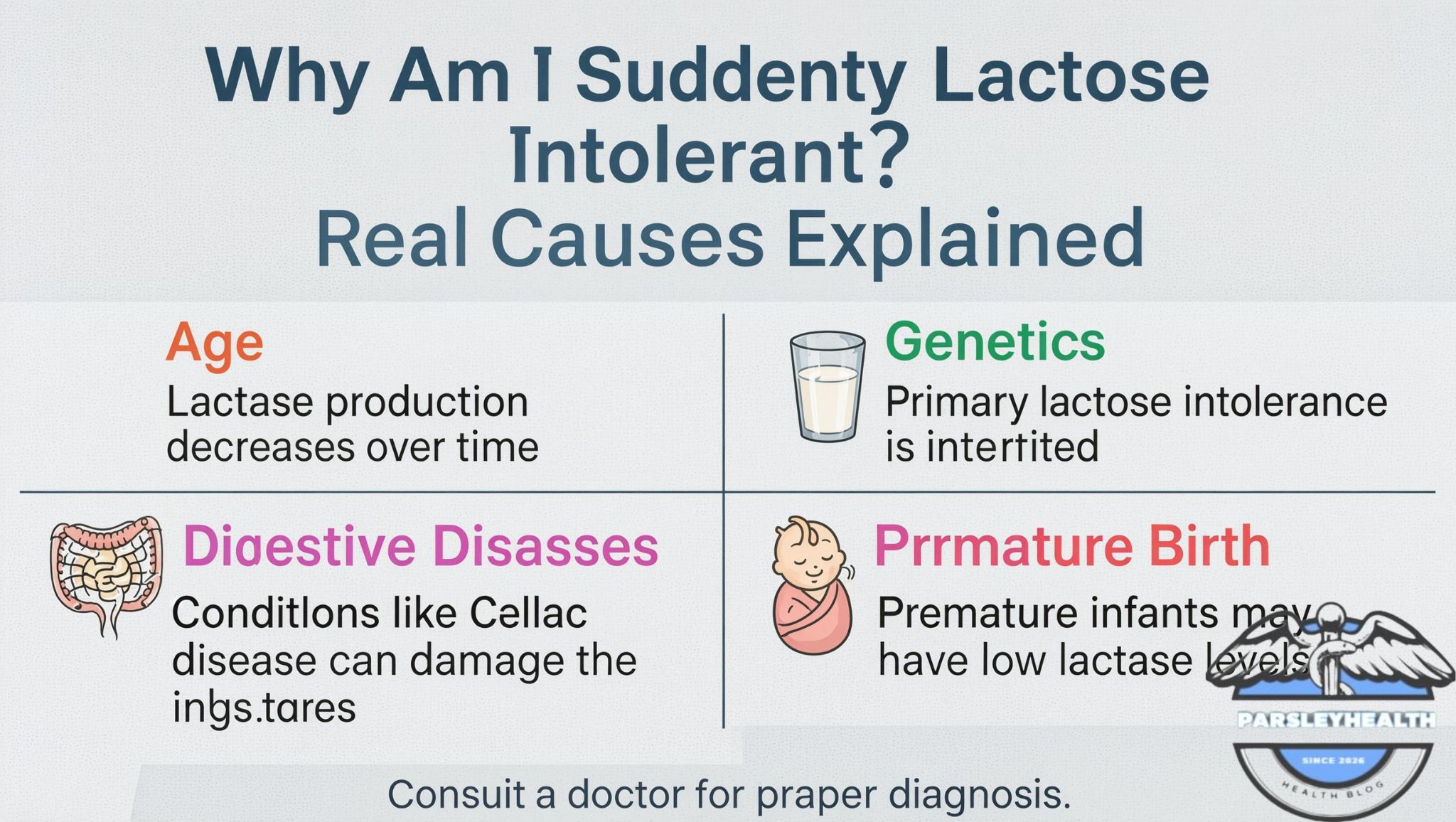
The body naturally reduces lactase production over time, especially after childhood. This is completely normal in many populations worldwide.
However, symptoms often seem “sudden” because the body may tolerate decreasing enzyme levels for years before reaching a tipping point.
Natural Aging and Lactase Decline
As humans age, lactase production commonly decreases.
This process is genetically influenced and varies between ethnic groups. In many adults, the small intestine simply stops producing high levels of lactase because milk is no longer biologically necessary after childhood.
Some people notice symptoms in:
- Their twenties
- Their thirties
- Middle age
- Even later adulthood
This is one of the most common explanations behind sudden dairy sensitivity.
Can Illness Trigger Lactose Intolerance?
Yes.
Temporary or long-term lactose intolerance can appear after illnesses affecting the digestive tract.
Stomach Infections
Viruses, food poisoning, or bacterial infections may damage the lining of the small intestine where lactase is produced.
After infections, some people temporarily struggle with dairy digestion until the gut heals. You may also read this: How Long Does Period Fatigue Last During Your Cycle?
Gastrointestinal Conditions
Certain digestive disorders can interfere with lactase production, including:
- Celiac disease
- Crohn’s disease
- Ulcerative colitis
- IBS
- Small intestinal bacterial overgrowth
Inflammation or damage to the intestinal lining may reduce the body’s ability to process lactose effectively.


The Role of Gut Health
Your gut microbiome plays a major role in digestion.
When gut bacteria become imbalanced due to:
- Stress
- Antibiotics
- Poor diet
- Illness
- Lack of sleep
digestive symptoms may become more noticeable.
Sometimes people are not truly lactose intolerant but instead experience increased gut sensitivity that makes dairy harder to tolerate.
Improving gut health may reduce symptoms in some cases.
Can Stress Make Lactose Intolerance Worse?
Absolutely.
Stress affects the gut more than most people realize.
The gut and brain are deeply connected through the gut-brain axis. Chronic stress may:
- Increase digestive sensitivity
- Speed up bowel activity
- Trigger bloating
- Worsen stomach discomfort
Someone with mild lactose intolerance may barely notice symptoms during calm periods but experience significant discomfort during stressful times.
Antibiotics and Dairy Sensitivity
Antibiotics can dramatically alter gut bacteria.
After antibiotic use, some people temporarily develop digestive issues, including:
- Bloating
- Food sensitivities
- Trouble digesting dairy
This happens because antibiotics reduce both harmful and beneficial bacteria, disrupting digestion temporarily.
Gut recovery may take weeks or months depending on:
- Antibiotic type
- Diet quality
- Overall health
Why Am I Suddenly Lactose Intolerant After Pregnancy?
Some women notice digestive changes after pregnancy.
Hormonal fluctuations, gut microbiome changes, stress, and altered digestion may all contribute to temporary or ongoing food sensitivities.
While pregnancy itself does not directly cause lactose intolerance, it may reveal digestive sensitivities that were previously unnoticed.
Symptoms of Lactose Intolerance
Symptoms usually appear within:
- 30 minutes
- To 2 hours
after consuming dairy.
Common symptoms include:
- Bloating
- Excessive gas
- Stomach pain
- Diarrhea
- Nausea
- Rumbling stomach sounds
Some people also report:
- Fatigue
- Brain fog
- General discomfort
though these symptoms are less specific.
Symptoms Can Vary by Dairy Type
Different dairy foods contain different lactose levels.
Foods higher in lactose include:
- Milk
- Soft ice cream
- Condensed milk
Foods often easier to tolerate include:
- Hard cheese
- Butter
- Greek yogurt
- Lactose-free milk
Many people can tolerate small amounts of dairy without major issues.
Is Sudden Lactose Intolerance Permanent?
Not always.
Temporary lactose intolerance can happen after:
- Illness
- Gut infections
- Antibiotic use
- Digestive inflammation
As the gut heals, lactase production may improve.
However, age-related lactose intolerance tends to be long-term.
The severity can still vary over time depending on:
- Stress
- Diet
- Gut health
- Portion sizes


6
How Lactose Intolerance Is Diagnosed
If symptoms persist, healthcare professionals may recommend testing.
Hydrogen Breath Test
This is one of the most common diagnostic tools.
After consuming lactose, elevated hydrogen levels in the breath may indicate improper lactose digestion.
Elimination Diet
Some people identify intolerance by removing dairy temporarily and monitoring symptoms carefully.
Medical Evaluation
Persistent digestive symptoms should not automatically be blamed on lactose intolerance.
Conditions like:
- IBS
- Food allergies
- Celiac disease
- Inflammatory bowel disease
can sometimes produce similar symptoms.
Foods That Commonly Trigger Symptoms
Some dairy products contain more lactose than others.
Higher-Lactose Foods
- Milk
- Milkshakes
- Ice cream
- Soft cheese
- Cream sauces
Lower-Lactose Foods
- Parmesan
- Cheddar
- Butter
- Greek yogurt
- Lactose-free dairy
Fermented dairy products may also be easier to digest because bacteria partially break down lactose.
How to Manage Lactose Intolerance
Most people do not need to eliminate dairy completely.
Management usually focuses on finding personal tolerance levels.
Try Smaller Portions
Many individuals tolerate:
- Small amounts of cheese
- Yogurt
- Dairy consumed with meals
better than large servings of milk alone.
Choose Lactose-Free Products
Lactose-free milk contains added lactase enzyme, making it easier to digest.
Today, many lactose-free options taste nearly identical to regular dairy.
Use Lactase Supplements
Over-the-counter lactase enzyme tablets may help digest lactose before consuming dairy.
Improve Overall Gut Health
Supporting digestion through:
- Fiber-rich foods
- Hydration
- Sleep
- Stress management
- Probiotic foods
may help reduce digestive discomfort overall.
Dairy Alternatives and Nutrition
If reducing dairy, it’s important to maintain nutrient intake.
Dairy provides:
- Calcium
- Protein
- Vitamin D
- Potassium
Good alternatives include:
- Fortified almond milk
- Soy milk
- Oat milk
- Coconut yogurt
- Calcium-rich leafy greens
Not all dairy-free products are equally nutritious, so label reading matters.
Can You Suddenly Become Allergic to Dairy?
Lactose intolerance and dairy allergy are different conditions.
Lactose Intolerance
- Digestive issue
- Caused by low lactase enzyme
- Usually uncomfortable but not dangerous
Dairy Allergy
- Immune system reaction
- Can cause hives, swelling, breathing difficulty
- Potentially serious
Adults can develop food allergies later in life, though this is less common than lactose intolerance.
Seek medical attention immediately if dairy causes:
- Swelling
- Wheezing
- Trouble breathing
- Severe allergic reactions
Why Some People Tolerate Cheese but Not Milk
Cheese often contains less lactose than milk because fermentation reduces lactose content.
Aged cheeses like:
- Swiss
- Parmesan
- Cheddar
may contain very small amounts of lactose.
This is why some lactose-intolerant individuals tolerate cheese surprisingly well.
The Emotional Side of Food Intolerance
Suddenly reacting to foods you love can feel frustrating and emotional.
Food is connected to:
- Comfort
- Family traditions
- Social events
- Daily routines
Many people worry they must permanently give up all dairy, but that’s not always true.
Understanding personal tolerance levels often allows for more flexibility than expected.
Why Am I Suddenly Lactose Intolerant Even if Tests Are Normal?
Sometimes digestive symptoms persist even when lactose intolerance tests appear normal.
Possible explanations include:
- IBS
- Food sensitivities
- Stress-related digestion issues
- Gut microbiome imbalances
- Sensitivity to dairy proteins rather than lactose
This is why individualized evaluation matters.
FAQ
Frequently Asked Questions
Can lactose intolerance appear overnight?
Symptoms may seem sudden, but lactase decline usually happens gradually over time.
Why can I eat cheese but not drink milk?
Cheese often contains less lactose, especially aged varieties.
Can stress cause lactose intolerance?
Stress does not directly cause it, but it can worsen digestive sensitivity and symptoms.
Is lactose intolerance dangerous?
It is usually not dangerous, though symptoms can be uncomfortable.
Can probiotics help lactose intolerance?
Certain probiotics may support digestion and improve lactose tolerance in some people.
Does lactose intolerance get worse with age?
For many people, lactase production continues declining over time.
Can children suddenly become lactose intolerant?
Yes, especially after stomach infections or digestive illnesses.
Are lactose-free products healthy?
Most lactose-free dairy products provide similar nutrients as regular dairy.
Is dairy allergy the same as lactose intolerance?
No. Dairy allergy involves the immune system, while lactose intolerance is a digestive enzyme issue.
Can lactose intolerance go away?
Temporary cases caused by illness or gut irritation sometimes improve after healing.
Conclusion
If you’ve been asking yourself why am i suddenly lactose intolerant, you’re far from alone. Sudden digestive changes around dairy are incredibly common and often linked to aging, gut health shifts, illness, stress, or temporary digestive disruption.
The encouraging part is that lactose intolerance rarely means your digestive system is “broken.” Many people successfully manage symptoms by adjusting portion sizes, choosing lower-lactose foods, improving gut health, or using lactose-free products.
Instead of fearing dairy completely, it’s often more helpful to understand your body’s personal tolerance levels. Paying attention to patterns, supporting digestion, and seeking medical guidance when necessary can help you feel more comfortable and confident about your food choices again.