Modern life keeps many people stuck in survival mode. Constant notifications, work pressure, poor sleep, emotional stress, and overstimulation can leave the body feeling tense, exhausted, and mentally drained. That’s why more people are searching for the best exercises for nervous system support rather than focusing only on calories burned or muscle growth.
Your nervous system controls nearly everything your body does—from breathing and heart rate to stress responses, recovery, focus, and emotional regulation. When it becomes overwhelmed, the effects can show up as anxiety, fatigue, brain fog, muscle tension, irritability, or difficulty sleeping.
The good news is that movement can help regulate the nervous system in powerful ways. Certain exercises encourage the body to shift out of chronic stress mode and into a calmer, more balanced state. Instead of exhausting the body further, these activities help improve resilience, recovery, and overall well-being.
Understanding how movement affects the nervous system can completely change the way you approach fitness, stress management, and long-term health.


Understanding the Nervous System
The nervous system is the body’s communication network. It controls:
- Movement
- Emotions
- Stress responses
- Sleep
- Heart rate
- Digestion
- Focus
- Recovery
It consists of two major branches:
- Central nervous system
- Peripheral nervous system
Within the autonomic nervous system are two important states:
- Sympathetic nervous system
- Parasympathetic nervous system
Sympathetic Nervous System
This is often called the “fight or flight” response.
It prepares the body for action by:
- Increasing heart rate
- Releasing stress hormones
- Heightening alertness
Short-term activation is healthy, but chronic activation may lead to:
- Anxiety
- Burnout
- Fatigue
- Sleep problems
- Muscle tension
Parasympathetic Nervous System
This is the “rest and digest” state.
It helps the body:
- Relax
- Recover
- Digest food
- Lower stress hormones
- Restore balance
Many nervous system exercises aim to strengthen parasympathetic activation. You may read this: How to Get Rid of Candida Naturally and Safely Fast.
Why Exercise Matters for Nervous System Health
Movement affects both the body and brain.
The right forms of exercise may:
- Lower stress hormones
- Improve circulation
- Support neurotransmitter balance
- Increase resilience to stress
- Improve sleep quality
- Reduce anxiety symptoms
However, not all exercise affects the nervous system equally.
Excessive high-intensity training without recovery may overstimulate the nervous system, especially in already stressed individuals.
That’s why balance matters.
Best Exercises for Nervous System Regulation
Some exercises calm the nervous system directly, while others build resilience over time.
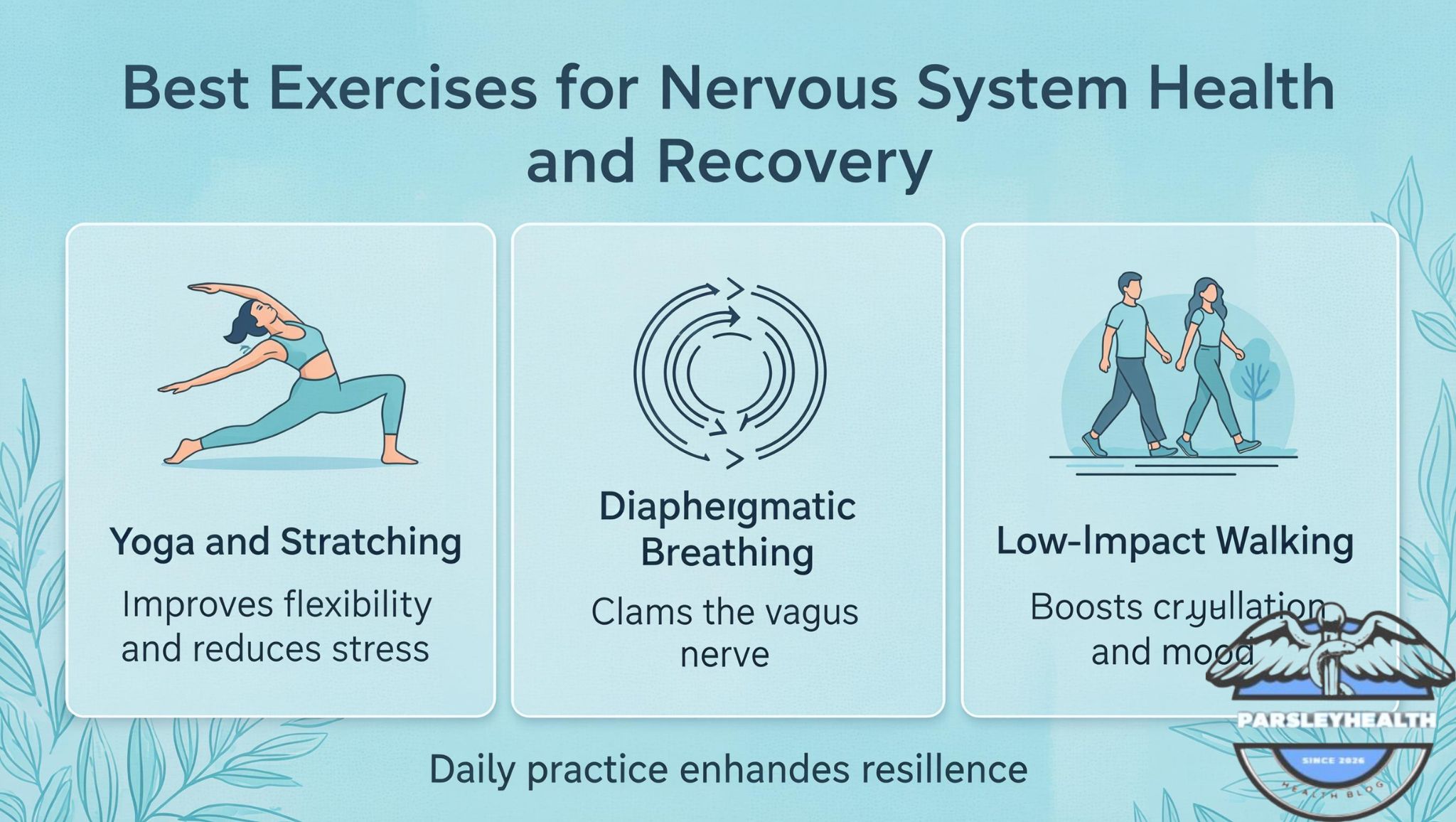
Walking
Walking is one of the simplest yet most effective nervous system exercises.
Benefits may include:
- Reduced cortisol
- Improved mood
- Better circulation
- Gentle nervous system stimulation
Outdoor walking can be especially calming because exposure to sunlight and nature supports mental regulation.
Slow Strength Training
Heavy, exhausting workouts can sometimes overstress the body.
Controlled resistance training with:
- Proper breathing
- Moderate intensity
- Adequate rest
may help improve nervous system resilience without overwhelming recovery systems.
Swimming
Swimming combines rhythmic movement with controlled breathing, making it highly calming for many people.
Water also creates a soothing sensory environment that may reduce stress responses.


Breathwork and the Nervous System
Breathing patterns strongly influence nervous system activity.
Shallow, rapid breathing often signals stress to the brain, while slow breathing encourages relaxation.
Diaphragmatic Breathing
Also called belly breathing, this technique involves:
- Slow inhalation through the nose
- Deep expansion of the abdomen
- Controlled exhalation
This may activate the vagus nerve and encourage parasympathetic activity.
Box Breathing
This technique involves:
- Inhale for 4 seconds
- Hold for 4 seconds
- Exhale for 4 seconds
- Hold for 4 seconds
Box breathing is commonly used for stress regulation and mental focus.
Extended Exhalation Breathing
Longer exhalations may calm the nervous system by signaling safety to the brain.
For example:
- Inhale for 4 seconds
- Exhale for 6–8 seconds
Yoga and Nervous System Balance
Yoga combines:
- Movement
- Breathing
- Body awareness
- Relaxation
making it one of the most effective practices for nervous system support.
Restorative Yoga
Restorative yoga focuses on gentle positions held for extended periods with support from props.
This style emphasizes:
- Relaxation
- Stillness
- Recovery
rather than intense stretching.
Yin Yoga
Yin yoga targets deeper connective tissues through slow, sustained holds.
Many people find it deeply calming for both the body and mind.
Vinyasa Yoga
More active yoga styles may also help regulate stress while improving mobility and circulation.
The best style depends on your current energy levels and stress state.
Mobility Exercises and Nervous System Health
Mobility work improves movement quality while helping reduce physical tension.
Gentle mobility exercises may support:
- Better posture
- Reduced muscle guarding
- Improved circulation
- Relaxation
Helpful Mobility Practices
- Cat-cow stretches
- Hip openers
- Thoracic spine rotations
- Neck mobility drills
- Shoulder rolls
Slow, controlled movement is key.
Best Exercises for Nervous System Recovery
Recovery-focused movement is especially important for people dealing with:
- Chronic stress
- Burnout
- Anxiety
- Overtraining
- Sleep problems
Tai Chi
Tai chi combines flowing movement with deep breathing and mindfulness.
Research suggests it may help:
- Reduce stress
- Improve balance
- Support relaxation
- Enhance mental clarity
Qigong
Qigong focuses on gentle movement, breath control, and energy awareness.
Many people describe it as meditative movement.
Stretching
Gentle stretching may help release muscle tension connected to chronic stress responses.


Overtraining and Nervous System Fatigue
Too much intense exercise without recovery may overload the nervous system.
Signs of Nervous System Overload
- Constant fatigue
- Poor sleep
- Elevated resting heart rate
- Irritability
- Low motivation
- Anxiety
- Reduced performance
Recovery is not weakness. It’s an essential part of nervous system health.
The Connection Between Exercise and the Vagus Nerve
The vagus nerve plays a major role in regulating:
- Heart rate
- Digestion
- Relaxation
- Emotional balance
Certain exercises may stimulate vagal tone, helping the body recover from stress more effectively.
Activities That May Support Vagal Tone
- Deep breathing
- Singing
- Humming
- Yoga
- Meditation
- Slow movement
Improved vagal tone is associated with better stress resilience.
Sleep and Nervous System Recovery
Even the best exercises cannot fully compensate for poor sleep.
Sleep is when the nervous system:
- Repairs itself
- Consolidates memory
- Balances hormones
- Reduces stress chemicals
Movement supports sleep quality, while good sleep improves exercise recovery.
Nutrition and Nervous System Function
Exercise works best when paired with supportive nutrition.
Nutrients Important for Nervous System Health
- Magnesium
- Omega-3 fatty acids
- B vitamins
- Protein
- Potassium
Foods That May Support Recovery
- Salmon
- Nuts
- Avocados
- Leafy greens
- Eggs
- Berries
- Oats
Chronic under-eating or restrictive diets may worsen nervous system stress.
Can Cardio Help the Nervous System?
Moderate cardio may improve:
- Mood
- Stress tolerance
- Brain function
- Endorphin release
However, excessive high-intensity cardio can sometimes increase stress responses in already overwhelmed individuals.
Balance and recovery matter more than intensity alone.
Mind-Body Awareness During Exercise
Many people exercise while disconnected from their bodies.
Nervous system-focused movement encourages:
- Awareness
- Controlled breathing
- Mindful pacing
- Reduced overstimulation
This shift often creates a healthier relationship with exercise overall.
Cold Exposure and Nervous System Training
Cold exposure practices like cold showers may influence nervous system resilience.
Potential benefits may include:
- Increased alertness
- Improved stress adaptation
- Enhanced circulation
However, cold exposure can also stress the body if overused.
People with chronic stress or anxiety may need gentler approaches first.
Best Exercises for Nervous System Support During Anxiety
When anxiety levels are high, overly intense exercise may feel overwhelming.
Helpful options often include:
- Walking
- Breathwork
- Yoga
- Stretching
- Swimming
- Tai chi
Gentle rhythmic movement tends to feel safer and more regulating for the body.
Building a Nervous System-Friendly Exercise Routine
A balanced routine often includes:
- Strength training
- Gentle cardio
- Recovery days
- Breathwork
- Mobility work
The goal is not constant exhaustion.
The healthiest routines support both performance and recovery.
Signs Your Nervous System Is Becoming More Balanced
As regulation improves, many people notice:
- Better sleep
- Improved mood
- Faster recovery
- Reduced anxiety
- More stable energy
- Better concentration
These changes often happen gradually rather than overnight.
FAQ
Frequently Asked Questions
What exercise is best for calming the nervous system?
Gentle exercises like walking, yoga, breathwork, and tai chi are commonly used to support relaxation.
Can exercise reduce anxiety?
Yes. Regular movement may help lower stress hormones and improve emotional regulation.
Is intense exercise bad for the nervous system?
Not necessarily, but excessive high-intensity exercise without recovery may contribute to nervous system overload.
How often should I exercise for nervous system health?
Consistency matters more than intensity. Moderate movement several times weekly is often beneficial.
Can breathing exercises calm the nervous system quickly?
Slow breathing techniques may help activate the parasympathetic nervous system and reduce stress responses.
Does yoga help regulate the nervous system?
Yes. Yoga combines movement, breathing, and mindfulness, which may support nervous system balance.
What are signs of nervous system fatigue?
Common signs include exhaustion, poor sleep, anxiety, irritability, and reduced exercise recovery.
Is walking good for stress recovery?
Absolutely. Walking is one of the simplest and most accessible ways to support nervous system regulation.
Can stretching reduce stress?
Gentle stretching may help release muscle tension associated with chronic stress.
Does sleep affect nervous system recovery?
Yes. Quality sleep is essential for nervous system repair and overall resilience.
Conclusion
Finding the best exercises for nervous system support is less about pushing harder and more about learning how to work with your body instead of against it. While intense workouts have their place, nervous system health often improves most through balance, recovery, mindful movement, and consistent stress regulation practices.
Walking, yoga, breathwork, swimming, tai chi, mobility exercises, and restorative movement all offer unique ways to calm the body and strengthen resilience over time. The key is choosing activities that leave you feeling more grounded, energized, and emotionally steady rather than constantly depleted.
Your nervous system affects nearly every aspect of your well-being. Supporting it through intentional movement can improve not only physical health, but also sleep, mood, focus, energy, and overall quality of life.