After a weekend full of desserts, soda, snacks, or late-night cravings, many people wake up feeling sluggish, bloated, foggy, and frustrated. That uncomfortable feeling often leads to one big question: how long does it take for sugar to get out of your system?
The answer is more complicated than most people expect. Sugar itself moves through the bloodstream relatively quickly, but the effects of high sugar intake on energy, insulin, cravings, inflammation, and mood can linger much longer depending on your diet, metabolism, activity level, and overall health.
For some people, symptoms improve within hours after cutting back on sugar. Others may notice cravings, fatigue, or energy crashes lasting several days or even weeks as the body adjusts. The process is influenced by everything from hydration and sleep to stress levels and insulin sensitivity.
Understanding how the body processes sugar can help you make healthier choices without falling into extreme “detox” trends or unrealistic promises. The body already has powerful systems designed to regulate blood sugar naturally—it just needs the right support.


6
How the Body Processes Sugar
Sugar is a carbohydrate that the body converts into glucose for energy.
When you eat sugary foods or refined carbohydrates:
- Digestion breaks them down into glucose
- Glucose enters the bloodstream
- Insulin helps move glucose into cells for energy
The body constantly works to maintain stable blood sugar levels.
What Happens After Eating Sugar?
After consuming sugar:
- Blood glucose rises
- Insulin is released
- Cells absorb glucose
- Excess sugar may be stored as glycogen or fat
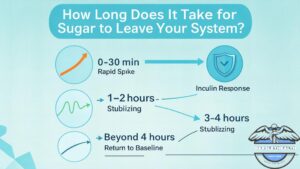
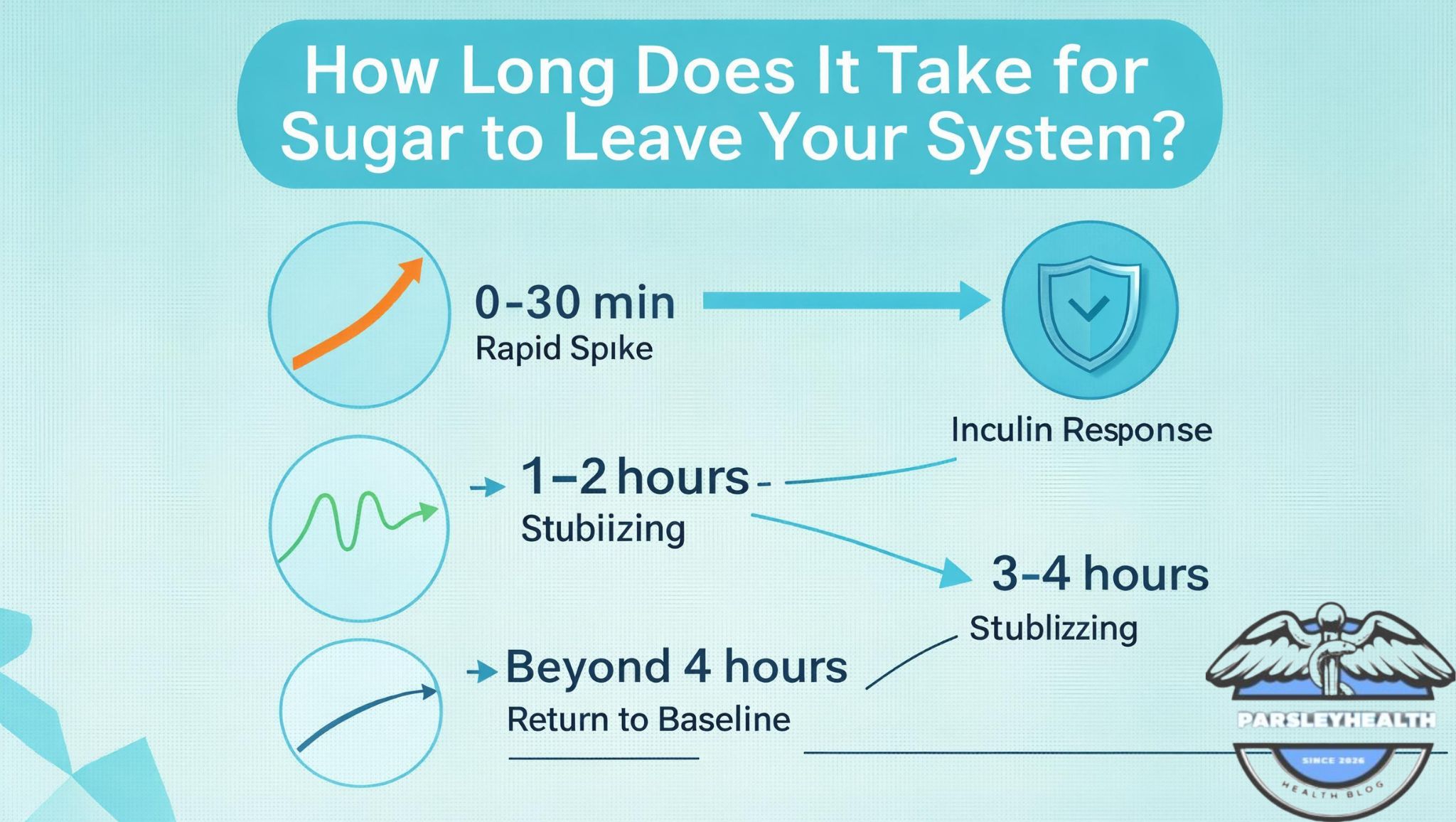
In healthy individuals, blood sugar levels often return closer to normal within:
- 2 to 4 hours
depending on:
- Meal composition
- Activity level
- Metabolism
How Long Does It Take for Sugar to Get Out of Your System Completely?
Technically, sugar does not simply “sit” in the body indefinitely.
The bloodstream processes glucose relatively quickly. However, the broader effects of excessive sugar intake may last much longer.
Short-Term Sugar Processing
For most healthy individuals:
- Blood sugar spikes may stabilize within several hours
- Insulin helps regulate glucose fairly quickly
Longer-Term Effects
Symptoms related to high sugar intake may linger for:
- Days
- Weeks
- Or longer
especially if someone regularly consumes large amounts of sugar.
These effects may include:
- Cravings
- Fatigue
- Brain fog
- Mood swings
- Energy crashes
Factors That Affect Sugar Metabolism
Not everyone processes sugar the same way.
Several factors influence how quickly the body regulates glucose.
Insulin Sensitivity
People with good insulin sensitivity generally process sugar more efficiently.
Insulin resistance may slow glucose regulation and lead to prolonged blood sugar elevation.
Physical Activity
Exercise helps muscles use glucose for energy.
Even light movement after meals may improve blood sugar control.
Meal Composition
Sugar eaten alone often causes faster spikes.
Pairing carbohydrates with:
- Protein
- Fiber
- Healthy fats
may slow glucose absorption. You may read this: Why Does Melatonin Not Work For Me? Reasons and Fixes Guide.


Sugar Crashes and Energy Swings
Many people notice energy crashes after consuming large amounts of sugar.
Why Sugar Crashes Happen
Rapid spikes in blood glucose may be followed by:
- Increased insulin release
- Sudden blood sugar drops
- Fatigue
- Irritability
- Hunger
This cycle can create repeated cravings and unstable energy levels.
Sugar Withdrawal Symptoms
When people dramatically reduce sugar intake, temporary symptoms sometimes appear.
Common Symptoms
- Headaches
- Fatigue
- Mood swings
- Cravings
- Irritability
- Brain fog
These symptoms are usually temporary and often improve within:
- Several days
- To two weeks
depending on previous sugar intake habits.
How Long Do Sugar Cravings Last?
Sugar cravings vary between individuals.
For many people:
- Strong cravings peak during the first few days
- Cravings gradually improve after 1–2 weeks
The brain’s reward system adapts over time, especially when dietary habits become more balanced.
Why Sugar Feels Addictive
Sugary foods stimulate dopamine release in the brain, creating pleasurable feelings.
Frequent exposure may reinforce:
- Habitual eating
- Emotional eating
- Craving cycles
The Connection Between Sugar and Insulin
Insulin is the hormone responsible for moving glucose from the bloodstream into cells.
Chronically high sugar intake may contribute to:
- Insulin resistance
- Increased fat storage
- Energy instability
- Metabolic stress
Balancing blood sugar is not just about avoiding sweets—it’s about supporting long-term metabolic health.
How Hydration Supports Blood Sugar Regulation
Water plays an important role in glucose balance.
Proper hydration supports:
- Kidney function
- Circulation
- Metabolic processes
Dehydration may worsen fatigue and increase feelings of sluggishness after excessive sugar intake.
Helpful Hydration Habits
- Drinking water consistently
- Limiting sugary beverages
- Including electrolyte-rich foods
Exercise and Sugar Metabolism
Movement is one of the fastest ways to help the body use excess glucose.
Helpful Activities
- Walking after meals
- Strength training
- Cycling
- Swimming
- Moderate cardio
Muscles absorb glucose efficiently during activity, helping stabilize blood sugar levels.


4
Sleep and Blood Sugar Balance
Poor sleep affects:
- Insulin sensitivity
- Hunger hormones
- Cravings
- Stress hormones
Even short-term sleep deprivation may increase cravings for:
- Sugary foods
- Refined carbohydrates
- High-calorie snacks
Improving sleep quality may significantly help blood sugar regulation.
Foods That Support Stable Blood Sugar
Balanced meals can reduce energy crashes and cravings.
Helpful Foods
- Eggs
- Oats
- Greek yogurt
- Nuts
- Vegetables
- Legumes
- Lean proteins
- Berries
Nutrients That Matter
- Fiber
- Protein
- Healthy fats
- Magnesium
These nutrients help slow digestion and improve satiety.
Does Sugar Turn Into Fat Immediately?
Not instantly.
The body first uses glucose for:
- Immediate energy
- Glycogen storage
Excess calories consumed consistently over time may contribute to fat storage.
Overall dietary patterns matter more than a single sugary meal.
Sugar and Inflammation
High sugar intake may contribute to inflammation in some individuals.
Potential effects include:
- Joint discomfort
- Fatigue
- Skin issues
- Digestive symptoms
Reducing excessive added sugar may improve overall well-being for many people.
Artificial Sweeteners and Cravings
Some people replace sugar with artificial sweeteners to reduce calorie intake.
Responses vary.
Some individuals find sweeteners helpful, while others notice:
- Continued cravings
- Digestive discomfort
- Increased desire for sweets
Moderation and individual awareness are important.
How Long Does It Take for Sugar to Get Out of Your System After a Binge?
After a large sugar-heavy meal or binge:
- Blood sugar often stabilizes within several hours
- Symptoms like fatigue or bloating may last longer
Recovery depends on:
- Hydration
- Sleep
- Activity
- Overall metabolic health
A single high-sugar day does not permanently damage the body.
The Emotional Side of Sugar Consumption
Many people feel guilt or anxiety after eating too much sugar.
This emotional stress can worsen unhealthy eating patterns.
Balanced nutrition works better long term than:
- Extreme restriction
- Shame
- “Detox punishment”
Sustainable habits matter more than perfection.
Is a Sugar Detox Necessary?
The body naturally regulates and processes glucose continuously.
Extreme detoxes are usually unnecessary.
Instead of aggressive cleansing programs, healthier strategies include:
- Eating balanced meals
- Staying active
- Sleeping well
- Reducing excess added sugar gradually
Signs Blood Sugar May Be Improving
As blood sugar stabilizes, many people notice:
- More stable energy
- Reduced cravings
- Better focus
- Improved mood
- Less afternoon fatigue
These improvements often happen gradually over time.
Can You Speed Up Sugar Removal?
You cannot instantly “flush out” sugar, but supportive habits may help regulate blood sugar more effectively.
Helpful Strategies
- Hydration
- Walking after meals
- Balanced meals
- Better sleep
- Stress management
Quick-fix detox products are rarely necessary.
When to See a Doctor
Medical evaluation is important if you experience:
- Extreme thirst
- Frequent urination
- Persistent fatigue
- Blurred vision
- Significant blood sugar issues
These symptoms may indicate:
- Prediabetes
- Diabetes
- Metabolic conditions
Common Myths About Sugar Detox
“Sugar Stays in Your Body for Weeks”
Blood glucose itself is processed relatively quickly.
“You Must Eliminate All Sugar Forever”
Balanced nutrition is usually more sustainable than extreme restriction.
“Fruit Is the Same as Candy”
Whole fruits contain:
- Fiber
- Water
- Nutrients
which affect the body differently than heavily processed sugary foods.
FAQ
Frequently Asked Questions
How long does sugar stay in your bloodstream?
For many healthy individuals, blood sugar levels begin stabilizing within a few hours after eating.
Can drinking water flush out sugar?
Hydration supports normal body function, but it does not instantly remove sugar.
How long do sugar cravings last?
Cravings often improve within several days to two weeks after reducing sugar intake.
Does exercise help lower blood sugar faster?
Yes. Physical activity helps muscles use glucose for energy.
Can too much sugar cause fatigue?
Yes. Blood sugar spikes and crashes may contribute to energy swings.
Is fruit sugar unhealthy?
Whole fruit contains fiber and nutrients that slow sugar absorption.
What foods help stabilize blood sugar?
Protein, fiber-rich foods, healthy fats, and minimally processed carbohydrates may help.
Can poor sleep affect sugar cravings?
Absolutely. Sleep deprivation may increase cravings and appetite hormones.
Is a sugar detox necessary?
Extreme detoxes are usually unnecessary because the body naturally regulates glucose.
When should I worry about blood sugar problems?
Persistent symptoms like excessive thirst, fatigue, or frequent urination should be medically evaluated.
Conclusion
If you’ve been wondering how long does it take for sugar to get out of your system, the answer depends on what you mean by “out of your system.” Blood glucose itself is processed relatively quickly, often within hours, but the effects of excessive sugar intake on cravings, energy, mood, and metabolism may linger much longer depending on your lifestyle and overall health.
The body already has sophisticated systems designed to regulate blood sugar naturally. Supporting those systems through balanced nutrition, hydration, movement, stress management, and sleep is usually far more effective than extreme detoxes or restrictive cleanses.
Most importantly, one sugary meal or difficult weekend does not define your health. Consistent habits—not perfection—have the greatest impact on long-term energy, metabolic balance, and overall wellness.