Skin can be surprisingly dramatic. One minute everything looks normal, and the next you notice red bumps, itchy patches, swelling, or blotchy marks that make you wonder what on earth is going on.
That is why understanding hives vs rash matters. The two can look similar at first glance, but they often behave differently, come from different triggers, and may need different kinds of care.
Sometimes the answer is simple: a new detergent, a bug bite, heat, stress, or a mild allergic reaction. Other times, a skin change can be your body’s way of waving a little red flag. Knowing what to look for can help you respond calmly instead of guessing.
What Is a Rash?
A rash is a broad word for a visible change in the skin. It may appear as redness, bumps, scaling, dryness, blisters, swelling, peeling, or patches that feel itchy, sore, warm, or tender. Cleveland Clinic notes that rashes can be caused by irritants, allergens, infections, and conditions such as eczema, psoriasis, and hives.
In other words, “rash” is not one single diagnosis. It is more like an umbrella term. Many different skin problems can show up as a rash, which is why the details matter: where it appears, how it feels, how fast it spreads, and whether it comes with other symptoms.
A rash may be mild and short-lived, or it may linger for days or weeks. Some rashes are dry and flaky. Others are wet, blistered, crusted, painful, or intensely itchy. Some stay in one area, while others spread across the body.
Common examples include contact dermatitis, eczema flare-ups, heat rash, fungal infections, viral rashes, psoriasis, insect bite reactions, and medication-related eruptions. Because so many conditions fit under the word “rash,” the pattern and timing often give the best clues.
What Are Hives?
Hives, also called urticaria, are raised, itchy welts or bumps that appear on the skin and often come and go quickly. The American Academy of Dermatology describes hives as intensely itchy bumps and patches; on darker skin tones, they may blend more closely with natural skin color and be harder to notice.
A key feature of hives is movement. A hive may appear in one spot, fade, and then show up somewhere else. Individual welts often last minutes to hours, though outbreaks can continue longer depending on the trigger.
Hives can be small like mosquito bites or large enough to merge into wide, swollen patches. They may look red, pink, pale, skin-colored, or slightly darker than surrounding skin, depending on skin tone and inflammation.
Cleveland Clinic explains that hives may be triggered by allergies, stress, heat, cold, sweat, pressure, infections, and other factors. They are often itchy, but some people describe a burning or stinging feeling too.
Hives vs Rash: The Main Difference
The easiest way to understand hives vs rash is this: hives are a specific type of rash, but not every rash is hives.
Hives are usually raised, itchy welts that appear suddenly and fade or move within hours. A general rash may stay in the same place, look scaly or dry, blister, crust, burn, peel, or develop slowly over time. You may read this: Gastro Health: Complete Guide to Better Digestive Wellness.
How Hives Usually Behave
Hives often have a sudden start. You may feel itchy first, then notice raised welts that seem to appear out of nowhere. The edges may be rounded or irregular, and the center can look lighter than the outside.
Another classic clue is that the marks change location. You might see them on your arm at breakfast, then on your back in the afternoon, with the original spots fading.
DermNet describes urticaria as very itchy wheals that can last from a few minutes to 24 hours. That “here now, gone later” pattern is one of the biggest hints that the bumps are hives.
How Other Rashes Usually Behave
Many rashes do not move around so quickly. They may stay in the same area and gradually get worse or better. A rash from poison ivy, for example, may form itchy streaks or blisters where the plant oil touched the skin.
Eczema may create dry, rough, inflamed patches that return in familiar areas. A fungal rash may form a ring-like border. A viral rash may appear with fever, fatigue, sore throat, or body aches.
So while hives often act like a fast-moving reaction, many other rashes behave more like a local skin problem or an illness-related symptom.
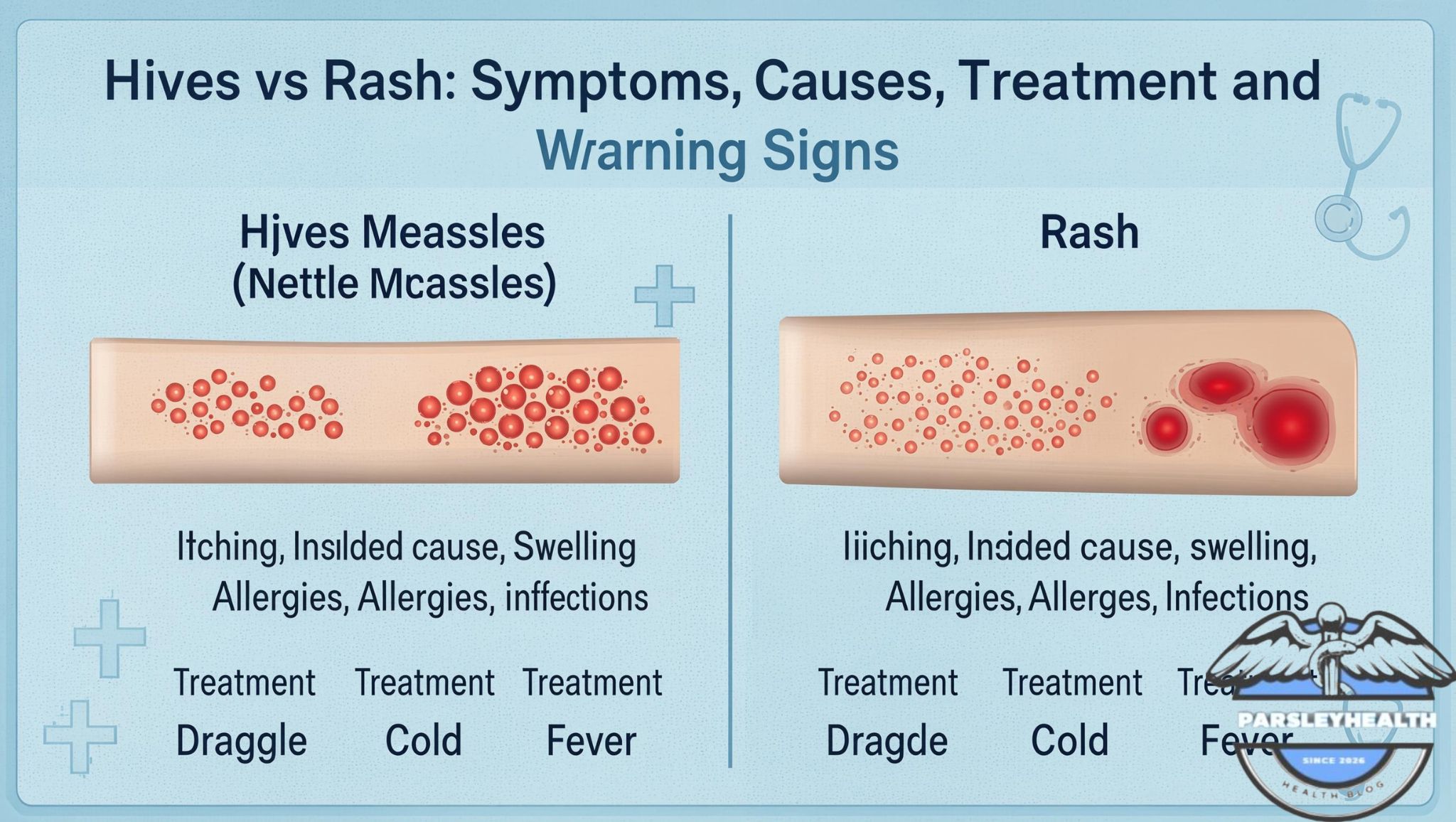
![Image: Side-by-side educational comparison showing raised welts on one side and a flat irritated rash on the other.]
Common Symptoms to Compare
Looking closely at symptoms can make the difference easier to spot. You do not need to diagnose yourself perfectly, but these clues can help you decide what to do next.
Itching
Both hives and rashes can itch. Hives, however, are often intensely itchy and may feel almost impossible to ignore. The itch can be widespread, sudden, and restless.
Other rashes may itch too, but the sensation can vary. Eczema often feels dry and itchy. Contact dermatitis may burn and itch. Fungal rashes may itch around the edges. Shingles may feel painful, tingling, or burning more than itchy.
Shape and Texture
Hives usually look raised and puffy, like welts. They may have smooth surfaces and soft swelling. Pressing on them may make them briefly turn pale.
Other rashes may be flat, rough, scaly, cracked, blistered, crusted, or dotted with tiny bumps. Texture is an important clue because dry scaling or crusting is less typical of ordinary hives.
Timing
Timing is one of the strongest clues. Hives often appear quickly and may fade within hours. A regular rash may take longer to develop and may remain in the same spot for days.
If the same exact mark stays for several days, becomes scaly, oozes, or forms a crust, it may be something other than simple hives.
Location
Hives can appear almost anywhere, including the face, trunk, arms, legs, hands, or feet. They may also occur with deeper swelling called angioedema, often around the lips, eyelids, hands, feet, or throat area.
Other rashes often have location patterns. Athlete’s foot affects the feet. Diaper rash affects the diaper area. Contact dermatitis appears where something touched the skin. Eczema commonly affects skin folds, hands, face, neck, or behind the knees.
Common Causes of Hives
Hives happen when the skin releases chemicals such as histamine, leading to itching, redness, and swelling. Sometimes the cause is obvious. Other times, it remains a mystery.
Common triggers include:
- Foods such as shellfish, nuts, eggs, or certain fruits
- Medications, including antibiotics and pain relievers
- Insect stings or bites
- Viral or bacterial infections
- Heat, cold, sweat, pressure, or sunlight
- Stress or emotional strain
- Exercise
- Latex or other contact allergens
The American Academy of Allergy, Asthma & Immunology notes that hives can occur with or without angioedema and may be acute or chronic.
Acute hives last less than six weeks. Chronic hives last six weeks or longer, often recurring without a clear trigger. Chronic hives can be frustrating because they may come and go unpredictably.
Common Causes of Rashes
A rash can come from many different sources. Some are external, such as a product touching the skin. Others come from inside the body, such as infection, inflammation, or immune system activity.
Irritant Contact Dermatitis
This happens when something directly irritates the skin. Common culprits include harsh soaps, cleaning products, fragrances, solvents, hand sanitizers, and detergents.
The rash may burn, sting, crack, or peel. It often appears exactly where the irritant touched the skin.
Allergic Contact Dermatitis
This is an immune reaction to something your skin has become sensitive to. Poison ivy, nickel jewelry, fragrances, hair dye, rubber, and certain preservatives can trigger it.
Unlike hives, allergic contact dermatitis may take hours or days to appear. It can form itchy, blistered, swollen, or weeping patches.
Eczema
Eczema, or atopic dermatitis, is a chronic inflammatory skin condition that often causes dry, itchy, irritated patches. Cleveland Clinic lists symptoms such as dry or cracked skin, itchiness, discoloration, small fluid-filled bumps, crusting, and swelling.
Eczema can flare when the skin barrier is irritated by weather changes, sweat, stress, soaps, allergens, or dryness.
Infections
Bacterial, viral, and fungal infections can all cause rashes. Ringworm, chickenpox, shingles, impetigo, hand-foot-and-mouth disease, and yeast infections are examples.
Infectious rashes may come with fever, pain, spreading redness, pus, blisters, swollen glands, or feeling generally unwell.
Heat and Sweat
Heat rash happens when sweat ducts become blocked, causing tiny bumps, prickling, or itchy irritation. It often appears in hot, humid weather or under tight clothing.
This can be confused with hives because both may flare with heat or sweat, but heat rash usually looks like small clustered bumps rather than large moving welts.
![Image: Infographic showing key differences between hives, contact rash, eczema, heat rash, and infection-related rash.]
When Skin Color Changes the Appearance
Skin symptoms do not look exactly the same on every skin tone. Redness may be obvious on lighter skin, but on brown or Black skin, inflammation may look purple, gray, dark brown, ashy, or close to the surrounding skin color.
This matters because hives and rashes may be missed or underestimated when redness is less visible. Instead of relying only on color, pay attention to swelling, texture, warmth, itching, pain, and whether the affected area feels different from nearby skin.
For hives, raised welts may be easier to feel than see. Running your fingers gently over the area may reveal soft, swollen patches.
Hives vs Rash in Allergic Reactions
Allergies can cause both hives and other types of rashes, which is one reason people get confused.
A food allergy, medication allergy, or insect sting allergy may cause sudden hives. These can appear within minutes to a few hours. They may come with swelling, flushing, stomach upset, wheezing, dizziness, or throat tightness.
An allergic skin rash from contact, such as poison ivy or nickel, usually appears where the skin touched the allergen. It may develop more slowly and last longer.
Watch for Emergency Symptoms
Get urgent medical help if hives or a rash appear with trouble breathing, swelling of the lips or tongue, throat tightness, dizziness, fainting, confusion, chest tightness, or repeated vomiting. These can be signs of a serious allergic reaction.
Hives with facial or throat swelling should be taken seriously, especially if symptoms are progressing quickly.
How Doctors Tell the Difference
A clinician usually starts with your story. When did it begin? What did it look like at first? Did it move? Did anything new touch your skin? Did you eat a new food or take a new medication? Were you sick recently?
They may ask about:
- New foods, supplements, or medicines
- Recent infections
- New skincare, laundry, or cleaning products
- Outdoor exposure
- Pets, plants, or insects
- Travel
- Work or hobby exposures
- Family history of skin conditions
- Fever, pain, swelling, or breathing symptoms
For hives, diagnosis is often based on appearance and timing. For other rashes, testing may be needed. This could include a skin scraping, patch testing, allergy testing, blood tests, bacterial culture, or sometimes a skin biopsy.
Treatment Options for Hives
Treatment depends on severity, duration, and trigger. For mild hives, avoiding the trigger and easing itching may be enough.
Antihistamines
Antihistamines are commonly used to reduce itching and swelling from hives. The American Academy of Dermatology says antihistamines often effectively treat hives, though some people need additional treatment.
Non-drowsy options are often preferred during the day, while some older antihistamines may cause sleepiness. Always follow label directions or a clinician’s advice, especially for children, pregnancy, older adults, or people taking other medicines.
Cool Compresses
A cool compress can calm itching and swelling. Use a soft cloth with cool water and apply it for 10 to 15 minutes at a time.
Avoid very hot showers, scratching, tight clothing, and overheating, as these can make hives worse.
Trigger Avoidance
If you suspect a trigger, write it down. Include foods, medications, activities, weather, stress, infections, and products used that day.
A simple symptom diary can help identify patterns, especially when hives keep returning.
Medical Treatment for Persistent Hives
Chronic or severe hives may need prescription treatment. Dermatologists or allergists may adjust antihistamine dosing or consider other therapies. AAD notes that medications such as omalizumab may be used in some cases when antihistamines are not enough.
Treatment Options for Other Rashes
Rash treatment depends heavily on the cause. The wrong treatment can sometimes make things worse, especially with infections or steroid-sensitive conditions.
For Irritation
If the rash seems linked to a product, stop using it. Wash the area gently with mild soap and water, then apply a fragrance-free moisturizer.
Avoid scrubbing. Irritated skin needs calm, not more friction.
For Dry or Eczema-Prone Skin
Use thick, fragrance-free moisturizers. Short, lukewarm showers are usually better than long, hot ones. Gentle cleansers can help protect the skin barrier.
A clinician may recommend topical corticosteroids or other anti-inflammatory creams for eczema flares.
For Fungal Rashes
Fungal rashes often need antifungal treatment, not steroid cream alone. Steroids may temporarily reduce redness but can allow fungus to spread.
A ring-shaped rash, scaling between toes, or rash in warm moist folds may point toward fungus.
For Infection Signs
If a rash is painful, hot, rapidly spreading, filled with pus, crusting heavily, or paired with fever, medical care is important. Infections may require prescription medicine.
Home Care: What You Can Do Safely
While you are figuring out what is happening, gentle care is usually the safest approach.
Try these steps:
- Keep the area clean and dry
- Use cool compresses for itch or heat
- Wear loose, breathable clothing
- Avoid scratching when possible
- Use fragrance-free moisturizer
- Skip new skincare products until the skin settles
- Avoid hot showers and harsh soaps
- Keep nails short to reduce skin damage from scratching
For itchy skin, an over-the-counter antihistamine or anti-itch lotion may help, depending on the cause. But avoid putting multiple products on the rash at once. Too many creams can make irritation harder to track.
What Not to Do
It is tempting to treat every itchy spot the same way, but that can backfire.
Do not assume every rash is an allergy. Some rashes are infections, autoimmune conditions, medication reactions, or heat-related irritation.
Do not keep using a product that burns or stings. A little tingle from an active skincare product may be expected in some cases, but burning skin is not a sign of “working.”
Do not scratch open the skin. Scratching can cause bleeding, infection, scarring, and more inflammation.
Do not ignore a rash that appears after starting a new medication. Some medication reactions can become serious and need prompt medical advice.
When to See a Doctor
Some skin changes can be managed at home, but others need professional care. Make an appointment if the rash lasts more than a few days without improvement, keeps returning, spreads, becomes painful, or interferes with sleep.
Seek care sooner if you notice fever, pus, warmth, red streaks, swelling, open sores, blisters near the eyes or genitals, or a rash after a new medication.
For hives, consider medical advice if outbreaks keep coming back, last more than a few days, or continue for weeks. Chronic hives are treatable, but they often need a more structured plan.
Hives vs Rash in Children
Children often develop rashes, and many are mild. Viral infections, heat, eczema, insect bites, food reactions, and contact irritation are common causes.
Hives in children can appear suddenly after infections, foods, medicines, or insect bites. They may look alarming, but mild hives without breathing trouble or swelling can sometimes settle with appropriate antihistamine use under guidance.
However, children should be checked promptly if they have fever, unusual sleepiness, trouble breathing, facial swelling, purple spots that do not fade when pressed, dehydration, stiff neck, or a rash that looks infected.
Hives vs Rash During Stress
Stress does not just affect your mood; it can affect your skin too. Some people notice hives during emotionally intense periods. Others experience eczema flares, acne, itching, or psoriasis worsening.
Stress-related hives may still be real hives, not “just in your head.” Stress can influence immune and inflammatory pathways, and it may also worsen scratching, sleep disruption, and skin sensitivity.
If stress seems connected, calming the skin and calming the nervous system can both help. Sleep, hydration, gentle movement, breathing exercises, and reducing heat or friction may support recovery.
How Long Do They Last?
Duration is another useful clue.
Acute hives may clear within hours or days, though new welts can continue appearing for a while. Chronic hives last six weeks or more and may come and go.
A contact rash may last days to weeks, especially if the skin keeps touching the trigger. Eczema can be chronic and recurring. Fungal rashes may persist until treated. Viral rashes often follow the course of the illness.
If a “hive” leaves bruising, lasts in the exact same spot longer than 24 hours, becomes painful, or causes skin discoloration, it is worth getting checked because it may not be ordinary hives.
Practical Comparison Table
| Feature | Hives | Other Rash Types |
|---|---|---|
| Usual appearance | Raised welts or swollen patches | Flat, bumpy, scaly, blistered, cracked, or crusted areas |
| Timing | Sudden onset; individual welts often fade within hours | May develop slowly and stay in one place |
| Itch | Often intense | Mild to severe; may also burn or hurt |
| Movement | Can move around the body | Often remains in the same area |
| Common triggers | Allergies, infection, stress, heat, cold, pressure, sweat | Irritants, allergens, eczema, infection, fungus, heat, autoimmune issues |
| Texture | Smooth, puffy swelling | May be rough, dry, wet, crusty, or scaly |
| Care approach | Antihistamines, trigger avoidance, cool compresses | Depends on cause; may need moisturizers, antifungals, antibiotics, or anti-inflammatory treatment |
FAQ
Can hives look like a regular rash?
Yes. Hives can look like a rash because they are a type of rash. The difference is that hives usually form raised, itchy welts that appear suddenly and often fade or move within hours.
Are hives always caused by allergies?
No. Allergies can cause hives, but so can infections, stress, heat, cold, pressure, sweating, exercise, and sometimes unknown triggers.
How do I know if my rash is serious?
A rash may be serious if it comes with trouble breathing, facial or throat swelling, fever, severe pain, purple spots, blistering, skin peeling, confusion, dizziness, or signs of infection. Seek urgent care for these symptoms.
Can a rash turn into hives?
A rash does not usually “turn into” hives, but you can have more than one skin reaction at the same time. For example, irritated skin may also develop hives after an allergic trigger.
Do hives spread by scratching?
Scratching does not spread hives like an infection, but it can make itching and swelling worse. Some people also develop raised lines after scratching due to a condition called dermatographism.
What is the fastest way to calm hives?
A cool compress, avoiding heat, wearing loose clothing, and using an appropriate antihistamine may help calm mild hives. Severe symptoms or breathing problems need urgent medical care.
Why does my rash keep coming back?
Recurring rashes may be linked to eczema, allergies, irritants, fungal infections, medications, chronic hives, or an underlying health condition. A symptom diary can help a clinician identify patterns.
Should I use steroid cream on hives?
Steroid creams are not usually the main treatment for widespread hives. Antihistamines are more commonly used. For other rashes, steroid creams may help some conditions but worsen others, such as certain fungal infections.
Conclusion
Understanding hives vs rash can make skin flare-ups feel less confusing. Hives tend to be raised, itchy, fast-changing welts that come and go, while other rashes may be dry, scaly, blistered, painful, crusted, or longer-lasting.
The most useful clues are timing, texture, location, triggers, and whether the marks move or stay put. Mild irritation often improves with gentle care, but spreading symptoms, pain, fever, swelling, breathing trouble, or a rash after a new medication should never be ignored.
Your skin is giving you information. When you learn how to read the signs, you can respond with more confidence and get the right help when it matters.