Few foods spark as much debate as dairy. One person swears milk causes bloating and breakouts, while another credits yogurt for improving digestion and overall health. Somewhere in the middle of all this confusion sits one important question: is dairy inflammatory?
The answer isn’t as simple as a yes or no. Dairy affects people differently depending on genetics, digestion, health conditions, and even the type of dairy they consume. For some, dairy can trigger uncomfortable symptoms. For others, it may provide valuable nutrients without causing any inflammation at all.
Understanding how dairy interacts with the body matters because inflammation is linked to everything from joint pain and digestive issues to fatigue and chronic disease. If you regularly consume milk, cheese, butter, or yogurt, knowing whether these foods support or disrupt your health can help you make smarter choices without unnecessary restriction.
Instead of relying on internet myths or fear-based nutrition trends, let’s look at what science, nutrition experts, and real-world experience actually reveal about dairy and inflammation.


What Does Inflammation Actually Mean?
Before deciding whether dairy is inflammatory, it helps to understand what inflammation really is.
Inflammation is the body’s natural defense response. When you get injured, sick, or exposed to harmful substances, your immune system activates inflammation to protect and heal tissues.
There are two main types:
Acute Inflammation
This is short-term inflammation that helps the body recover. Examples include:
- Swelling after an injury
- Fighting infections
- Temporary immune responses
Acute inflammation is normal and necessary.
Chronic Inflammation
This happens when inflammation stays active for long periods. Chronic inflammation has been linked to:
- Heart disease
- Type 2 diabetes
- Arthritis
- Digestive disorders
- Obesity
- Autoimmune conditions
Diet, stress, sleep, exercise, and lifestyle habits all influence chronic inflammation levels.
That’s why people often ask whether certain foods, including dairy, contribute to ongoing inflammatory responses.
Is Dairy Inflammatory for Everyone?
The short answer is no.
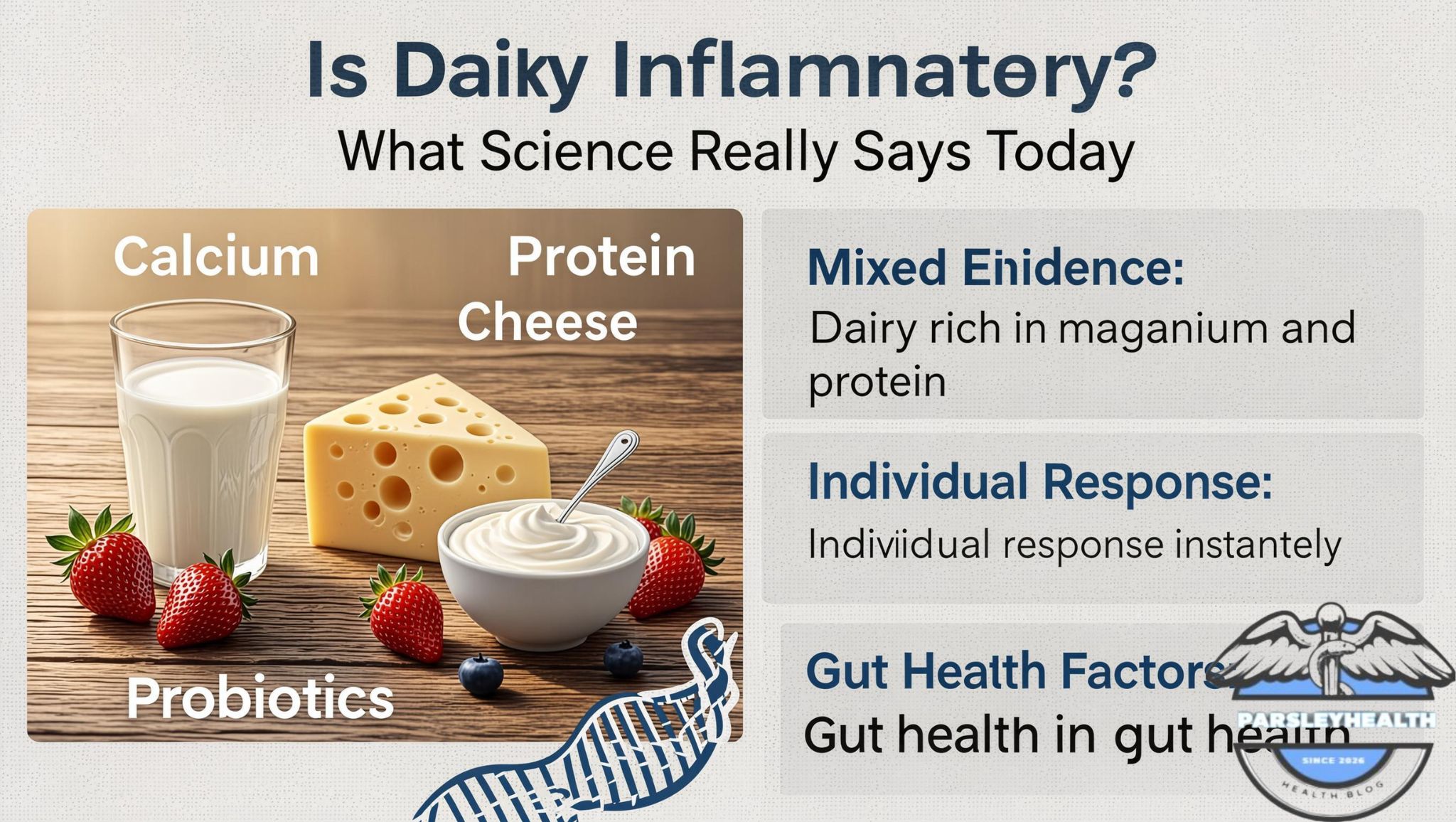
Research does not show that dairy universally causes inflammation in healthy people. In fact, many studies suggest certain dairy products may have neutral or even anti-inflammatory effects.
However, individual responses vary significantly.
Some people experience:
- Digestive discomfort
- Acne flare-ups
- Sinus congestion
- Bloating
- Fatigue
Others tolerate dairy perfectly well without noticeable symptoms.
The real question may not be “Is dairy inflammatory?” but rather:
- Which dairy products?
- For which people?
- Under what conditions?
How Dairy Affects the Body
Dairy contains a complex mix of nutrients and bioactive compounds, including:
- Protein
- Calcium
- Vitamin D
- Potassium
- Probiotics
- Saturated fat
- Natural sugars like lactose
These components can affect inflammation differently depending on the individual.
Dairy Protein and Immune Response
Milk contains two primary proteins:
- Casein
- Whey
Some people may react negatively to these proteins, especially if they have:
- Dairy allergies
- Food sensitivities
- Autoimmune conditions
In those cases, dairy can trigger immune reactions that increase inflammation.
However, most people without sensitivities digest these proteins normally.
Lactose Intolerance vs Dairy Inflammation
Many people confuse lactose intolerance with inflammation.
Lactose intolerance occurs when the body lacks enough lactase, the enzyme needed to digest lactose, the natural sugar in milk.
Symptoms may include:
- Gas
- Bloating
- Stomach pain
- Diarrhea
These symptoms are uncomfortable but do not necessarily mean dairy is causing systemic inflammation.


Which Dairy Products Are More Likely to Cause Problems?
Not all dairy foods affect the body equally.
Milk
Milk is often the most debated dairy product because it contains:
- Lactose
- Casein
- Whey proteins
Some people digest milk easily, while others experience digestive or skin-related symptoms.
Whole milk also contains saturated fat, which has historically raised concerns about inflammation, though recent research paints a more nuanced picture.
Cheese
Cheese is lower in lactose than milk because much of the lactose is removed during processing.
Aged cheeses like:
- Parmesan
- Cheddar
- Swiss
are often easier to tolerate.
However, processed cheese products with additives and preservatives may contribute to poorer overall dietary quality.
Yogurt
Yogurt is one of the most interesting dairy foods because it often contains beneficial probiotics.
These probiotics may support:
- Gut health
- Digestion
- Immune balance
For many people, yogurt is less inflammatory than other dairy products.
Greek yogurt, in particular, offers higher protein and lower lactose levels.
Butter and Cream
Butter contains very little lactose or protein, which means some dairy-sensitive individuals tolerate it better.
Still, butter is high in saturated fat, so moderation remains important.
Is Dairy Inflammatory for People With Autoimmune Conditions?
This is where the conversation becomes more individualized.
Some people with autoimmune diseases report improvements when reducing or eliminating dairy. Conditions commonly discussed include:
- Rheumatoid arthritis
- Hashimoto’s thyroiditis
- Psoriasis
- Inflammatory bowel disease
However, scientific evidence remains mixed.
There is no universal rule stating all autoimmune patients must avoid dairy. Some people feel significantly better without it, while others notice no difference.
Elimination diets supervised by healthcare professionals are often the best way to identify personal triggers.
Dairy and Skin Inflammation
Many people connect dairy consumption with acne and skin irritation.
Research suggests certain dairy products, especially skim milk, may influence acne in some individuals. Scientists believe hormones and growth factors in milk could play a role.
Still, dairy is rarely the only factor behind skin issues.
Other contributors include:
- Stress
- Genetics
- Hormones
- Sleep quality
- Overall diet
If you suspect dairy affects your skin, tracking symptoms after consumption can help identify patterns. You may also read this: When to Take Probiotics for Better Gut Health Daily.
Is Dairy Inflammatory or Anti-Inflammatory According to Research?
This question has been heavily studied.
Surprisingly, many scientific reviews suggest dairy either:
- Has no inflammatory effect
- Or may slightly reduce inflammatory markers in healthy adults
Fermented dairy products like yogurt and kefir may even support anti-inflammatory pathways through gut health improvements.
That said, context matters.
Highly processed diets that include sugary dairy desserts, processed cheese products, and excess calories can still contribute to inflammation indirectly.
It’s often the overall dietary pattern—not one single food—that matters most.


The Role of Gut Health
The gut plays a major role in inflammation regulation.
When gut bacteria are balanced and diverse, the immune system tends to function more effectively. Fermented dairy products may help support this balance.
Probiotic Dairy Foods
Examples include:
- Yogurt
- Kefir
- Cultured dairy drinks
These foods contain live bacteria that may support:
- Digestion
- Immune response
- Reduced gut irritation
However, individuals with dairy sensitivities may still react poorly even to probiotic dairy.
Signs Dairy May Not Work Well for You
Even though dairy isn’t universally inflammatory, certain symptoms may suggest sensitivity.
Possible signs include:
- Persistent bloating
- Stomach cramps
- Excess mucus
- Skin breakouts
- Fatigue after eating dairy
- Joint discomfort
- Digestive irregularities
Symptoms vary widely between individuals.
Keeping a food journal can help identify whether dairy consistently correlates with certain issues.
Should You Eliminate Dairy Completely?
Not necessarily.
Completely removing dairy without a medical reason may make it harder to get nutrients like:
- Calcium
- Protein
- Vitamin D
- Phosphorus
For some people, moderation or selective choices work better than strict elimination.
Instead of removing all dairy immediately, you could:
- Choose fermented dairy
- Reduce processed dairy products
- Try lactose-free options
- Observe portion sizes
- Monitor symptoms
Best Dairy Choices for Lower Inflammation
If you tolerate dairy well, some options may fit better into an anti-inflammatory eating pattern.
Better Dairy Choices
- Plain Greek yogurt
- Kefir
- Cottage cheese
- Aged cheeses
- Unsweetened yogurt
- Grass-fed dairy when available
Dairy Products to Limit
- Sugary flavored yogurts
- Ice cream loaded with additives
- Highly processed cheese products
- Sweetened dairy drinks
The less processed the food, the better it generally supports overall health.
Dairy Alternatives and Inflammation
Many people switch to plant-based alternatives like:
- Almond milk
- Oat milk
- Soy milk
- Coconut yogurt
These can work well, but not all alternatives are automatically healthier.
Some contain:
- Added sugars
- Gums
- Artificial ingredients
- Low protein content
Soy milk tends to offer the closest protein profile to cow’s milk, while almond milk is often lower in calories.
Always read labels carefully.
How Genetics Influence Dairy Tolerance
Genetics play a huge role in how people process dairy.
In some populations, lactose intolerance is very common, while others maintain strong lactase production into adulthood.
This explains why one person may drink milk daily without issues while another experiences immediate digestive discomfort.
Your personal response matters more than generalized internet advice.
Is Dairy Inflammatory for Athletes and Active People?
For many active individuals, dairy can actually support recovery.
Dairy products provide:
- Protein for muscle repair
- Electrolytes
- Carbohydrates
- Calcium
Chocolate milk, for example, has long been used as a post-workout recovery drink.
Unless an athlete has sensitivity or intolerance, dairy may fit perfectly into a balanced performance-focused diet.
Emotional Fear Around Food and Dairy
Food conversations online often become extreme. One group labels dairy as toxic, while another insists everyone should consume it daily.
Nutrition is rarely that black and white.
Fear-based eating can create unnecessary stress around food choices. Stress itself may negatively affect digestion and inflammation.
Instead of treating dairy as universally “good” or “bad,” a more balanced approach is often healthier both physically and mentally.
FAQ
Frequently Asked Questions
Is dairy inflammatory for people with arthritis?
Some individuals with arthritis report symptom improvement after reducing dairy, but scientific evidence remains mixed. Responses vary from person to person.
Can dairy cause joint pain?
In sensitive individuals, dairy may contribute to discomfort or inflammation-like symptoms. Others experience no issues at all.
Is yogurt inflammatory?
Most research suggests yogurt is neutral or potentially beneficial because of its probiotic content.
Does dairy increase mucus production?
Some people feel dairy thickens mucus temporarily, although scientific evidence supporting this is limited.
Is lactose-free milk less inflammatory?
Lactose-free milk may reduce digestive symptoms in lactose-intolerant individuals, but it still contains milk proteins.
Can dairy trigger acne?
For some people, especially teenagers and young adults, dairy consumption may be associated with acne flare-ups.
Should I stop eating dairy to reduce inflammation?
Not necessarily. It’s better to evaluate your individual response before eliminating nutrient-rich foods completely.
Is cheese inflammatory?
Natural cheeses are not universally inflammatory, although highly processed cheese products may fit less well into a healthy dietary pattern.
Are fermented dairy products healthier?
Fermented dairy foods like kefir and yogurt may support gut health because they contain beneficial probiotics.
Can dairy affect gut health?
Yes. Depending on the individual, dairy may either support gut health or contribute to digestive discomfort.
Conclusion
So, is dairy inflammatory? For most healthy people, the answer is probably not. Current research suggests many dairy products have neutral or even beneficial effects on inflammation markers, especially fermented options like yogurt and kefir.
At the same time, individual responses matter. Some people genuinely feel better when limiting certain dairy foods, particularly if they have lactose intolerance, allergies, sensitivities, or autoimmune conditions.
Rather than following rigid food rules, the smartest approach is paying attention to how your own body responds. Choosing minimally processed dairy, maintaining a balanced diet, and focusing on overall lifestyle habits often matters far more than blaming one single food group.