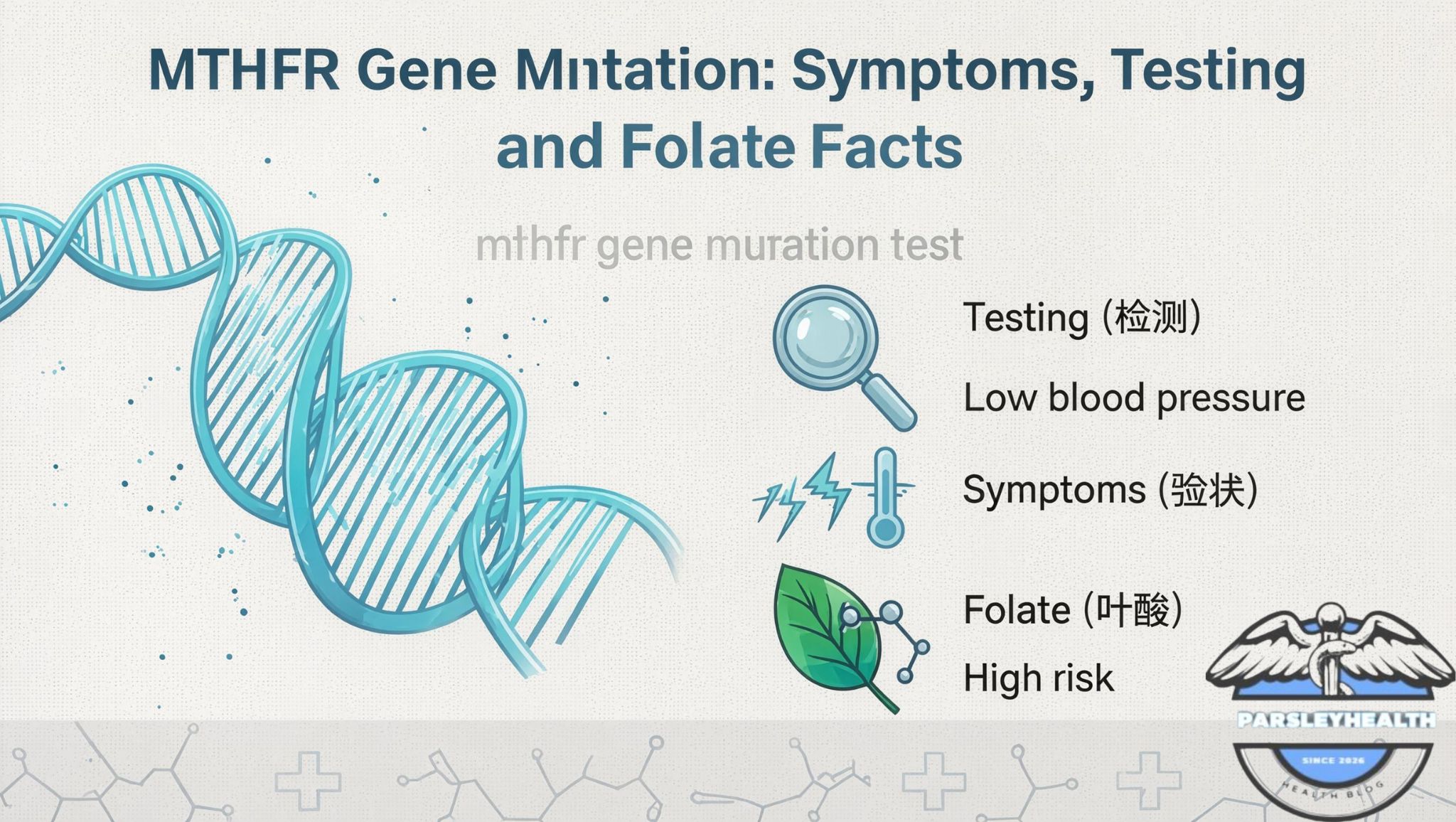
Few health topics create as much confusion from one tiny gene as MTHFR. One search can leave you wondering whether a common genetic variant explains your fatigue, anxiety, miscarriages, migraines, blood clots, or every strange symptom you have ever had.
If you are trying to understand mthfr gene mutation, the first thing to know is this: most common MTHFR variants are not dangerous by themselves. They are very common, and many people who have them never develop health problems because of them.
Still, MTHFR does matter in specific ways. It plays a role in how your body processes folate and homocysteine, and those pathways can become relevant when homocysteine is high, folate or B12 is low, pregnancy planning is involved, or a rare severe enzyme deficiency is suspected.
The goal is not to panic over a genetic result. The goal is to understand what the result means, what it does not mean, which tests actually matter, and how to make smart decisions about folate, B vitamins, pregnancy, and cardiovascular risk.
What Is the MTHFR Gene?
The MTHFR gene gives your body instructions for making an enzyme called methylenetetrahydrofolate reductase. This enzyme helps process folate, a B vitamin your body needs for DNA production, red blood cell formation, pregnancy development, and normal cell function.
The CDC explains that the MTHFR gene helps the body process folate and that one common variant, C677T, can reduce how efficiently the enzyme works. Even so, folic acid intake remains effective for raising blood folate levels, including in people with MTHFR variants.
Folate, Folic Acid, and Methylfolate
These terms are often mixed together, but they are not exactly the same.
Folate is the general name for vitamin B9 found naturally in foods such as leafy greens, beans, lentils, asparagus, citrus fruits, and avocado.
Folic acid is the synthetic form of vitamin B9 used in fortified foods and many supplements. It is the form most studied for preventing neural tube defects in pregnancy. The CDC recommends that anyone who could become pregnant get 400 micrograms of folic acid daily, even if they have an MTHFR variant.
Methylfolate, also called 5-MTHF or L-methylfolate, is an active form of folate used in some supplements. Some people prefer it, but it is not automatically necessary for everyone with an MTHFR variant.
What Does MTHFR Gene Mutation Mean?
The phrase mthfr gene mutation is commonly used online, but in many cases, “variant” is more accurate than “mutation.” A mutation sounds rare and dangerous. The common MTHFR changes, especially C677T and A1298C, are genetic variants found in many healthy people.
A genetic variant is simply a difference in DNA sequence. Some variants matter a lot. Some matter a little. Some do not meaningfully affect health at all.
The Two Most Common MTHFR Variants
The two variants most often discussed are:
- C677T
- A1298C
You can inherit zero, one, or two copies of these variants. For example, someone may have one copy of C677T, two copies of C677T, one copy of A1298C, or one copy of each.
Having one or even two copies does not automatically mean you are sick, deficient, infertile, at high risk of blood clots, or unable to process folic acid. What matters clinically is usually whether homocysteine is elevated, whether folate or B12 status is poor, and whether you have symptoms or medical history that need evaluation.
How Common Are MTHFR Variants?
Common MTHFR variants are widespread. That is one reason experts caution against overinterpreting them. If a variant is common in the general population and most people with it do not develop a specific disease, the variant alone is usually not enough to explain complex symptoms.
The American College of Medical Genetics and Genomics has advised that MTHFR polymorphism testing has minimal clinical utility in routine thrombophilia evaluation, because earlier concerns about clotting, heart disease, and recurrent pregnancy loss have not been supported strongly enough for routine testing.
This does not mean folate metabolism is irrelevant. It means the genetic result by itself is often less useful than people expect.
MTHFR Gene Mutation and Homocysteine
Homocysteine is an amino acid in the blood. Your body normally uses folate, vitamin B12, and vitamin B6 to help convert homocysteine into other useful compounds. When this process is not working well, homocysteine can rise.
MedlinePlus explains that a homocysteine test measures the level of homocysteine in the blood, and high levels may be linked with low vitamin B12 or folic acid, homocystinuria, or higher risk of heart and blood vessel problems. You may aslo read this: MTHFR Gene Mutation Symptoms: What Signs Really Mean.
Why Homocysteine Often Matters More Than the Gene Result
A common MTHFR variant does not automatically cause high homocysteine. Many people with variants have normal homocysteine, especially when folate intake is adequate.
Cleveland Clinic puts it simply: if homocysteine levels are normal, even when an MTHFR variation is present, nothing usually needs to be done clinically based on that variation alone.
That is why many clinicians focus on homocysteine, folate status, vitamin B12, kidney function, thyroid health, medication history, and overall risk factors rather than ordering MTHFR testing for everyone.
Symptoms Often Blamed on MTHFR
Online, the mthfr gene mutation is sometimes blamed for a long list of symptoms. You may see claims linking it to fatigue, anxiety, depression, migraines, infertility, miscarriages, ADHD, autism, blood clots, poor detoxification, hormone imbalance, or chemical sensitivity.
The problem is that many of these symptoms are common and can have dozens of causes. A person may have fatigue and an MTHFR variant, but that does not prove the variant caused the fatigue.
Symptoms That Deserve a Broader Look
If you feel unwell, it is reasonable to investigate. But the workup should not stop at MTHFR.
Symptoms such as fatigue, brain fog, numbness, tingling, dizziness, palpitations, depression, anxiety, headaches, or poor exercise tolerance may also involve:
- Iron deficiency
- Vitamin B12 deficiency
- Folate deficiency
- Thyroid disease
- Sleep apnea
- Depression or anxiety disorders
- Autoimmune disease
- Diabetes or blood sugar swings
- Medication side effects
- Kidney disease
- Chronic infection
- Perimenopause or hormonal changes
- Poor sleep or chronic stress
If symptoms are persistent, the most useful next step is usually a thoughtful medical evaluation, not assuming one gene explains everything.
MTHFR Gene Mutation and Folate
Folate is where this topic becomes practical. MTHFR helps process folate, and folate matters for red blood cells, DNA, pregnancy, and homocysteine metabolism.
But there is a common myth that people with MTHFR variants cannot use folic acid. The CDC directly addresses this and states that people with MTHFR variants can process folic acid. It also says folic acid is the only type of folate shown to help prevent neural tube defects.
Should You Avoid Folic Acid?
Not automatically. For pregnancy prevention of neural tube defects, folic acid remains the standard public health recommendation. The CDC recommends 400 micrograms of folic acid daily for anyone who could become pregnant, even if they have an MTHFR variant.
Some people choose methylfolate supplements, especially if advised by a clinician. But switching to methylfolate does not mean folic acid is harmful for everyone with MTHFR variants.
Food Sources of Folate
Folate-rich foods are helpful regardless of genotype. Good choices include:
- Spinach
- Romaine lettuce
- Asparagus
- Broccoli
- Lentils
- Black beans
- Chickpeas
- Avocado
- Oranges
- Brussels sprouts
- Peas
- Fortified grains
- Fortified cereals
A food-first approach supports folate intake along with fiber, minerals, antioxidants, and other nutrients.
MTHFR Gene Mutation and Pregnancy
Pregnancy is one of the main reasons people worry about MTHFR. This is understandable because folate is essential for early fetal development, and low folate intake is linked with neural tube defects.
The most important practical message is clear: people who could become pregnant should get 400 micrograms of folic acid daily, even if they have an MTHFR variant. The CDC says the two key factors for having enough folate in the blood to help prevent neural tube defects are the amount of folic acid consumed daily and how long it is consumed before pregnancy.
Does MTHFR Cause Miscarriage?
This is where many people receive confusing information. Common MTHFR variants have been studied in relation to recurrent pregnancy loss, but major professional guidance does not recommend routine MTHFR testing as part of recurrent miscarriage or thrombophilia evaluation.
The College of American Pathologists clinician handout notes that MTHFR testing is not recommended in the workup of thrombophilia or recurrent pregnancy loss by several professional groups, including ACMG and ACOG.
Miscarriage can happen for many reasons, including chromosomal abnormalities, uterine factors, hormonal conditions, autoimmune conditions such as antiphospholipid syndrome, clotting disorders, thyroid disease, diabetes, age-related factors, and unexplained causes. A history of recurrent pregnancy loss deserves compassionate, evidence-based evaluation.
Should Pregnant People Test for MTHFR?
Routine testing is generally not recommended for common variants. If there is concern about nutrition or metabolism, clinicians may look at folate status, B12, homocysteine, thyroid function, blood counts, and other factors instead.
MTHFR Gene Mutation and Blood Clots
Another major concern is clotting risk. Many people have been told that an mthfr gene mutation means they are prone to blood clots. Current guidance is more reassuring.
The ACMG guideline states that MTHFR polymorphism testing has limited clinical utility in thrombophilia evaluation and should not be routinely ordered for that purpose.
Cleveland Clinic also discusses the question of MTHFR and thrombosis and notes that common MTHFR variants have been investigated because of their relationship to homocysteine, but the presence of a variant alone is not the same as having a clotting disorder.
What Actually Raises Clot Risk?
Blood clot risk is usually assessed through a broader lens. Important factors may include:
- Personal history of blood clots
- Strong family history of blood clots
- Antiphospholipid syndrome
- Factor V Leiden
- Prothrombin gene mutation
- Major surgery
- Immobilization
- Pregnancy and postpartum period
- Estrogen-containing medications
- Cancer
- Smoking
- Obesity
- Certain autoimmune diseases
- Older age
If you have had a clot or have a strong family history, speak with a hematologist or qualified clinician. Do not rely on MTHFR status alone to judge risk.
Should You Get Tested?
Most people do not need MTHFR testing. MedlinePlus states that medical experts do not recommend testing for common MTHFR gene changes in most cases. Testing may be considered in narrower situations, such as high homocysteine with certain personal or family history factors.
When Testing May Be Considered
A clinician may consider testing or related evaluation if:
- Homocysteine is persistently high
- A close relative has a known MTHFR-related issue
- There is early heart or blood vessel disease in the family
- Rare homocystinuria or severe metabolic disorder is suspected
- A specialist believes the result would change management
Even then, the test is usually only one piece of the puzzle.
Why Direct-to-Consumer Results Can Be Confusing
Many people discover MTHFR variants through ancestry or wellness genetic testing. The result may look alarming because it is presented without medical context.
But a variant does not automatically mean disease. It does not tell you whether your homocysteine is high, whether your folate status is low, whether you need treatment, or whether symptoms are related.
If a result worries you, bring it to a clinician or genetic counselor rather than trying to interpret it through forums and supplement marketing.
What Tests Are More Useful Than MTHFR Alone?
If you are concerned about methylation, folate metabolism, fatigue, pregnancy planning, or cardiovascular risk, several tests may be more clinically useful than MTHFR genotyping alone.
Homocysteine
A homocysteine test can show whether the pathway is actually affected in a measurable way. MedlinePlus notes that high homocysteine may point to low B12 or folic acid, homocystinuria, or increased cardiovascular risk.
Vitamin B12
B12 deficiency can cause fatigue, anemia, numbness, tingling, balance problems, memory issues, mood changes, and elevated homocysteine. It can occur in vegans, vegetarians, older adults, people with digestive disorders, and those taking certain medications.
Folate
Folate testing may help identify deficiency, especially in people with poor intake, malabsorption, alcohol use disorder, pregnancy, certain medications, or anemia.
Complete Blood Count
A CBC can check for anemia or enlarged red blood cells, which may suggest B12 or folate problems.
Thyroid and Kidney Function
Hypothyroidism and kidney disease can contribute to elevated homocysteine and symptoms that overlap with nutrient deficiency. MedlinePlus notes that high homocysteine may be caused by conditions such as hypothyroidism, kidney disease, medications, older age, and B vitamin deficiencies.
Treatment: What Actually Helps?
There is no single treatment for an mthfr gene mutation because common variants are not usually treated as diseases. Treatment depends on what is actually abnormal.
If homocysteine is high, clinicians may evaluate and address folate, B12, B6, kidney function, thyroid function, medications, diet, and cardiovascular risk. If folate intake is low, increasing folate-rich foods and using an appropriate supplement may help.
Folate and B Vitamins
Depending on the situation, a clinician may recommend:
- Folic acid
- Folinic acid
- L-methylfolate
- Vitamin B12
- Vitamin B6
- A prenatal vitamin
- A multivitamin
- Diet changes
The right choice depends on pregnancy status, deficiency testing, medication use, symptoms, and medical history.
Do You Need Methylfolate?
Some people tolerate methylfolate well and prefer it. Others feel jittery or anxious with high doses. More is not always better.
If you are pregnant or trying to conceive, do not assume a methylfolate-only supplement is automatically superior to folic acid. Folic acid has the strongest evidence for neural tube defect prevention at the population level, including for people with MTHFR variants.
Avoid Megadosing Without Guidance
High-dose supplements can create problems. Large doses of folic acid can mask signs of B12 deficiency, while high-dose B6 can cause nerve symptoms if overused for long periods. Supplements can also interact with medications.
Use targeted dosing, not fear-based dosing.
Diet for MTHFR Support
A supportive diet for MTHFR concerns is not extreme. It is a steady pattern that supports folate, B vitamins, protein, healthy fats, and overall metabolic health.
Best Foods to Include
Try to eat more:
- Leafy greens
- Lentils and beans
- Eggs
- Fish
- Poultry
- Yogurt or kefir
- Nuts and seeds
- Citrus fruits
- Avocado
- Whole grains
- Fortified foods
- Beets
- Broccoli
- Asparagus
What About “Methylation Diets”?
Some diets marketed for mthfr gene mutation become overly restrictive. They may remove gluten, dairy, grains, caffeine, sugar, alcohol, synthetic folic acid, processed foods, and dozens of other things at once.
For some people, fewer ultra-processed foods and more whole foods can help energy and digestion. But unnecessary restriction can also increase anxiety, reduce nutrient intake, and make eating feel unsafe.
A sustainable approach is better: build meals around protein, vegetables, fiber-rich carbohydrates, healthy fats, and enough calories.
Lifestyle Factors That Matter
Genes are one part of health, not the whole story. Homocysteine and inflammation can be affected by diet, smoking, alcohol, sleep, kidney function, thyroid function, medications, and overall health.
Helpful Habits
Supportive habits include:
- Not smoking
- Limiting heavy alcohol intake
- Eating folate-rich foods regularly
- Getting enough B12
- Treating thyroid disease if present
- Managing kidney disease if present
- Moving your body consistently
- Sleeping enough
- Managing blood pressure
- Managing cholesterol and blood sugar
- Following pregnancy folic acid guidance
These steps are useful whether you have an MTHFR variant or not.
Common Myths About MTHFR
Myth: Everyone Should Test for MTHFR
Most people do not need MTHFR testing. MedlinePlus states that medical experts do not recommend testing for common MTHFR gene changes in most cases.
Myth: MTHFR Means You Cannot Take Folic Acid
The CDC says people with MTHFR variants can process folic acid and should still get 400 micrograms daily if they could become pregnant.
Myth: MTHFR Alone Causes Blood Clots
Common MTHFR variants are not treated as major clotting disorders. ACMG guidance does not support routine MTHFR testing for thrombophilia evaluation.
Myth: MTHFR Explains Every Symptom
Fatigue, anxiety, migraines, infertility, and brain fog can have many causes. MTHFR may be relevant in some contexts, but it should not become a catch-all explanation.
Myth: More Methylfolate Is Always Better
High-dose methylfolate is not necessary for everyone and may cause side effects in some people. Supplement plans should match actual needs.
When to See a Doctor
Consider medical guidance if you have an MTHFR result and are unsure what it means, especially if you also have symptoms, high homocysteine, pregnancy plans, recurrent pregnancy loss, a history of blood clots, early heart disease, neurological symptoms, or signs of B12 deficiency.
Symptoms Worth Checking
Ask about evaluation if you have:
- Persistent fatigue
- Numbness or tingling
- Balance problems
- Memory changes
- Shortness of breath
- Pale skin
- Recurrent miscarriages
- Personal history of blood clots
- Strong family history of early cardiovascular disease
- High homocysteine
- Unexplained anemia
- Vegan diet without B12 supplementation
- Digestive disease or malabsorption
The goal is to identify treatable issues, not to chase a gene result in isolation.
Questions to Ask Your Clinician
Bring your result and ask clear questions:
- Do I have one copy or two copies of a variant?
- Is this C677T, A1298C, or another variant?
- Is my homocysteine level normal?
- Should we check B12, folate, CBC, thyroid, or kidney function?
- Does this result change anything for pregnancy planning?
- Do I need folic acid, methylfolate, or another supplement?
- Could any medications affect my folate or homocysteine?
- Is my clotting risk based on anything besides MTHFR?
- Should I see a genetic counselor, hematologist, or maternal-fetal medicine specialist?
These questions keep the conversation practical.
FAQ
What is an mthfr gene mutation?
An mthfr gene mutation usually refers to a common genetic variant in the MTHFR gene, most often C677T or A1298C. These variants can affect folate processing to varying degrees but are not automatically dangerous.
Is MTHFR really a mutation or a variant?
For the common changes C677T and A1298C, “variant” is often a better word. They are common DNA differences, not rare disease-causing mutations in most people.
What symptoms does MTHFR cause?
Common MTHFR variants usually do not cause clear symptoms by themselves. If homocysteine is high or B vitamin levels are low, symptoms may relate to folate or B12 deficiency, anemia, cardiovascular risk, or another underlying issue.
Should I test for MTHFR?
Most people do not need MTHFR testing. Medical experts generally do not recommend testing for common variants in most cases. Homocysteine, B12, folate, CBC, thyroid, and kidney tests may be more useful depending on symptoms.
Does MTHFR increase blood clot risk?
Common MTHFR variants alone are not considered major clotting disorders, and routine testing is not recommended for thrombophilia evaluation by ACMG guidance. Clot risk should be assessed based on personal and family history plus established clotting risk factors.
Can I take folic acid if I have MTHFR?
Yes. The CDC states that people with MTHFR variants can process folic acid and that anyone who could become pregnant should get 400 micrograms of folic acid daily.
Is methylfolate better than folic acid?
Not necessarily for everyone. Methylfolate may be useful for some people, but folic acid has the strongest evidence for preventing neural tube defects. Supplement choice should depend on pregnancy status, labs, tolerance, and clinician guidance.
Does MTHFR cause miscarriage?
Common MTHFR variants are not routinely recommended as part of recurrent pregnancy loss testing. Recurrent miscarriage has many possible causes and deserves a proper evaluation.
What should I do if my homocysteine is high?
Work with a healthcare professional to look for causes such as low folate, low B12, low B6, kidney disease, hypothyroidism, medications, or rare inherited conditions. Treatment depends on the cause.
Can diet help with MTHFR?
Yes, a folate-rich, nutrient-dense diet can support overall folate and B vitamin status. Leafy greens, beans, lentils, eggs, fish, fortified foods, citrus, avocado, and whole grains can all fit into a supportive plan.
Conclusion
The mthfr gene mutation conversation can feel scary because it is often presented as the hidden cause of countless health problems. In reality, common MTHFR variants are widespread, and most people with them do not need special treatment based on the gene result alone.
What matters most is context. Is homocysteine high? Are folate or B12 levels low? Are you pregnant or planning pregnancy? Do you have a personal history of blood clots, early heart disease, recurrent pregnancy loss, anemia, or neurological symptoms? Those details matter far more than a genetic label by itself.
For most people, the best path is simple and steady: eat folate-rich foods, follow standard folic acid guidance if pregnancy is possible, correct confirmed deficiencies, avoid unnecessary megadoses, and work with a qualified clinician when symptoms or abnormal labs need attention.