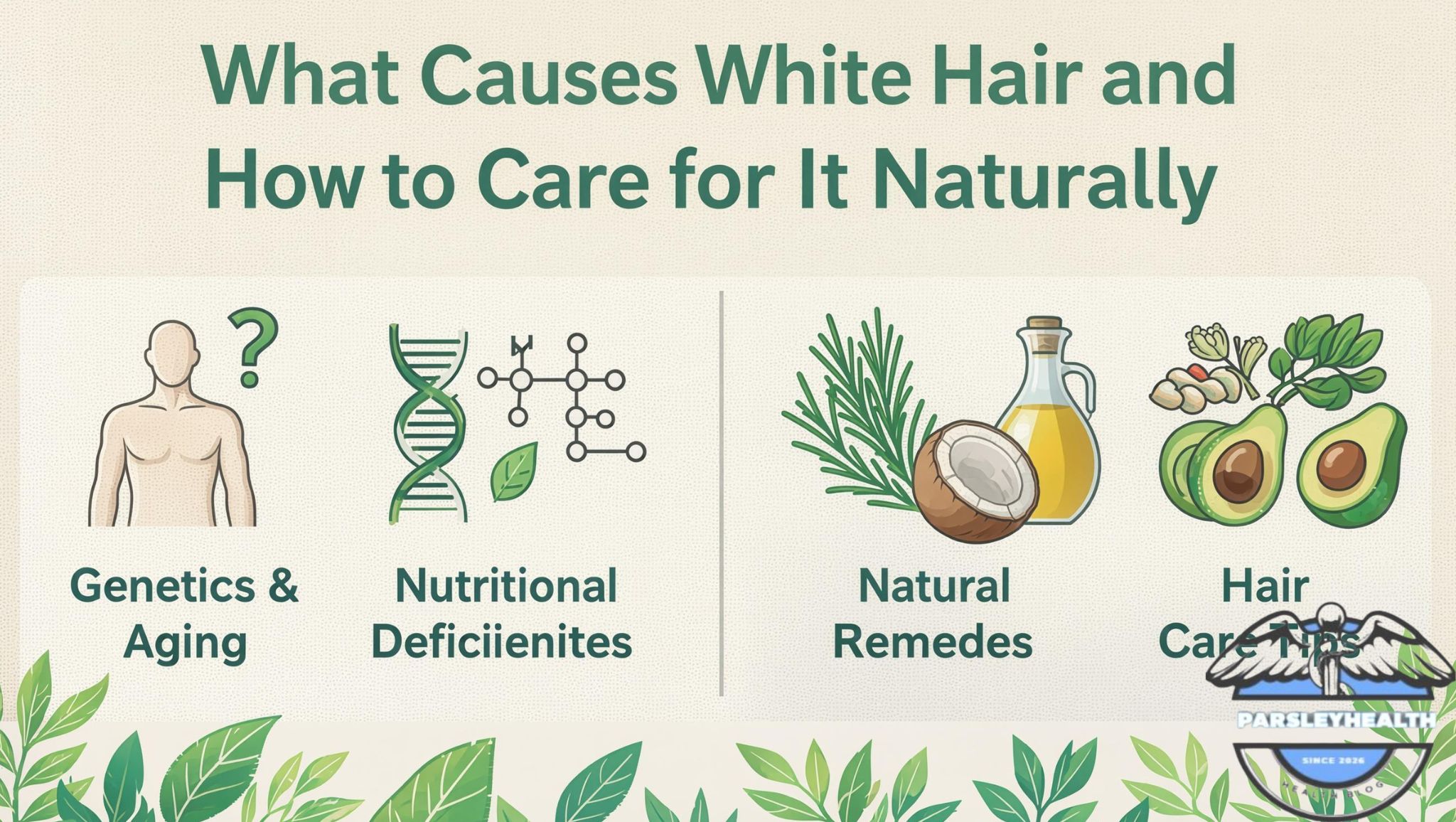
Finding your first white strand can feel oddly personal. You spot it in the mirror, pull it forward, and suddenly you are wondering whether it came from age, stress, genetics, or something your body is trying to tell you.
If you have searched what causes white hair, the answer begins with pigment. Hair turns gray or white when follicles produce less melanin, the pigment that gives hair its color, and this usually happens gradually with age.
But white hair is not just about getting older. Family history, stress biology, smoking, certain deficiencies, autoimmune conditions, thyroid problems, and natural changes in the hair follicle can all play a role. The key is knowing what is normal, what may be worth checking, and how to care for white or gray hair so it looks healthy instead of dull or dry.
![Image: Close-up of a person gently noticing a few white strands in the mirror, soft natural bathroom light, realistic wellness style.]
How Hair Gets Its Color
Hair color comes from melanin, a pigment made by specialized cells called melanocytes inside hair follicles. More melanin generally means darker hair, while less melanin creates lighter hair. When melanin production drops sharply or stops, new hair grows in gray, silver, or white.
A common misunderstanding is that an existing strand suddenly “turns white.” In most cases, once a strand grows out of the follicle, its color is set. The change happens when the follicle produces a new strand with less pigment than before. Harvard Health explains that as follicles age, new hair is more likely to grow in gray rather than an existing hair changing color overnight.
Gray Hair vs White Hair
Gray hair still has some pigment mixed with unpigmented strands, which gives it a salt-and-pepper or silver appearance. White hair has little to no visible pigment.
The difference is not always obvious because lighting, natural hair color, texture, and the mix of pigmented and unpigmented strands can change how hair looks. Someone with black hair may notice white strands sooner because the contrast is stronger, while someone with blonde hair may not notice early grays as quickly.
What Causes White Hair?
The simplest answer to what causes white hair is reduced melanin in the hair follicle. The deeper answer is that melanin production can decline for several reasons, including aging, genetics, oxidative stress, nutrient deficiencies, medical conditions, and environmental factors.
For most people, genetics and aging are the main drivers. Still, early or sudden-looking changes can sometimes point to something worth investigating, especially if white hair appears alongside fatigue, hair loss, weight changes, skin changes, or other symptoms.
The Hair Growth Cycle Matters
Hair grows in cycles. A follicle produces a strand, rests, sheds it, and eventually grows a new one. If the pigment-making system weakens between cycles, the next strand may come in gray or white.
That is why white hair often appears gradually. One follicle changes, then another, then another. Over time, the overall color shifts.
Aging and Natural Pigment Loss
Aging is the most common reason hair becomes white. Over time, melanocytes become less active, and the follicle’s pigment supply declines. Cleveland Clinic explains that gray or white hair develops when hair follicles produce less melanin, and this becomes more common with age.
Many people begin noticing gray or white strands in their 30s or 40s, though the timing varies widely. Some people see white hair in their teens or 20s, while others keep most of their natural color much longer.
Why Hair Often Looks Different as It Whitens
White and gray hair can feel coarser, drier, or more wiry. The strand is not necessarily stronger; it may simply behave differently because aging also changes scalp oil production, hair texture, and how the cuticle reflects light.
This is why white hair often benefits from more moisture, gentler washing, and protection from heat and sun.
Genetics: The Biggest Clue
If your parents or grandparents went white early, there is a good chance you may too. Genetics strongly influence when pigment loss begins, how quickly it progresses, and where white hair appears first.
Researchers have identified genes linked with hair graying, including findings involving the IRF4 gene, which is connected with hair color and graying patterns. Mayo Clinic reported on research identifying a specific gene associated with gray hair. You may read this: What Causes White Hair at Early Age? Causes and Care Tips.
Family Pattern Is Often the Best Predictor
Look at your family’s hair history. Did relatives go gray in their 20s? Did they keep dark hair into their 50s? Did whitening start at the temples, beard, crown, or eyebrows?
Your pattern may not match perfectly, but family history often gives the clearest clue.
Stress and White Hair
Stress is one of the most talked-about causes, and the science is more interesting than the old myth suggests. Severe or chronic stress may contribute to premature graying by affecting pigment-regenerating cells in hair follicles.
The National Institutes of Health reported on research showing that stress activates the sympathetic nervous system and releases norepinephrine in the follicle, which can deplete melanocyte stem cells responsible for regenerating pigment.
Can Stress Turn Hair White Overnight?
Usually, no. A single strand does not typically lose pigment overnight. But stress may speed up the process in follicles that are vulnerable, especially over time.
There is also a condition called alopecia areata, where pigmented hairs may shed more noticeably than white hairs, creating the sudden appearance of whitening. That is different from every strand instantly changing color.
Stress Is Not the Only Explanation
Even though stress can play a role, Harvard Health points out that most gray hair is not caused by stress alone. Aging and genetics remain major factors.
So if you are asking what causes white hair after a stressful year, stress may be part of the story, but it is rarely the whole story.
![Image: Infographic-style illustration of a hair follicle showing melanin, melanocytes, reduced pigment, and white hair growth.]
Oxidative Stress and Hair Pigment
Oxidative stress happens when unstable molecules called free radicals outnumber the body’s antioxidant defenses. Hair follicles are metabolically active, and pigment-producing cells can be sensitive to oxidative damage.
Research reviews describe hair graying as a multifactorial process involving genetic, environmental, biochemical, and oxidative factors.
What Contributes to Oxidative Stress?
Common contributors may include:
- Smoking
- Air pollution
- UV exposure
- Poor sleep
- Chronic stress
- Inflammation
- Nutrient-poor diets
- Certain illnesses
- Harsh chemical exposure
This does not mean you can prevent every white hair with antioxidants. But reducing avoidable stressors may support overall hair and scalp health.
Smoking and Premature White Hair
Smoking is often linked with premature aging, and hair is no exception. Tobacco smoke increases oxidative stress, affects blood vessels, and exposes follicles to damaging compounds.
Although genetics still matter, smoking is one lifestyle factor that may speed visible aging signs, including changes in skin and hair. If white hair appears earlier than expected and smoking is part of the picture, quitting is one of the most meaningful changes for overall health.
Vitamin B12 and Nutrient Deficiencies
Nutrient deficiencies do not explain most white hair, but they can contribute to premature graying in some people. Vitamin B12 is one of the most commonly discussed nutrients because it is important for red blood cells, nerves, DNA production, and overall cellular function.
Premature graying reviews have linked early graying with nutritional factors, including B12, folate, vitamin D, iron, copper, and other micronutrients, though the relationship is not always simple or the same for everyone.
Signs a Deficiency May Be Involved
Consider asking a healthcare professional about testing if white hair appears early along with:
- Fatigue
- Dizziness
- Shortness of breath
- Tingling or numbness
- Pale skin
- Hair shedding
- Brittle nails
- Poor concentration
- Mouth soreness
- Heavy periods
- Restricted diet
- Digestive problems
Nutrient deficiencies are treatable, but guessing with high-dose supplements is not always safe. Testing is better than randomly taking pills.
Thyroid Problems and Hair Changes
Thyroid hormones influence metabolism, skin, hair growth, and energy. Both underactive and overactive thyroid conditions can affect hair texture, shedding, and sometimes pigment-related changes.
Cleveland Clinic lists thyroid disease among conditions that can affect melanin levels and contribute to gray hair.
Symptoms That May Point to Thyroid Issues
Possible hypothyroidism symptoms include fatigue, feeling cold, dry skin, constipation, weight gain, low mood, heavy periods, and hair thinning. Hyperthyroidism may cause weight loss, fast heartbeat, anxiety, sweating, tremor, and sleep problems.
If white hair appears with broader hair thinning or body-wide symptoms, it is worth checking thyroid health rather than assuming it is only cosmetic.
Autoimmune Conditions and White Patches
Sometimes pigment loss is connected to autoimmune activity. Vitiligo, for example, causes loss of pigment in skin and can also affect hair in the involved areas, creating white patches or streaks.
Alopecia areata can also create sudden changes in hair appearance because it causes patchy hair loss. When regrowth happens, some hair may come back white at first.
When to Pay Attention to Patches
Get medical advice if you notice:
- A sudden white patch in one area
- White hair with pale skin patches
- Patchy hair loss
- Scalp itching, burning, or scaling
- Eyebrow or eyelash color changes
- Rapid changes in hair density
A dermatologist can help determine whether the change is simple graying or part of a skin or autoimmune condition.
Premature White Hair
Premature graying is usually defined differently depending on ancestry. A review in International Journal of Trichology describes premature graying as appearing before age 20 in Caucasians and before age 30 in African American populations; other research commonly uses before age 25 in Asian populations.
Premature whitening can still be genetic and harmless. But if it appears very early or progresses quickly, it may be worth looking at family history, nutrition, stress, smoking, thyroid function, autoimmune symptoms, and medication history.
What Causes White Hair in Young Adults?
The question what causes white hair in teens or young adults often comes down to family history. But early white hair can also be associated with nutritional deficiencies, thyroid issues, oxidative stress, smoking, autoimmune conditions, and certain medical treatments.
A young person with a few white strands and a strong family history may not need to worry. A young person with sudden whitening, fatigue, hair loss, skin changes, or other symptoms should consider a medical checkup.
Can White Hair Be Reversed?
In most cases, white hair does not permanently return to its original color. Once a follicle stops producing enough pigment, the new hair from that follicle usually continues to grow in gray or white.
Some rare cases of repigmentation have been described, often related to correcting deficiencies, treating medical conditions, or medication-related changes. But there is no proven supplement, oil, shampoo, or home remedy that reliably reverses normal age-related white hair.
Be Careful With “Reverse Gray Hair” Claims
Products that promise to permanently restore natural pigment should be viewed skeptically. Hair health can improve with better nutrition and care, but restoring melanin is much more complicated than moisturizing a dry strand.
If a product claims to reverse white hair quickly for everyone, that is a red flag.
Can Diet Prevent White Hair?
Diet cannot override your genes, but it can support healthy hair follicles. A balanced diet provides the building blocks for hair growth, antioxidant defense, and overall scalp health.
Helpful Nutrients for Hair Health
Focus on food patterns that include:
- Protein from eggs, fish, poultry, beans, tofu, yogurt, or lentils
- Iron from meat, seafood, beans, spinach, and fortified foods
- B12 from animal foods or fortified foods
- Folate from leafy greens, beans, and citrus
- Zinc from seafood, meat, pumpkin seeds, and legumes
- Copper from nuts, seeds, shellfish, and whole grains
- Vitamin D from sunlight, fatty fish, fortified foods, or supplements if needed
- Omega-3 fats from fish, chia, flax, and walnuts
This kind of eating supports hair quality and general health, even if it does not stop every white strand.
Hair Care for White and Gray Hair
White hair can look beautiful, but it may need different care. Because it reflects light differently and can be more prone to dryness, it may look dull, yellowed, or frizzy without the right routine.
Keep It Moisturized
Use gentle shampoos and moisturizing conditioners. Avoid stripping the hair with harsh cleansers, especially if your scalp is dry.
Deep conditioning once a week can help soften wiry texture and improve shine.
Protect It From Heat
White hair can show heat damage more noticeably. Use lower heat settings, apply heat protectant, and avoid daily hot styling if possible.
Prevent Yellowing
White and silver hair can pick up yellow tones from sun exposure, hard water, smoke, pollution, and product buildup. A purple shampoo used occasionally may help neutralize yellow tones, but overuse can leave a violet cast or dryness.
Protect From Sun
UV exposure can make white hair look dull or yellow. Hats, scarves, UV-protective hair products, and shade can help preserve brightness.
![Image: Elegant white and silver hair care flat lay with gentle shampoo, conditioner, wide-tooth comb, purple shampoo, and silk scarf.]
Should You Pull Out White Hair?
Pulling out a white hair will not make several more grow in its place. That is a myth. But plucking can irritate the follicle, damage the scalp, and potentially affect regrowth if repeated often.
If one strand bothers you, trimming it is kinder than pulling it. If many strands bother you, blending, highlights, gloss, toner, or color may be better options.
Coloring White Hair Safely
White hair can be more resistant to dye because texture and cuticle behavior may change. That is why some people find that color fades faster or does not cover as evenly.
Options for Blending or Covering
You can consider:
- Semi-permanent gloss
- Demi-permanent color
- Permanent dye
- Highlights or lowlights
- Gray blending
- Root touch-up sprays
- Henna or plant-based color, with caution
- Professional toning
If you use chemical dyes, follow instructions carefully and patch test when recommended. If your scalp is sensitive, consult a stylist or dermatologist.
Embracing White Hair
For many people, white hair becomes a style choice rather than a problem. Silver, white, and gray hair can look striking, modern, soft, elegant, or bold depending on the cut and care routine.
A good haircut makes a big difference. White hair that is dry and shapeless may feel aging, while white hair that is healthy, shiny, and intentionally styled can look polished and confident.
Ways to Make White Hair Look Intentional
Try:
- A clean, flattering haircut
- Moisture-rich styling cream
- Shine spray or lightweight oil
- Purple shampoo only when needed
- Soft layers for movement
- Scalp care for healthy growth
- Clothing colors that complement silver tones
The goal is not to hide age. It is to make your hair look cared for.
What Causes White Hair Suddenly?
People often say their hair turned white suddenly after shock, illness, grief, or trauma. True overnight whitening is uncommon, but sudden appearance can happen for a few reasons.
One reason is contrast. You may not notice scattered white strands until lighting, haircut, or shedding makes them obvious. Another reason is selective shedding, where pigmented hairs fall out more than white hairs, making white hair seem to appear abruptly.
Stress biology may also accelerate graying over time, but it usually does not bleach fully grown strands overnight. NIH-supported research shows a biological link between stress and depletion of pigment-regenerating stem cells in follicles, but that process affects future hair growth.
When to See a Doctor or Dermatologist
White hair alone is usually not dangerous. But sometimes it appears with clues that deserve attention.
See a healthcare professional if you notice:
- White hair appearing very early without family history
- Sudden patches of white hair
- Patchy hair loss
- Scalp pain, redness, scaling, or sores
- Rapid shedding
- Fatigue, dizziness, or weakness
- Unexplained weight changes
- Irregular periods
- Skin pigment changes
- Tingling, numbness, or memory issues
- Symptoms after starting a new medication or treatment
A clinician may consider blood tests for B12, ferritin, thyroid function, vitamin D, or other markers depending on symptoms.
Common Myths About White Hair
Myth: One White Hair Means You Are Aging Fast
One white hair simply means one follicle has produced a strand with little pigment. It does not mean your whole body is aging rapidly.
Myth: Plucking Makes More White Hair Grow
Plucking does not multiply white hairs. But it can damage the follicle if repeated.
Myth: Stress Is Always the Cause
Stress can contribute, but most white hair is still strongly influenced by genetics and aging.
Myth: Supplements Always Reverse White Hair
Supplements may help if a deficiency exists, but they do not reliably reverse normal graying. Taking unnecessary high doses can be harmful.
Myth: White Hair Is Unhealthy Hair
White hair is not automatically unhealthy. It simply has less pigment. It may need different moisture and tone care, but it can be strong and beautiful.
Practical Steps to Support Hair Pigment and Hair Health
You cannot control every cause, but you can support the conditions your hair follicles need.
Try to:
- Eat enough protein
- Correct confirmed deficiencies
- Avoid smoking
- Manage chronic stress
- Sleep consistently
- Protect hair from UV exposure
- Use gentle hair products
- Avoid excessive bleaching and heat
- Treat thyroid or autoimmune conditions if present
- See a dermatologist for sudden changes
These steps may not erase existing white hair, but they support healthier growth and may help reduce preventable damage.
FAQ
What causes white hair at a young age?
Early white hair is most often genetic, especially if parents or grandparents also went gray early. Other possible contributors include stress, smoking, nutrient deficiencies, thyroid disease, autoimmune conditions, and certain medical treatments.
Can stress cause white hair?
Yes, stress may contribute to premature graying. NIH-supported research found that stress can affect melanocyte stem cells involved in regenerating hair pigment. However, genetics and aging remain major causes.
Can white hair turn black again naturally?
Usually, no. Once a follicle consistently produces white hair, it often continues doing so. Rare repigmentation can happen in specific situations, such as correcting a deficiency or treating an underlying condition, but it is not typical.
Does vitamin B12 deficiency cause white hair?
Vitamin B12 deficiency has been associated with premature graying in some research, but it is not the cause for everyone. If you have fatigue, tingling, weakness, pale skin, or dietary risk factors, testing may be useful.
Is white hair caused by lack of melanin?
Yes. White hair develops when the hair follicle produces little to no melanin. Melanin is the pigment responsible for natural hair color.
Why do some people get white hair in their beard first?
Facial hair and scalp hair can age differently because follicles in different areas have different sensitivities, growth cycles, and genetic programming. It is common for beard hair to gray or whiten earlier than scalp hair.
Can thyroid problems cause white hair?
Thyroid disease can affect hair growth, texture, shedding, and sometimes pigment changes. If white hair appears with fatigue, weight changes, dry skin, heart symptoms, or hair thinning, thyroid testing may be worth discussing.
Does pulling white hair make more grow?
No. Pulling one white hair does not cause several more to grow. But repeated plucking can irritate or damage the follicle, so trimming is safer.
What foods help prevent white hair?
No food can guarantee prevention, but protein-rich foods, leafy greens, beans, eggs, fish, nuts, seeds, whole grains, and foods rich in B12, iron, zinc, copper, folate, and vitamin D can support overall hair health.
What causes white hair most often?
The most common answer to what causes white hair is natural aging combined with genetics. Other factors such as stress, smoking, nutrient deficiencies, thyroid issues, autoimmune conditions, and oxidative stress may influence timing.
Conclusion
Understanding what causes white hair makes the change feel less mysterious. In most cases, white hair appears because follicles gradually produce less melanin, and that process is strongly shaped by age and genetics.
Still, timing matters. White hair that appears very early, suddenly, or alongside fatigue, hair loss, skin changes, or other symptoms may deserve a closer look. Nutrient deficiencies, thyroid problems, autoimmune conditions, smoking, and stress can all play a role for some people.
You may not be able to stop every white strand, but you can support healthier hair with good nutrition, stress care, sleep, scalp health, gentle products, and medical attention when symptoms suggest something deeper. Whether you color it, blend it, or embrace it fully, white hair can be cared for beautifully.