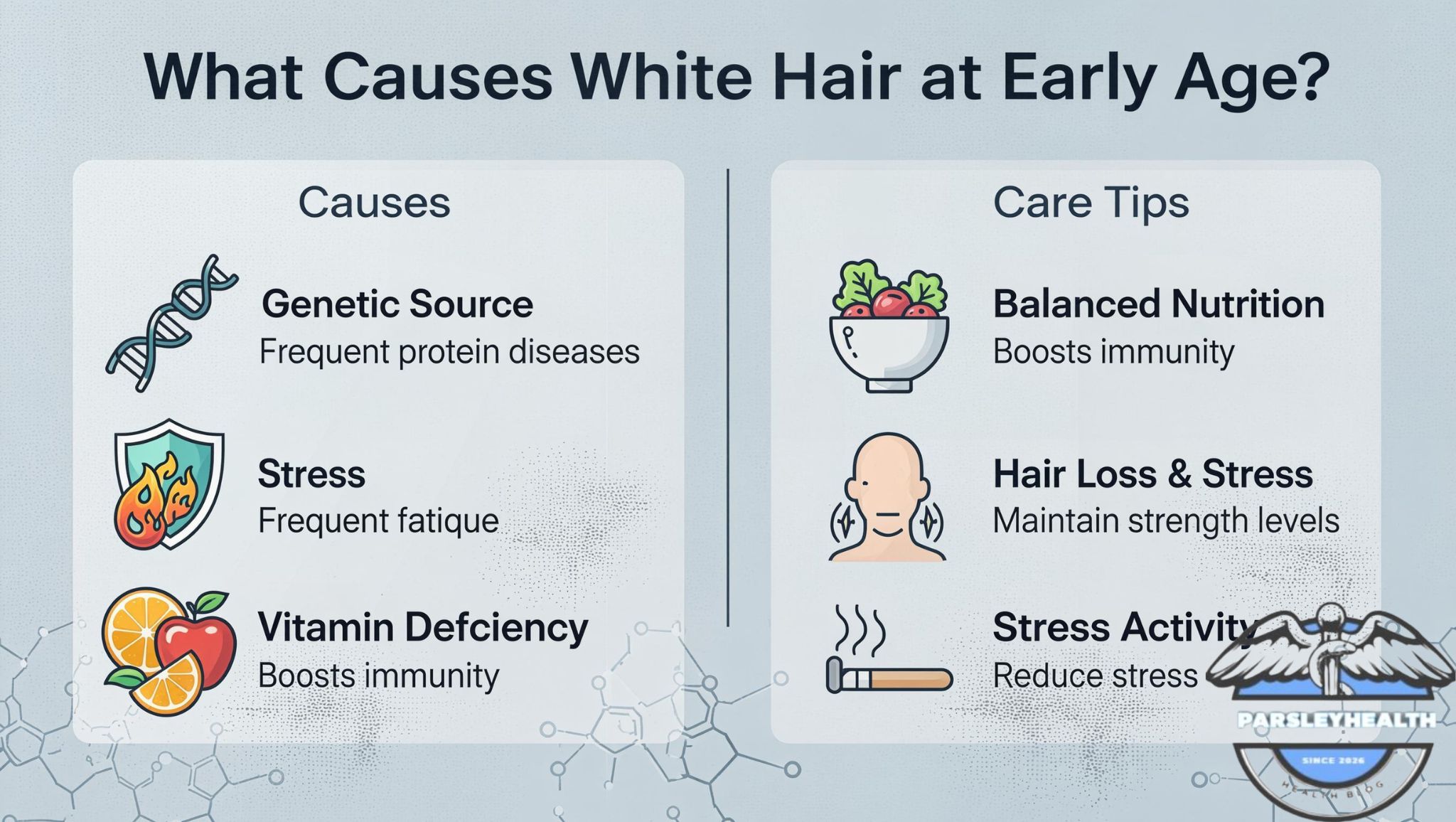
Noticing white hair earlier than expected can feel confusing, especially when you still feel too young for it. One tiny strand can turn into a mirror-checking habit almost overnight.
If you are wondering what causes white hair at early age, the answer is usually a mix of genetics, pigment changes, lifestyle factors, and sometimes underlying health issues. White hair happens when hair follicles produce little or no melanin, the pigment that gives hair its natural color.
For many people, early white hair is harmless and inherited. For others, it may be connected to stress, vitamin deficiencies, thyroid imbalance, smoking, autoimmune conditions, or oxidative stress. Understanding the difference can help you avoid panic, make smarter choices, and know when it is worth seeing a doctor.
![Image: A young adult looking closely in a mirror after noticing a few white strands, natural light, calm realistic health style.]
How Hair Gets Its Natural Color
Hair color comes from melanin, a pigment made by cells called melanocytes inside hair follicles. These cells produce the pigment that gives hair shades of black, brown, blonde, red, gray, or white.
As long as melanocytes keep producing enough pigment, new hair grows in with color. When pigment production slows or stops, new strands grow in gray, silver, or white. Cleveland Clinic explains that gray hair develops when hair follicles produce less melanin, and white hair appears when there is little or no pigment left.
A common myth is that an existing dark strand suddenly turns white. In most cases, that is not how it works. Harvard Health explains that once a hair strand grows out of the follicle, its color is set; the change happens when the follicle later produces a new strand with less pigment.
Gray Hair vs White Hair
Gray hair usually means there is a mix of pigmented and unpigmented hair, or a strand still has some pigment left. White hair has almost no visible pigment.
The difference can also depend on your natural hair color. A white strand is much easier to spot in black or dark brown hair than in blonde or light brown hair. That is one reason some people feel like early whitening appeared “suddenly,” even when it had been developing gradually.
What Causes White Hair at Early Age?
The main reason hair turns white early is that pigment-producing cells in the follicle slow down sooner than expected. This can happen because of inherited traits, stress biology, oxidative damage, nutrient deficiencies, thyroid problems, autoimmune conditions, smoking, or certain medical factors.
For most young people, family history is the strongest clue. If your parents, grandparents, or siblings developed white hair early, you may simply be following the same genetic pattern.
Still, what causes white hair at early age is not always only genetics. If the change is sudden, widespread, patchy, or paired with fatigue, hair loss, skin changes, weight changes, or other symptoms, it may be worth looking deeper.
Genetics: The Most Common Reason
Genetics often decide when your hair begins to lose pigment. Some people notice white strands in their teens or early 20s because their hair follicles are genetically programmed to reduce melanin earlier.
This does not mean anything is “wrong” with you. It may simply be your natural timeline.
Family History Matters
Ask yourself:
- Did one or both parents get white hair early?
- Did grandparents go gray in their 20s or 30s?
- Do siblings or cousins have early white strands?
- Did facial hair or scalp hair whiten first in your family?
If the answer is yes, inherited premature graying is likely. Mayo Clinic has reported on research identifying genes linked with gray hair, reinforcing how strongly inherited traits can influence the timing of pigment loss.
Why Genetics Can Feel Unfair
Two people can eat similar diets, sleep similar hours, and live similar lifestyles, yet one gets white hair at 22 and the other at 45. That difference is often genetic.
Lifestyle can support hair health, but it cannot completely override inherited pigment timing.
Premature Graying: What Counts as “Early”?
There is no single age that defines early white hair for everyone. Dermatology literature often defines premature graying differently across ethnic groups because natural graying patterns vary.
A review on premature hair graying describes early graying as occurring before age 20 in some populations and before age 30 in African ancestry groups, with other studies using different age cutoffs depending on ethnicity.
General Age Guide
A practical way to think about it:
- White hair in the teens is usually considered early.
- White hair in the 20s may be premature, especially if there is no family history.
- White hair in the 30s can be normal, depending on genetics.
- White hair after the mid-30s is often part of natural aging.
The timing matters less than the pattern. A few strands with a strong family history are usually less concerning than sudden widespread whitening with other symptoms.
Stress and Early White Hair
Stress is one of the most debated causes of premature white hair. It is not just an old saying; there is biological evidence that severe stress may affect pigment-producing systems in hair follicles.
NIH reported on research showing that stress can activate the sympathetic nervous system and affect melanocyte stem cells, which are involved in regenerating hair pigment. Once these pigment-regenerating cells are depleted, future hair can grow in gray or white.
Can Stress Turn Hair White Overnight?
Usually, no. Stress does not typically bleach a fully grown strand overnight. Hair color is set once the strand emerges from the scalp.
What can happen is that new hair grows in with less pigment after a stressful period. Another possibility is that darker hairs shed more noticeably than white hairs, making white hair look like it appeared suddenly. You may read this: How Much CRP Level Is Dangerous? Ranges and Warning Signs.
Stress Is Usually Not the Only Cause
Stress may contribute, but it is rarely the whole explanation. Harvard Health notes that most gray hair is not related to stress alone and that follicle aging and genetics play major roles.
So if you are asking what causes white hair at early age after months of stress, stress may be one piece of the puzzle, but family history and overall health still matter.
Oxidative Stress and Melanin Loss
Oxidative stress happens when free radicals overwhelm the body’s antioxidant defenses. Hair follicles are active mini-organs, and pigment-producing melanocytes can be sensitive to oxidative damage.
Research reviews describe premature graying as a multifactorial process involving genetics, oxidative stress, inflammation, environmental exposure, and biochemical changes.
Common Sources of Oxidative Stress
Possible contributors include:
- Smoking
- Air pollution
- Poor sleep
- Chronic emotional stress
- UV exposure
- Nutrient-poor eating patterns
- Inflammation
- Certain illnesses
- Harsh chemical exposure
- Excessive heat styling or bleaching
You cannot avoid every source of oxidative stress, but reducing avoidable triggers can support healthier hair and scalp conditions.
![Image: Educational illustration of a hair follicle showing melanocytes, melanin production, reduced pigment, and white hair growth.]
Vitamin B12 Deficiency
Vitamin B12 is often discussed in relation to early white hair. B12 helps with DNA production, red blood cell formation, nerve function, and cellular health. When levels are low, the body can show symptoms in many ways.
Some research on premature graying has found associations between early graying and nutritional factors, including vitamin B12, folate, iron, vitamin D, and other micronutrients.
Signs B12 May Be Low
Possible signs include:
- Fatigue
- Weakness
- Dizziness
- Tingling or numbness
- Brain fog
- Pale skin
- Shortness of breath
- Sore tongue
- Mood changes
- Poor concentration
People at higher risk include vegans, vegetarians who do not use fortified foods or supplements, people with digestive disorders, older adults, and those taking certain acid-reducing medications or metformin.
Can Correcting B12 Reverse White Hair?
Sometimes deficiency-related changes may improve when the deficiency is corrected, but this is not guaranteed. If early white hair is genetic, B12 will not turn it back.
The smart approach is testing, not guessing. Taking high-dose supplements without knowing your levels may miss the real cause.
Iron, Ferritin, and Hair Pigment
Iron supports oxygen transport, energy production, and hair growth. Low iron or low ferritin, which reflects iron stores, is more commonly linked with hair shedding, but it may also be part of the broader picture in some cases of premature graying.
This may be especially relevant for people with heavy periods, restrictive diets, frequent blood donation, digestive problems, or low intake of iron-rich foods.
Signs Iron May Be Low
Watch for:
- Fatigue
- Shortness of breath
- Dizziness
- Fast heartbeat
- Headaches
- Cold hands and feet
- Hair shedding
- Brittle nails
- Restless legs
- Heavy menstrual bleeding
If these symptoms appear with early white hair, ask a clinician whether blood tests such as CBC, ferritin, and iron studies are appropriate.
Vitamin D, Folate, Copper, and Zinc
Hair pigment is influenced by many cellular processes, so several nutrients may matter. Vitamin D, folate, copper, and zinc have all been studied in relation to premature graying, though research is still developing.
Copper is involved in melanin production pathways. Zinc supports immune and cellular function. Folate helps with DNA synthesis. Vitamin D plays roles in immune and skin biology.
Food Sources That Support Hair Health
A balanced diet for hair health can include:
- Eggs
- Fish
- Lean meat
- Lentils
- Beans
- Greek yogurt
- Nuts
- Seeds
- Leafy greens
- Whole grains
- Citrus fruits
- Fortified foods
- Shellfish
- Mushrooms
- Avocado
No single food prevents white hair. But a nutrient-rich eating pattern supports the systems involved in healthy hair growth.
Thyroid Problems
Thyroid hormones affect metabolism, energy, skin, hair growth, and overall body function. Thyroid imbalance may contribute to hair thinning, texture changes, dryness, shedding, and sometimes pigment changes.
Cleveland Clinic lists thyroid disease among medical conditions that can affect melanin and contribute to gray hair.
Symptoms That May Suggest Thyroid Imbalance
An underactive thyroid may cause:
- Fatigue
- Weight gain
- Feeling cold
- Dry skin
- Constipation
- Hair thinning
- Heavy or irregular periods
- Low mood
- Puffy face
An overactive thyroid may cause:
- Fast heartbeat
- Anxiety
- Sweating
- Weight loss
- Tremor
- Heat intolerance
- Sleep problems
- Increased bowel movements
If early white hair appears with these symptoms, thyroid testing may be worth discussing.
Smoking and Early White Hair
Smoking is one of the clearest lifestyle factors associated with premature aging signs. It increases oxidative stress, affects circulation, exposes follicles to toxins, and may speed pigment-cell damage.
If you are wondering what causes white hair at early age and you smoke, quitting is one of the most powerful steps you can take for overall health, skin health, and potentially hair aging.
Smoking is not always the cause, but it can be an accelerator.
Autoimmune Conditions
Some autoimmune conditions can affect pigment cells or hair follicles. Vitiligo, for example, causes loss of pigment in patches of skin and may also turn hair white in affected areas. Alopecia areata can cause patchy hair loss, and regrown hair may sometimes appear white at first.
When White Hair May Be Autoimmune-Related
Consider seeing a dermatologist if you notice:
- A sudden white patch in one area
- White hair with pale skin patches
- Patchy hair loss
- Eyebrow or eyelash whitening
- Scalp tenderness, itching, or burning
- Rapid shedding
- Family history of autoimmune disease
Patchy changes are more suspicious than a few scattered white strands.
Hormonal Changes
Hormones influence hair growth, scalp oil, texture, and shedding. While hormones are not usually the only cause of early white hair, they can influence the overall hair environment.
Thyroid hormones are the most obvious example, but major hormonal shifts such as pregnancy, postpartum changes, PCOS-related changes, and chronic stress hormone disruption can affect hair quality and shedding.
If white hair appears along with irregular periods, acne, facial hair growth, sudden shedding, or major weight changes, medical evaluation can help clarify what is happening.
Medications and Medical Treatments
Some medications and medical treatments can affect hair growth, texture, shedding, or pigment. Chemotherapy, radiation, immune-related therapies, and some other drugs may change hair appearance.
In some cases, hair that grows back after treatment may have a different texture or color. Sometimes it returns to the previous shade later; sometimes it does not.
If you notice early whitening after starting a new medication or treatment, do not stop the medication on your own. Ask your clinician whether the change could be related.
Hair Products, Heat, and Chemical Damage
Hair dye, bleach, relaxers, heat tools, and harsh products do not usually stop melanin production inside the follicle. So they are not typical root causes of true white hair.
However, they can make hair look lighter, duller, more damaged, or more brittle. Bleached or sun-damaged hair may be mistaken for white hair because it loses richness and shine.
Signs It May Be Damage, Not Pigment Loss
It may be product or heat damage if:
- Hair looks lighter mainly at the ends
- The roots still grow in your natural color
- Hair feels rough, dry, or stretchy
- Breakage is common
- The change followed bleaching, straightening, or frequent heat use
True white hair grows from the root.
![Image: Infographic showing causes of early white hair: genetics, stress, B12, thyroid, smoking, oxidative stress, autoimmune patches, and nutrition.]
Can Early White Hair Be Reversed?
This is the question most people really want answered. The honest answer is: sometimes, but usually not completely.
If early white hair is caused by a correctable issue such as vitamin B12 deficiency, severe nutritional deficiency, or thyroid imbalance, improvement may be possible after treatment. But if the cause is genetic or age-related pigment loss, reversal is unlikely.
Be Careful With Miracle Claims
Many oils, pills, shampoos, and “melanin boosters” claim to reverse white hair. Most are not supported by strong evidence.
A product may improve shine, reduce breakage, darken hair temporarily with staining ingredients, or make white hair look healthier. That is different from restoring melanin production inside the follicle.
If a product promises permanent reversal for everyone, be skeptical.
What Causes White Hair at Early Age in Teenagers?
Teenagers can develop white hair for several reasons. Family history is still the most common explanation, especially if a parent or grandparent also had early graying.
However, teens with rapid whitening, fatigue, patchy hair loss, skin pigment changes, or other symptoms should be checked for possible nutritional deficiencies, thyroid issues, autoimmune conditions, or other medical factors.
When Parents Should Seek Advice
A doctor or dermatologist visit is reasonable if a teen has:
- Sudden white patches
- Significant hair loss
- Extreme fatigue
- Poor growth or weight changes
- Very restrictive eating
- Pale skin or dizziness
- Skin depigmentation
- Scalp inflammation
- Irregular periods with other symptoms
A few inherited strands are usually not dangerous, but symptoms change the picture.
What Causes White Hair at Early Age in Men?
Men often notice early white hair in the beard, mustache, temples, or sideburns before the rest of the scalp. This can be completely normal.
Facial hair follicles do not always follow the same timeline as scalp follicles. Some men have dark scalp hair and a white beard patch in their 20s. Others gray first at the temples.
Genetics, smoking, stress, and nutritional status can all influence timing. If whitening is paired with hair loss, fatigue, or skin changes, it is worth checking broader health factors.
What Causes White Hair at Early Age in Women?
Women may notice early white hair along the hairline, temples, part line, or scattered through the crown. Genetics is still the most common reason, but iron deficiency, B12 deficiency, thyroid issues, heavy periods, postpartum changes, stress, and autoimmune conditions can also play a role.
Women with heavy menstrual bleeding, fatigue, dizziness, hair shedding, or irregular cycles should consider medical evaluation. Sometimes the white hair is harmless, but the accompanying symptoms may reveal a treatable problem.
Can Diet Help Prevent More White Hair?
Diet cannot rewrite your genetic code, but it can reduce avoidable nutritional stress on the body. Hair follicles need protein, minerals, vitamins, healthy fats, and overall energy to function well.
Hair-Supportive Eating Pattern
Aim for meals that include:
- Protein at each meal
- Iron-rich foods
- B12 from animal or fortified foods
- Folate-rich vegetables and legumes
- Zinc from seafood, meat, beans, nuts, and seeds
- Copper from nuts, seeds, shellfish, and whole grains
- Vitamin D from sunlight, fatty fish, fortified foods, or supplements if needed
- Antioxidant-rich fruits and vegetables
This approach supports hair health even if it does not reverse existing white strands.
Lifestyle Steps That May Slow Preventable Graying
You cannot control every cause, but you can reduce factors that may speed follicle stress.
Try to:
- Stop smoking
- Sleep consistently
- Manage chronic stress
- Eat enough protein and calories
- Correct confirmed deficiencies
- Protect hair from harsh sun
- Avoid excessive bleaching
- Use gentle scalp care
- Treat thyroid or autoimmune conditions
- Stay physically active
- Limit crash dieting
- See a doctor for sudden changes
These steps support overall health first. Healthier hair is a bonus.
How to Care for Early White Hair
White hair can look beautiful when it is healthy, hydrated, and intentional. The challenge is that white strands may feel drier or more wiry than pigmented hair.
Keep It Moisturized
Use a gentle shampoo and a good conditioner. If your hair feels rough, add a weekly deep conditioner or leave-in conditioner.
Avoid Yellowing
White hair can pick up yellow tones from sun, pollution, smoke, hard water, or product buildup. Occasional purple shampoo may help, but using it too often can dry hair or leave a violet tint.
Protect From Heat
Use lower heat settings and apply heat protectant before styling. White strands can show dryness and damage more easily.
Blend or Embrace
You do not have to choose between hiding every strand and going fully silver. Options include:
- Face-framing highlights
- Gloss treatments
- Root touch-up sprays
- Demi-permanent color
- Gray blending
- Toner
- A fresh haircut that makes white strands look intentional
The best choice is the one that makes you feel comfortable.
When to See a Doctor
Early white hair alone is usually not a medical emergency. But it is worth getting checked if the change is sudden, patchy, or accompanied by other symptoms.
Book an appointment if you notice:
- White hair before puberty
- Rapid spread of white hair
- Patchy white areas
- Hair loss or bald patches
- Scalp redness, itching, or sores
- Fatigue, dizziness, or weakness
- Tingling or numbness
- Unexplained weight changes
- Irregular periods
- Skin pigment changes
- Family history of autoimmune disease
- Symptoms after a new medication
A clinician may consider blood tests for complete blood count, ferritin, vitamin B12, vitamin D, thyroid function, or other markers based on symptoms.
Common Myths About Early White Hair
Myth: One White Hair Means You Are Aging Fast
One white strand only means one follicle produced hair with little pigment. It does not mean your body is rapidly aging.
Myth: Plucking White Hair Makes More Grow
Plucking one white hair does not cause several more to grow. But repeated plucking can irritate or damage follicles, so trimming is safer.
Myth: Stress Is Always the Cause
Stress may contribute, but genetics remains the most common reason. Most gray hair is not caused by stress alone.
Myth: Hair Oil Can Permanently Reverse White Hair
Hair oils can condition the scalp and improve shine, but they do not reliably restart melanin production in follicles.
Myth: White Hair Is Always Unhealthy
White hair is not automatically unhealthy. It simply has less pigment. It can be strong, soft, shiny, and attractive with the right care.
FAQ
What causes white hair at early age most often?
Genetics is the most common cause. If your parents or grandparents developed white hair early, you may inherit the same pattern. Other possible causes include stress, B12 deficiency, thyroid problems, smoking, oxidative stress, autoimmune conditions, and nutritional gaps.
Can vitamin deficiency cause white hair early?
Yes, some deficiencies may be linked with early white hair, especially vitamin B12, iron, folate, vitamin D, copper, and zinc. Testing is the best way to know whether a deficiency is actually present.
Is early white hair permanent?
Often, yes, especially when it is genetic. If it is related to a correctable deficiency or medical condition, some improvement may be possible, but full reversal is not guaranteed.
Can stress cause white hair in young people?
Stress may contribute to premature graying by affecting pigment-regenerating cells in hair follicles. NIH-supported research has shown a biological link between stress and pigment stem cell depletion.
Does lack of sleep cause white hair?
Poor sleep may contribute indirectly by increasing stress, inflammation, and oxidative strain, but it is rarely the only cause. Genetics and pigment biology are usually more important.
Can thyroid disease cause premature white hair?
Thyroid problems can affect hair growth, texture, shedding, and sometimes pigment changes. If early white hair appears with fatigue, weight changes, dry skin, palpitations, or hair thinning, thyroid testing may help.
Should I take B12 for white hair?
Only take B12 as needed based on diet, symptoms, or testing. It may help if you are deficient, but it will not reverse genetically driven white hair.
Does smoking cause early white hair?
Smoking is associated with oxidative stress and premature aging signs, and it may contribute to earlier graying in some people. Quitting supports overall health and may reduce further damage.
Can white hair turn black again naturally?
It is uncommon. Some cases linked to deficiencies or medical issues may improve after correction, but most genetic or age-related white hair does not naturally return to its original color.
When should I worry about early white hair?
You should consider medical advice if white hair appears very early, spreads rapidly, forms patches, comes with hair loss, or appears alongside fatigue, skin pigment changes, weight changes, irregular periods, or neurological symptoms.
Conclusion
Understanding what causes white hair at early age can take away a lot of fear. In many cases, early white hair is simply inherited, especially when it runs in the family. It does not mean you are unhealthy, aging too fast, or doing something wrong.
Still, early whitening can sometimes point to treatable issues such as vitamin B12 deficiency, low iron, thyroid imbalance, autoimmune conditions, smoking-related oxidative stress, or intense chronic stress. The pattern matters. A few family-related strands are very different from sudden patchy whitening with fatigue or hair loss.
You may not be able to reverse every white strand, but you can support healthier hair by eating well, correcting deficiencies, sleeping consistently, reducing stress, avoiding smoking, protecting your scalp, and getting medical help when symptoms suggest something more. Whether you cover it, blend it, or wear it proudly, early white hair can still be healthy, stylish, and completely your own.