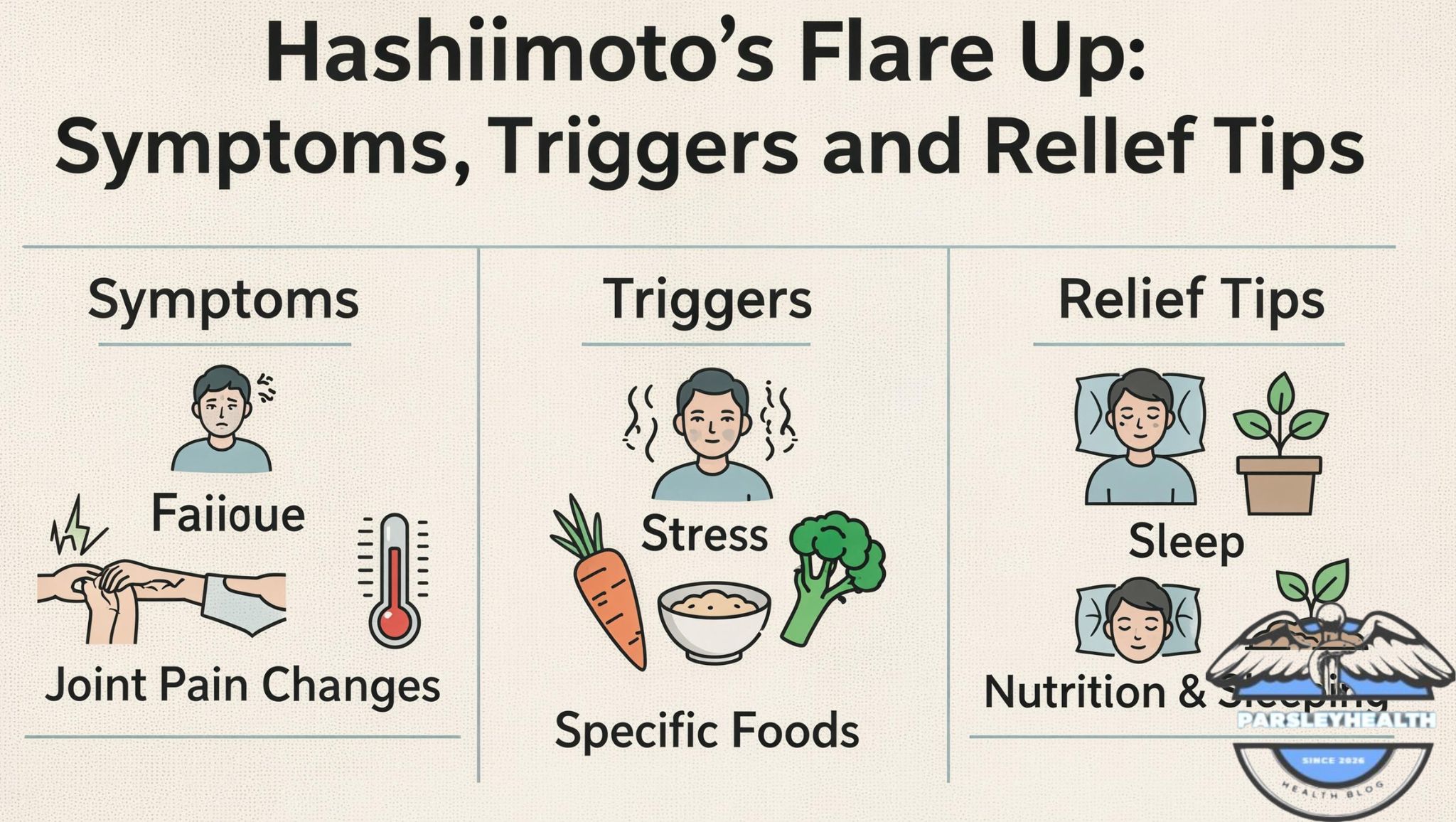
Some days with Hashimoto’s feel manageable. Other days, it can feel like someone quietly turned down every system in your body.
If you are dealing with a hashimoto’s flare up, you may notice crushing fatigue, brain fog, body aches, mood changes, cold intolerance, constipation, puffiness, or a strange sense that your body is moving through mud. It can be frustrating because symptoms may appear even when you are “doing everything right.”
Hashimoto’s disease is an autoimmune condition in which the immune system attacks the thyroid gland. Over time, this inflammation can reduce thyroid hormone production and lead to hypothyroidism, according to the American Thyroid Association and Cleveland Clinic.
The tricky part is that a flare can look like many other things: poor sleep, stress, low iron, medication absorption issues, infection, perimenopause, depression, or another autoimmune condition. That is why understanding patterns, triggers, labs, and warning signs matters.
![Image: A woman sitting on a sofa with a blanket, journal, water, and thyroid medication nearby, soft natural light, calm health article style.]
What Is Hashimoto’s Disease?
Hashimoto’s disease, also called Hashimoto’s thyroiditis or chronic autoimmune thyroiditis, is an autoimmune disorder that affects the thyroid gland. The thyroid is a small butterfly-shaped gland at the front of the neck that helps regulate metabolism, body temperature, heart rate, digestion, energy, and menstrual function.
In Hashimoto’s, the immune system mistakenly targets the thyroid. The American Thyroid Association explains that people with Hashimoto’s often develop thyroid peroxidase antibodies, thyroglobulin antibodies, or both, which can damage the thyroid and cause inflammation over time.
Many people do not notice symptoms at first. As thyroid hormone levels decline, symptoms of hypothyroidism may appear. NIDDK lists common symptoms such as fatigue, weight gain, cold intolerance, joint and muscle pain, constipation, dry skin, thinning hair, heavy or irregular periods, fertility problems, slowed heart rate, and depression.
What Is a Hashimoto’s Flare Up?
A hashimoto’s flare up is a period when symptoms suddenly worsen or return after being stable. Some people describe it as a “thyroid crash,” while others notice a slow build of fatigue, swelling, aches, mood changes, and brain fog.
There is no single official medical definition of a flare. In real life, people often use the term to describe a noticeable increase in symptoms related to thyroid hormone changes, immune activity, stress, illness, medication timing, or another trigger.
A flare does not always mean your thyroid is permanently worse. Sometimes symptoms happen because your medication is not absorbing well, your dose needs adjustment, you are recovering from an infection, or another condition is mimicking thyroid symptoms.
Why Flares Can Be Confusing
Hashimoto’s symptoms overlap with many other issues. Fatigue can come from low thyroid hormone, anemia, poor sleep, depression, low vitamin B12, low vitamin D, chronic stress, sleep apnea, or perimenopause. Weight changes can involve thyroid function, food intake, activity, insulin resistance, fluid retention, or medication effects.
That is why symptoms matter, but labs and context matter too.
Common Hashimoto’s Flare Up Symptoms
A hashimoto’s flare up often feels like hypothyroid symptoms intensifying. The exact symptoms vary from person to person.
Fatigue That Feels Heavy
This is not ordinary tiredness. It may feel like your muscles are weighted down, your thoughts are slow, and even simple tasks require too much effort.
You may wake up exhausted, need naps, struggle to exercise, or feel drained after normal daily activity. Youmay read this: MTHFR Gene Mutation: Symptoms, Testing and Folate Factsmthfr gene mutation test.
Brain Fog
Brain fog can make it hard to concentrate, remember words, process information, or stay organized. Some people feel mentally slow or emotionally flat.
This can be especially frustrating when others cannot see what is happening.
Cold Intolerance
Feeling cold when others are comfortable is a common hypothyroid symptom. You may notice cold hands, cold feet, chills, or needing extra layers indoors.
Muscle and Joint Aches
A flare may bring body aches, stiffness, tenderness, or heavy limbs. NIDDK includes joint and muscle pain among common hypothyroidism symptoms related to Hashimoto’s disease.
Constipation and Bloating
Low thyroid function can slow digestion. During a flare, you may notice constipation, bloating, sluggish digestion, or feeling uncomfortably full.
Dry Skin and Hair Changes
Dry skin, brittle nails, thinning hair, and increased shedding can happen when thyroid hormone levels are low. Hair changes may take longer to improve because hair growth cycles move slowly.
Mood Changes
Low mood, irritability, anxiety, and emotional sensitivity can appear during a flare. Thyroid hormone affects brain function, energy, and nervous system regulation, but mood symptoms can also come from stress, sleep problems, and life circumstances.
Menstrual Changes
Some women notice heavier periods, irregular cycles, worse PMS, or fertility challenges when thyroid levels are off. NIDDK includes heavy or irregular menstrual periods and fertility problems among common symptoms.
What Triggers a Hashimoto’s Flare Up?
There is rarely one universal trigger. A hashimoto’s flare up may follow a stressful season, illness, sleep loss, medication changes, dietary shifts, hormonal changes, or missed doses.
Stress
Stress does not “cause” every flare, but it can affect sleep, inflammation, appetite, digestion, medication consistency, and immune function. A stressful event may also make existing symptoms feel louder.
Examples include work pressure, grief, caregiving, relationship strain, financial stress, overtraining, or ongoing burnout.
Infection or Illness
Colds, flu, COVID-like illnesses, stomach bugs, dental infections, urinary infections, or other immune challenges can leave you feeling wiped out. After an infection, it can be hard to tell whether fatigue is from Hashimoto’s, recovery, inflammation, or all of the above.
Poor Sleep
Sleep is recovery time for the immune system and nervous system. Several nights of poor sleep can worsen fatigue, cravings, mood, inflammation, and pain sensitivity.
If you wake frequently, snore, gasp, sweat, or feel unrefreshed despite enough hours in bed, consider whether another sleep issue is involved.
Medication Absorption Problems
For people taking levothyroxine, absorption matters. Mayo Clinic explains that hypothyroidism associated with Hashimoto’s is treated with synthetic T4 hormone called levothyroxine, and the treatment goal is to restore and maintain adequate T4 levels.
Thyroid medication may not absorb well if taken too close to certain foods, supplements, or medications. Common interfering factors can include calcium, iron, some antacids, bile acid binders, high-fiber meals, coffee too soon after dosing, and inconsistent timing.
Always follow your prescriber’s instructions and ask a pharmacist about interactions.
Hormonal Shifts
Pregnancy, postpartum changes, perimenopause, menopause, starting or stopping hormonal contraception, and menstrual cycle shifts can all affect how you feel.
Postpartum thyroid changes are especially important because immune activity shifts after pregnancy. New or worsening symptoms after childbirth deserve medical attention.
Too Much or Too Little Iodine
Iodine is needed to make thyroid hormone, but more is not always better. Excess iodine can worsen thyroid autoimmunity in some people. Do not take high-dose iodine supplements unless your clinician specifically recommends it.
Diet Changes
Some people feel worse after major diet shifts, especially if they begin under-eating, cutting carbohydrates too aggressively, eliminating too many foods, or changing fiber intake in a way that affects medication absorption.
A supportive diet should nourish you, not make eating stressful or restrictive.
![Image: Infographic showing possible Hashimoto’s flare triggers: stress, infection, poor sleep, medication timing, hormonal shifts, nutrient gaps, and overtraining.]
Hashimoto’s Flare Up vs Low Thyroid Medication Dose
Sometimes what feels like a flare is actually under-treated hypothyroidism. If your thyroid hormone dose is too low, symptoms may gradually return or never fully improve.
Mayo Clinic notes that levothyroxine treatment often continues for life and that dosing is monitored with blood tests.
Signs Your Dose May Need Review
Talk with your clinician if you notice:
- Persistent fatigue
- Weight gain without clear explanation
- Cold intolerance
- Constipation
- Dry skin
- Hair thinning
- Heavy periods
- Depression or low mood
- Slowed heart rate
- Ongoing brain fog
Do not change your dose on your own. Too much thyroid hormone can cause symptoms such as palpitations, anxiety, insomnia, bone loss risk, and heart rhythm problems.
Hashimoto’s Flare Up vs Hyperthyroid-Like Symptoms
Hashimoto’s is usually linked with hypothyroidism, but thyroiditis can sometimes cause temporary release of stored thyroid hormone. Mayo Clinic explains that thyroiditis can trigger the thyroid to release stored hormone at once, causing a spike in thyroid activity before the thyroid becomes underactive.
This can feel very different from the classic sluggish Hashimoto’s picture.
Symptoms That May Feel Hyperthyroid
You may notice:
- Racing heart
- Anxiety or panic
- Sweating
- Heat intolerance
- Trembling
- Diarrhea
- Insomnia
- Unexplained weight loss
- Feeling wired but exhausted
These symptoms should be discussed with a healthcare professional, especially if they are new, severe, or paired with chest pain, faintness, or shortness of breath.
Labs to Check During a Flare
Symptoms give clues, but blood tests help clarify what is happening. The exact labs depend on your history and clinician’s approach.
Common Thyroid Labs
Your doctor may consider:
- TSH
- Free T4
- Free T3, in selected cases
- Thyroid peroxidase antibodies
- Thyroglobulin antibodies
- Thyroid ultrasound, if nodules or gland enlargement are suspected
The American Thyroid Association explains that Hashimoto’s is associated with thyroid antibodies that damage the thyroid over time.
Other Labs That May Matter
Because symptoms overlap, your clinician may also check:
- Complete blood count
- Ferritin and iron studies
- Vitamin B12
- Vitamin D
- A1C or glucose
- Inflammatory markers
- Liver and kidney function
- Celiac screening, if symptoms suggest it
- Reproductive hormones, when relevant
If your thyroid labs look stable but you feel awful, it does not mean symptoms are imaginary. It means the search may need to widen.
How Long Does a Hashimoto’s Flare Up Last?
A hashimoto’s flare up may last a few days, a few weeks, or longer depending on the trigger. A flare after poor sleep or a stressful event may settle quickly with rest and consistency. Symptoms from an incorrect medication dose, absorption problem, infection, anemia, or major hormonal shift may last until the underlying issue is addressed.
Why Tracking Helps
Keep a simple note of:
- Symptoms
- Sleep quality
- Stress level
- Medication timing
- Supplements
- Menstrual cycle phase
- Illness or infection
- Diet changes
- Exercise intensity
- Lab results
Patterns often become clearer after two to four weeks of tracking.
What to Do During a Hashimoto’s Flare Up
The goal is not to panic or overhaul your entire life. During a flare, your body usually needs consistency, gentle support, and a clear plan.
Prioritize Rest Without Guilt
Fatigue during a flare can be real and physical. Pushing harder may backfire. Rest does not mean doing nothing forever; it means giving your body room to recover.
If possible, reduce nonessential tasks, simplify meals, lower exercise intensity, and protect sleep.
Take Medication Consistently
If you take thyroid hormone, take it exactly as prescribed. Keep timing consistent. Ask your clinician or pharmacist how far apart to separate it from calcium, iron, coffee, food, and other medications.
Small timing changes can matter for some people.
Eat Steady, Nourishing Meals
A flare is not the best time for crash dieting, extreme detoxing, or skipping meals. Your body needs enough energy, protein, fiber, and micronutrients.
Supportive meals may include:
- Eggs with vegetables and whole-grain toast
- Greek yogurt with berries and seeds
- Lentil soup with olive oil and salad
- Salmon with rice and greens
- Chicken, tofu, or beans with roasted vegetables
- Oatmeal with nut butter and fruit
Hydrate and Support Digestion
Constipation and bloating can worsen discomfort. Water, fiber-rich foods, gentle walking, and regular meals may help. If constipation is persistent or severe, ask your clinician what is safe.
Use Gentle Movement
Exercise can support mood, digestion, insulin sensitivity, and energy, but intense workouts during a flare may feel impossible. Try walking, stretching, yoga, light strength work, or mobility exercises.
If exercise reliably makes you crash for days, bring that up with a healthcare professional.
![Image: A calming recovery scene with herbal tea, balanced meal, walking shoes, sleep mask, and a simple symptom journal.]
Diet and Hashimoto’s: What Actually Helps?
There is no single Hashimoto’s diet that works for everyone. A nourishing, anti-inflammatory eating pattern may help overall health, but food should not become fear-based.
Focus on Nutrient Density
Helpful foods often include:
- Colorful vegetables
- Fruit
- Beans and lentils
- Fish
- Eggs
- Poultry
- Nuts and seeds
- Olive oil
- Whole grains, if tolerated
- Yogurt or fermented foods, if tolerated
- Adequate protein
- Enough calories
Gluten and Hashimoto’s
Some people with Hashimoto’s also have celiac disease. In celiac disease, gluten must be avoided completely. Without celiac disease, the need to avoid gluten is more individual.
If you suspect gluten worsens symptoms, talk with your clinician before removing it long term, especially if celiac testing may be needed. Testing is most accurate while you are still eating gluten.
Selenium, Vitamin D, and Supplements
Selenium, vitamin D, iron, B12, zinc, and magnesium are often discussed in thyroid health. Deficiencies should be corrected when present, but more is not always better.
Do not start high-dose supplements without guidance. Selenium and iodine can be harmful in excess, and iron can be dangerous if you do not need it.
Stress, Cortisol, and Autoimmune Symptoms
Stress management is not a cure for Hashimoto’s, and symptoms should never be dismissed as “just stress.” Still, stress can influence sleep, inflammation, digestion, pain sensitivity, and daily functioning.
Practical Stress Support
Try:
- Short walks outside
- Breathing exercises
- Gentle stretching
- Journaling
- Lowering caffeine if anxious
- Setting work boundaries
- Asking for help
- Therapy or counseling
- Reducing overcommitment
- Restorative hobbies
The point is not to become perfectly calm. It is to reduce the load your body carries every day.
Sleep and Hashimoto’s Recovery
Poor sleep can make thyroid symptoms feel worse. It can also intensify cravings, mood swings, pain, and brain fog.
Better Sleep Basics
Try:
- Wake at a consistent time
- Get morning light
- Keep the bedroom cool and dark
- Avoid caffeine late
- Limit alcohol
- Reduce screens before bed
- Create a short wind-down routine
- Treat snoring or breathing issues seriously
If sleep problems persist, do not assume they are only from Hashimoto’s. Insomnia, sleep apnea, restless legs, anxiety, reflux, and perimenopause can all disrupt sleep.
When a Flare Might Be Something Else
A hashimoto’s flare up can mimic many conditions. If symptoms are intense, new, or different from your usual pattern, broaden the possibilities.
Conditions That Can Feel Similar
These may overlap with thyroid symptoms:
- Iron deficiency anemia
- Vitamin B12 deficiency
- Vitamin D deficiency
- Depression
- Anxiety
- Sleep apnea
- Perimenopause
- Chronic infection
- Celiac disease
- Rheumatoid arthritis
- Lupus
- Fibromyalgia
- Diabetes or blood sugar swings
- Medication side effects
If your labs are “normal” but you still feel unwell, ask what else should be checked.
Red Flags: When to Seek Medical Care Quickly
Most Hashimoto’s flares are not emergencies, but some symptoms need prompt attention.
Get Urgent Help If You Have
- Chest pain
- Shortness of breath
- Fainting
- Confusion
- Severe weakness
- Very slow or very fast heart rate
- Severe swelling
- High fever
- Neck swelling with trouble breathing or swallowing
- Severe depression or thoughts of self-harm
- Pregnancy with worsening thyroid symptoms
- New severe palpitations
- Sudden neurological symptoms
Untreated severe hypothyroidism can rarely become dangerous. Hyperthyroid-like symptoms can also stress the heart. When symptoms feel extreme or unusual, get assessed.
Hashimoto’s and Pregnancy
Thyroid hormone is important during pregnancy. If you are pregnant, trying to conceive, or recently postpartum, thyroid monitoring becomes especially important.
Hashimoto’s can affect fertility and pregnancy outcomes when hypothyroidism is untreated or undertreated. NIDDK notes that Hashimoto’s-related hypothyroidism can include heavy or irregular periods and fertility problems.
Pregnancy often changes thyroid hormone needs. Do not wait months to report symptoms or a positive pregnancy test if you take thyroid medication.
Hashimoto’s and Weight Changes
Weight gain can happen with hypothyroidism, but it is not always dramatic. Fluid retention, constipation, fatigue-related inactivity, stress eating, sleep disruption, insulin resistance, and perimenopause can all contribute too.
If weight changes happen suddenly, do not blame yourself. Review thyroid labs, medication consistency, sleep, food intake, activity, stress, and other metabolic markers with your clinician.
What Helps Without Extremes
Helpful steps include:
- Adequate protein
- Strength training when tolerated
- Daily walking
- Fiber-rich meals
- Treating constipation
- Sleeping better
- Limiting alcohol
- Managing blood sugar
- Avoiding crash diets
Extreme restriction can worsen fatigue and make flares harder to manage.
Hashimoto’s and Hair Loss
Hair thinning can be one of the most distressing symptoms. Low thyroid hormone can contribute, but so can low iron, stress, postpartum changes, rapid weight loss, low protein intake, vitamin deficiencies, androgen changes, and genetics.
Hair growth takes time. Even after thyroid levels improve, hair may take months to look fuller.
Hair-Supportive Habits
Consider:
- Checking ferritin, B12, vitamin D, and thyroid labs
- Eating enough protein
- Avoiding harsh hairstyles
- Reducing heat damage
- Treating scalp inflammation
- Being patient with regrowth cycles
If shedding is sudden, patchy, or severe, see a dermatologist.
Working With Your Doctor During a Flare
A useful appointment is specific. Instead of saying only “I feel terrible,” bring patterns.
What to Bring
Bring:
- Current medication dose
- How and when you take it
- Supplements and timing
- Recent lab results
- Symptom timeline
- Menstrual or pregnancy status
- Recent illness
- Diet or weight changes
- Sleep issues
- Heart rate changes
- Family history
- Questions about dose, absorption, or additional testing
This helps your clinician decide whether to adjust thyroid medication, repeat labs, check for other deficiencies, or investigate another condition.
Common Mistakes During a Hashimoto’s Flare
Changing Medication on Your Own
It is tempting to increase or skip doses based on symptoms. Do not do this without medical guidance. Too much thyroid hormone can cause serious side effects.
Starting Too Many Supplements
Adding five supplements at once makes it hard to know what helps or harms. Some supplements interfere with thyroid medication.
Blaming Every Symptom on Hashimoto’s
Hashimoto’s can explain a lot, but not everything. New symptoms deserve fresh attention.
Overexercising
Hard workouts during severe fatigue may worsen crashes. Scale intensity to your current capacity.
Under-Eating
Skipping meals or extreme dieting can worsen fatigue, mood, constipation, and stress hormones.
FAQ
What does a hashimoto’s flare up feel like?
A hashimoto’s flare up may feel like heavy fatigue, brain fog, cold intolerance, constipation, body aches, dry skin, puffiness, mood changes, hair shedding, and feeling slower than usual.
How long does a Hashimoto’s flare last?
It depends on the trigger. Some flares last a few days, while others continue for weeks if medication absorption, thyroid hormone levels, infection, stress, or another condition is involved.
What triggers a hashimoto’s flare up?
Common triggers include stress, illness, poor sleep, inconsistent thyroid medication timing, medication absorption issues, hormonal changes, major diet changes, nutrient deficiencies, and sometimes excessive iodine.
Can stress cause a Hashimoto’s flare?
Stress can contribute by affecting sleep, immune regulation, digestion, habits, and inflammation. It may not be the only cause, but it can make symptoms worse.
Should I check thyroid labs during a flare?
Yes, especially if symptoms are new, severe, persistent, or different from your usual pattern. TSH and free T4 are commonly checked, and other labs may be useful depending on symptoms.
Can diet stop a Hashimoto’s flare?
Diet may support energy, digestion, and inflammation balance, but it does not replace thyroid medication when needed. Avoid extreme diets and focus on steady, nutrient-rich meals.
Can Hashimoto’s cause hyperthyroid symptoms?
Sometimes thyroid inflammation can temporarily release stored hormone, causing hyperthyroid-like symptoms before the thyroid becomes underactive. New palpitations, tremor, heat intolerance, or rapid weight loss should be discussed with a clinician.
Is a Hashimoto’s flare dangerous?
Most flares are not immediately dangerous, but severe symptoms can be. Seek urgent care for chest pain, trouble breathing, fainting, confusion, severe weakness, extreme heart rate changes, or neck swelling that affects swallowing or breathing.
Why do I still have symptoms if my TSH is normal?
Symptoms may come from medication timing, free hormone levels, iron deficiency, B12 deficiency, vitamin D deficiency, sleep problems, stress, perimenopause, another autoimmune condition, or non-thyroid causes.
Can Hashimoto’s go away?
Hashimoto’s is usually a chronic autoimmune condition. Treatment can manage hypothyroidism and improve symptoms, but ongoing monitoring is commonly needed. Mayo Clinic notes that levothyroxine treatment for Hashimoto’s-related hypothyroidism is often lifelong.
Conclusion
A hashimoto’s flare up can feel discouraging, especially when symptoms interrupt work, family life, exercise, mood, and daily confidence. But a flare is also information. It may point to stress, illness, poor sleep, medication absorption issues, thyroid dose changes, hormone shifts, nutrient deficiencies, or another condition that needs attention.
Start with the basics: take medication consistently, protect sleep, eat enough nourishing food, reduce unnecessary stress load, track symptoms, and review labs with your healthcare professional when symptoms persist or change.
You do not have to solve every symptom by guessing. With the right context, testing, and support, it becomes easier to understand what your body is asking for and how to respond with care rather than panic.